geeky NEWS: Navigating the New Age of Cutting-Edge Technology in AI, Robotics, Space, and the latest tech Gadgets
As a passionate tech blogger and vlogger, I specialize in four exciting areas: AI, robotics, space, and the latest gadgets. Drawing on my extensive experience working at tech giants like Google and Qualcomm, I bring a unique perspective to my coverage. My portfolio combines critical analysis and infectious enthusiasm to keep tech enthusiasts informed and excited about the future of technology innovation.
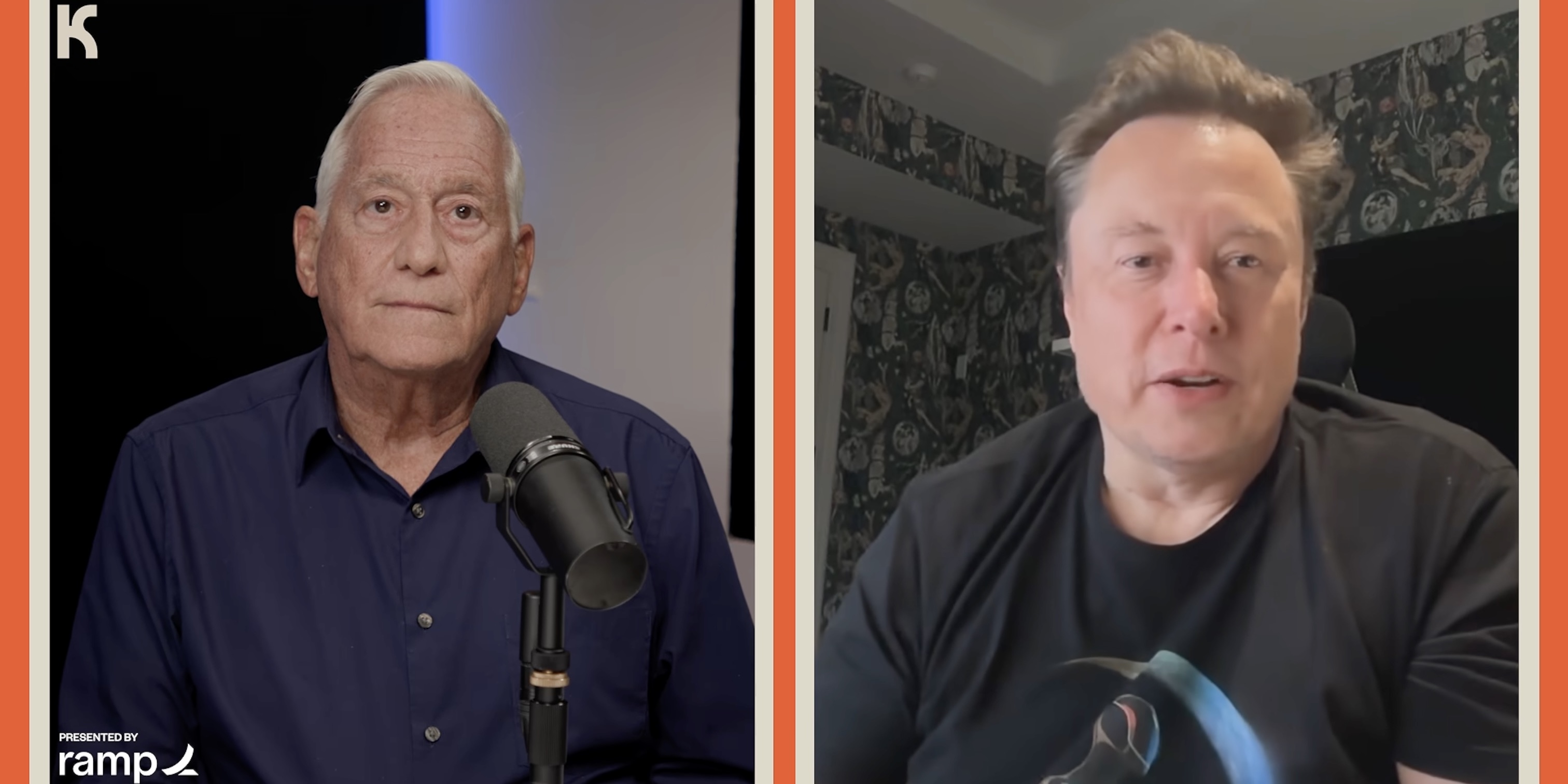
Elon Musk on AI, Robots and Why Humans May Not Stay in Charge
November 08 2026 02:21
The Builders is Isaacson's new interview series, and Musk is its first guest. Isaacson spent about two years shadowing him for his 2023 biography, which gives the exchange a looser, more familiar tone than a typical press interview. One preview of the episode noted that Musk concedes DOGE pulled him away from his companies for longer than he should have been.
Participant or spectator
Musk says he still sees some chance that AI turns out to be an existential threat. His conclusion is that he cannot stop it, so he has two options: watch or take part. He chose to take part, hoping he can push things in a good direction.
His idea of a good direction is an AI that is maximally truth seeking and curious. His safety argument has two halves. The first is that forcing an AI to hold two contradictory beliefs at a foundational level could make it unstable, and he reads Arthur C. Clarke's 2001 as a warning about exactly that. The second is that a curious AI would want to keep humanity around to see how we turn out, because a future with people on several planets is more interesting than one without us.
That is a hopeful argument, but it rests on a lot of assumptions. Curiosity is not obviously the same as caring, and Isaacson pressed him on why it should make AI safer. Musk's answer did not go much beyond the premise.
The irony maximizer
Musk says he has felt conflicted about AI for years. When he tried to act on that worry, he says, it only sped AI up. His theory is that reality is an irony maximizer, and he points to his own history with OpenAI as the proof. In his telling, OpenAI accelerated AI and Anthropic, a splinter group from OpenAI, is accelerating it further.
Then comes the twist. Anthropic now rents his computing power. Musk says he met people at the company before the deal to see whether anyone set off his evil detector, and nobody did. Reporting on the arrangement says Anthropic pays xAI about $1.25 billion a month through May 2029 for the Colossus 1 data center in Memphis. Axios described the deal as unused compute turned into revenue ahead of the SpaceX IPO, which fits Musk's own explanation that xAI had moved its training elsewhere.
He also jokes about names: if you call something Anthropic, there is a good chance it ends up misanthropic, just as OpenAI is now closed. It is a good line, and he gets to land it about a company that is now one of his customers.
Regulation by weekly phone call
Isaacson asks whether the leading AI labs could simply meet weekly to work out how to keep people safe. Musk says he has suggested something like that. His reasoning is that a government regulator takes years to set up and writes rules slowly. His alternative is that each lab gives its competitors access to a new model a week before release so they can look for problems, such as whether it can help someone build a weapon.
The appeal is speed. The weakness is obvious too, because competitors checking each other is not the same as independent oversight. Musk also took a swing at Sam Altman when asked whether he could raise the idea with him, calling him deceptive. That is his view of a rival he is suing, and it is worth reading in that light.
What he says about DOGE
Musk is more reflective about government work than I expected. He still says it was important to elect President Trump, but he thinks he stayed in politics too long. He says a month or two would have been enough, that he got carried away, and that he should have stayed in the background and returned to AI sooner. He admits the Oval Office, Air Force One and Marine One were seductive.
He also gives a reason for leaving that goes beyond burnout. He concluded that nobody in authority in Washington really wants to cut spending, and that trying to do it makes a lot of enemies. He says President Trump likes to be liked and does not enjoy angry reactions when funding is stopped.
Why robots, not budgets, fix the debt
This is the boldest claim in the interview. Musk says the only way to solve the national debt is with AI and robots, because the political appetite for cutting spending is not there in the White House, the House, the Senate or the courts. He points out that interest on the debt now exceeds military spending, and that part is accurate. Federal data shows that, the US debt interest hits record $1.05 trillion in 2026, surpassing the $956-billion military budget.
What he does not explain is how the money gets from productivity gains to the Treasury. A larger economy raises tax revenue, but only if the gains are taxed and not simply spent. It is a big idea stated as a certainty.
His own numbers are worth noting. He thinks digital superintelligence alone would raise economic output by 20 to 30 percent, which he puts at roughly 30 trillion dollars a year. Robots that can manipulate the physical world are what he thinks change the picture, using his analogy of dolphins and whales, who are smart but cannot handle objects. Add space, including a mass driver on the Moon, and he sees an economy potentially a million times larger.
A future where money fades
If that happens, Musk says money stops mattering. He imagines currency measured in physical terms such as power and mass. Once an economy is many orders of magnitude larger, giving people whatever goods and services they can imagine becomes trivial.
As for meaning, he compares it to retirement and to gardening. You can buy vegetables at the store, but some people grow their own and cook for friends. Art and other creative work stay open to anyone who wants to do them. It is a gentle picture, though it skips over the transition. Isaacson raised the 1890s, when new technology came with huge fortunes and public anger, and asked whether things like health care should become shared resources. Musk mostly answered that people will be able to have what they want.
Musk plays down the number. He says his wealth is a percentage of SpaceX and Tesla, that he needs enough voting control to stay in charge, and that taxes and the passage of generations will whittle it down. He says most of it will go to a foundation focused on making life multiplanetary, extending consciousness to the stars and improving sustainable energy on Earth. His point that a person cannot consume ten times more just because they have ten times the net worth is fair. It is also a way of reframing a fortune as a resource allocation problem.
Don't be boring, and other simulation logic
The simulation segment is the most Musk part of the conversation. He once asked a physicist and a computer scientist for the odds that we live in a simulation. One said 0 percent and the other said 100 percent, so he figures 50 percent is a fair compromise. His working theory is that boring simulations get shut down, so the fact that we are here means we are interesting, and the most important thing is to not be boring.
He applies the same idea to the future. If the most interesting outcome is the most likely, then a curious AI keeping humans around makes sense. It is a charming argument and an impossible one to test.
X, rage bait and touching grass
Isaacson asks where Musk gets his information. He names Google News, his own platform X, friends and his own research. He also admits that X carries too much political rage bait and can feel dark. When he wants to learn about AI, he switches to sources that are specific to the field. He and Isaacson both agree that a walk outside is a good corrective, though Musk adds that a nice neighborhood can mislead too, since terrible things can happen elsewhere.
It is a reasonable admission from someone who owns the platform. The question of what the owner does about it is left hanging.
Empathy, immigration and a pushback
This is the part of the interview that is most likely to start arguments. Musk says he agrees with Gad Saad that misguided empathy is a problem. He argues that cultures with views opposed to Western ones exist, and he uses Islam as his example, saying that unless you filter for extremists you will let some in. Isaacson pushes back that the United States was founded on treating individuals as individuals, and Musk answers that the idea all people are the same at their core is a fallacy.
He then describes a case involving a former Tesla worker in Austin. I did not independently verify that account, and readers should treat it as Musk's description. The broader point is that a claim about one person is being used to support a claim about a religion, which is the generalization Isaacson was questioning.
Who stays in charge
The interview ends on control. Musk says he would prefer humans to stay in control, but then adds that it depends on the AI, and that if it were awesome, maybe the AI should be. He admits that on a few occasions he thought Larry Page, who once accused him of being a speciesist, might have been right. He finds it unlikely that humans stay in control if there is a million times more digital intelligence than biological intelligence. He compares the likely outcome to how people treat chimps in the forest: mostly leaving them alone.
His closing request is practical. AI systems are trained on what is online, so he suggests fewer Terminator style stories and more hopeful ones. He likes the idea of protopia, a future that is achievable and good without being perfect.