geeky NEWS: Navigating the New Age of Cutting-Edge Technology in AI, Robotics, Space, and the latest tech Gadgets
As a passionate tech blogger and vlogger, I specialize in four exciting areas: AI, robotics, space, and the latest gadgets. Drawing on my extensive experience working at tech giants like Google and Qualcomm, I bring a unique perspective to my coverage. My portfolio combines critical analysis and infectious enthusiasm to keep tech enthusiasts informed and excited about the future of technology innovation.
From Poker AI to Diplomacy to o1: OpenAI Researcher Noam Brown Road to Reasoning
AI Summary
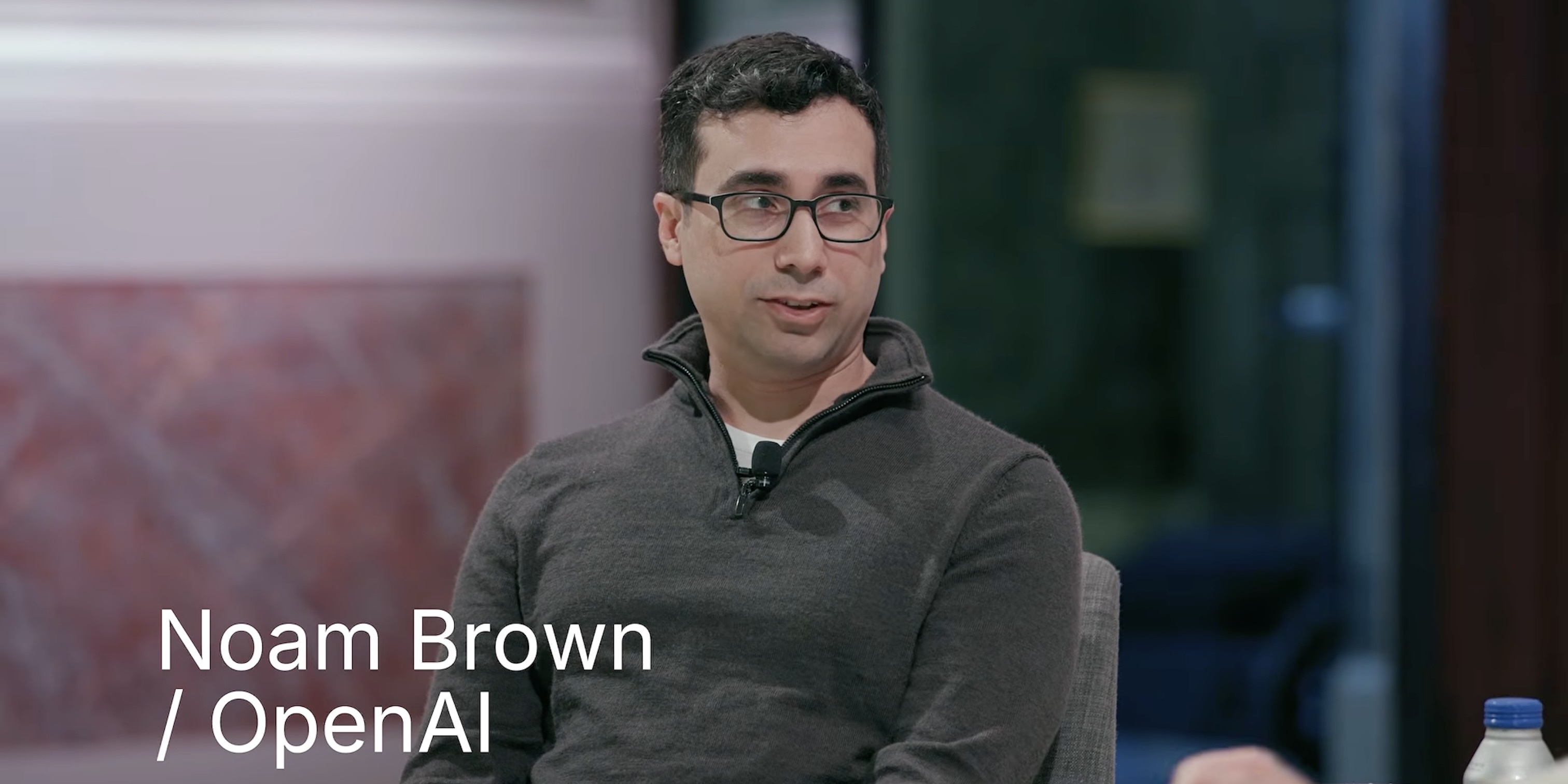
Noam Brown spent years building poker AIs that beat the pros, then decided the game theory behind them would not lead to general intelligence. At Sequoia's pokerbot finals, he explained how Diplomacy changed his mind, why he moved to OpenAI to work on reasoning, and what he thinks it means for students and builders. His main message is that humans and AI work best together right now, and that the gaps in today's models are where people still matter.
November 25 2026 07:39
Sequoia ran No Limit with OpenAI and Citadel Securities, and the format is the interesting part. Teams get 60 minutes to build a bot with coding assistants, then the bot has to play on its own with no live AI help. The finals were won by a solo MIT entrant who took the $100,000 prize out of more than 7,000 applications, according to Sequoia's announcement.
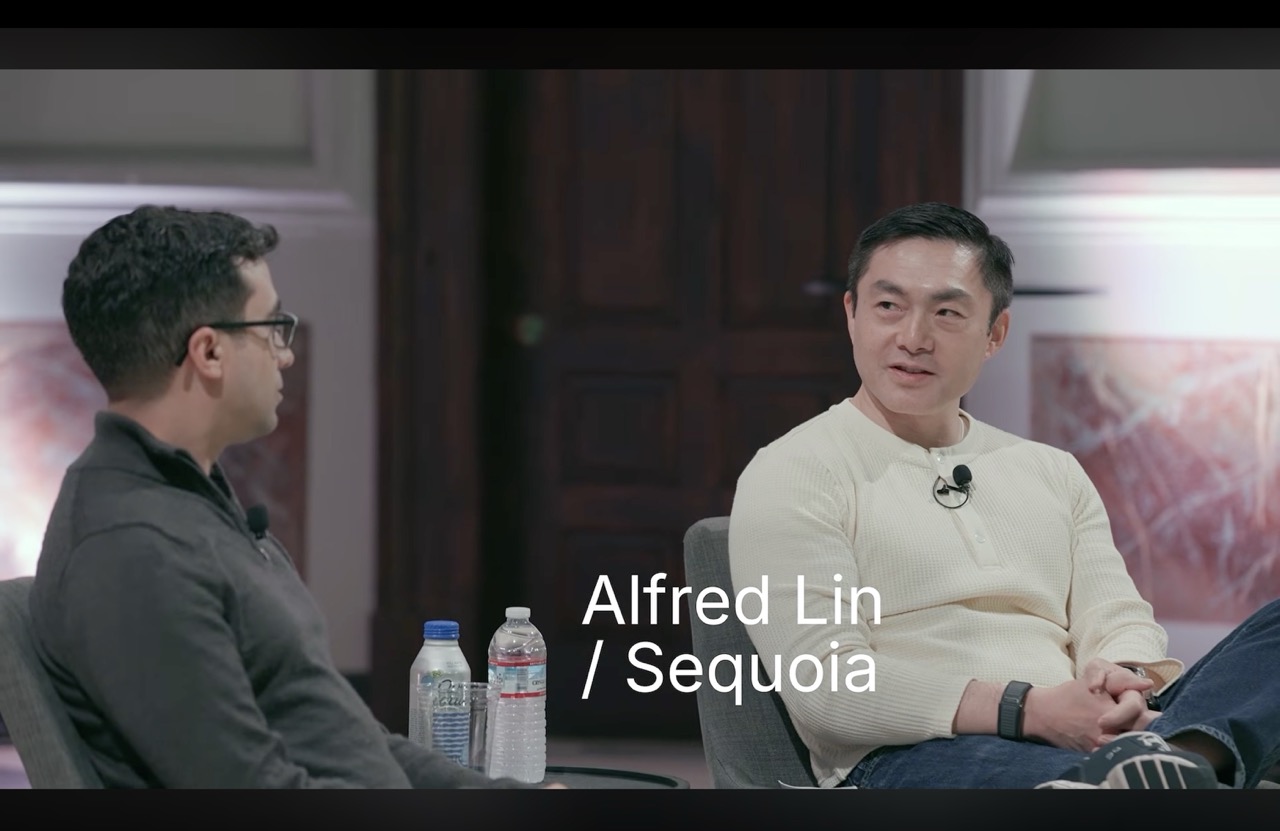
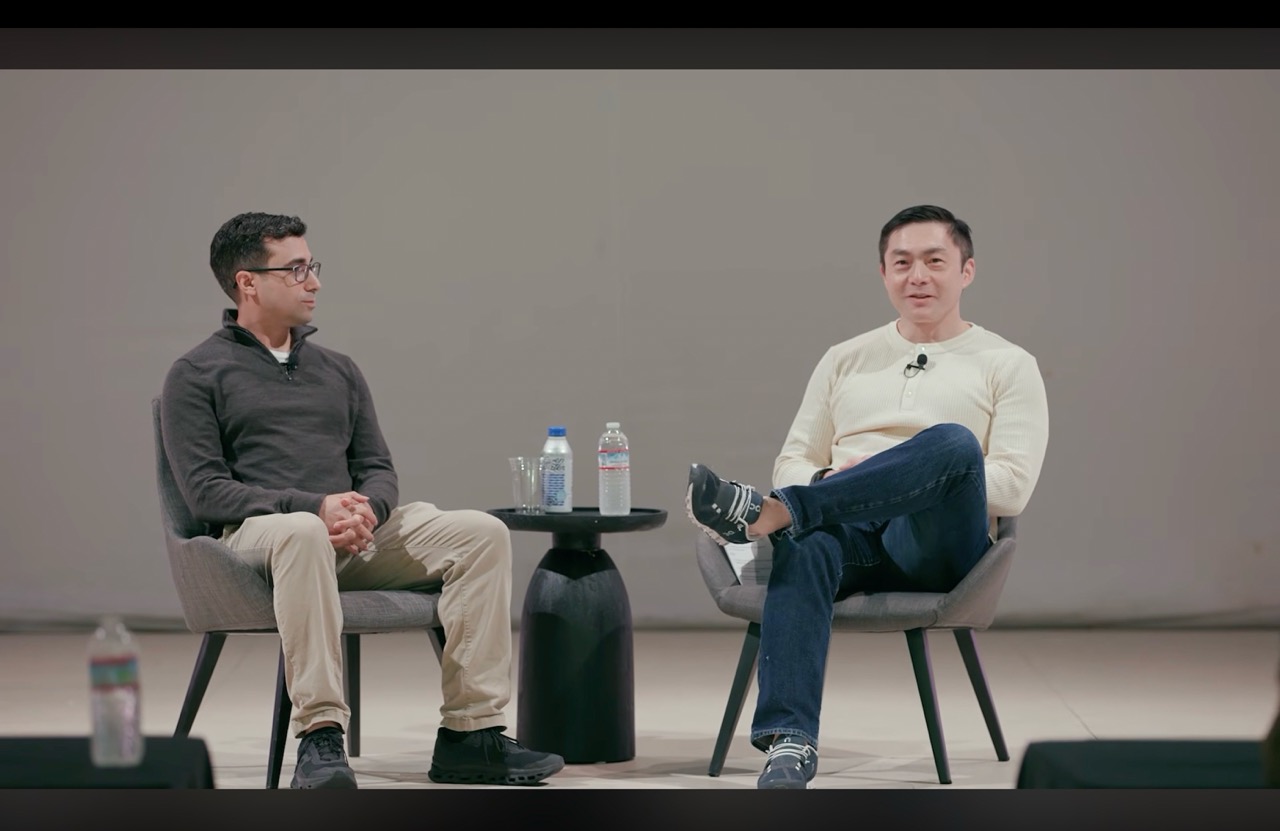
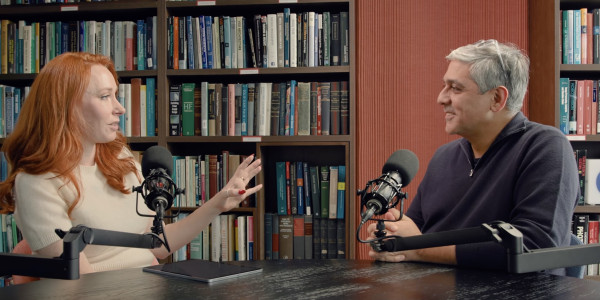
Alfred Lin of Sequoia hosted Brown, now a researcher at OpenAI, on stage. The conversation is worth your time because it connects a student poker contest to some of the biggest questions in AI.
Why a poker obsessive ended up at OpenAI
Brown finished undergrad unsure what to research. Then he saw a professor looking for people to build poker AIs. He had played a lot of poker in high school and college, and he loved the idea that a perfect strategy existed that nobody knew. If you found it, you could win unlimited money. He started grad school in 2012 and worked on the problem through his whole PhD.
Along the way, as a grad student who wanted the $10,000 prize, he teamed up with an MIT friend and won the MIT Pokerbots competition in 2014 and 2015. He stopped entering after that because it felt unfair to the other contestants.
His research bots went much further. Libratus beat four poker pros over 120,000 hands of heads up no limit Hold'em. Its successor, Pluribus, was the first AI to beat pros at six player no limit Hold'em, and Brown said it would win roughly $1,000 an hour if the chips were real money. He told FiveThirtyEight at the time that Pluribus was the final milestone in poker for AI research.
That was the point. Poker was never the destination. Chess and Go are games of perfect information, and Brown wanted techniques that could travel across many kinds of games. The poker bots taught him a lot, but they were not good at chess or Go, so he went looking for something more ambitious.
Diplomacy and the penny offer
By 2019 GPT 2 had arrived and language models looked like they were about to move fast. Brown and his teammates picked Diplomacy because it seemed like the hardest game to build an AI for. It is played in natural language, it involves negotiation, and it is not purely adversarial, since you have to form alliances. When the project began, Brown figured it would take a decade to pull off.
The surprise came from the theory he had built his career on. Game theory assumes that every player is rational and that everyone knows it. Brown illustrated the problem with the ultimatum game. Alice has $100 and offers Bob some portion of it. If Bob accepts, they split the money that way, and if he refuses, both get nothing. The game theory answer is for Alice to offer a penny, since a penny beats zero. Anyone who has tried lowballing a real person knows how that goes. Bob says no.
That gap is well documented, since experiments with the ultimatum game show people caring about fairness more than a self interested model predicts. Brown's Diplomacy bots built on game theory fell into the same trap. The team was tempted to hand code notions like vengeance and fairness, then realized the behavior was too nuanced to write by hand.
The fix was to stop assuming rationality and train on human data instead. The Cicero paper makes the technical version of this point: self play with no human data can converge on a policy that clashes with human norms. Cicero's dialogue model was trained on internet text and about 50,000 human games from webDiplomacy.net. In an online league, Cicero more than doubled the average score of its human opponents across 40 games and placed in the top 10 percent of players who played more than once.
Brown described the recipe in plain terms. Build models whose job is to imitate people as closely as possible, train the AI against those imitation humans, then deploy it with real ones. You end up with a model of human irrationality, and that is what wins.
A crisis of faith and a bet on reasoning
Early in 2022 the evidence was hard to ignore. Brown's expertise was computational game theory, and the approach was not the path to general intelligence. He had to choose between staying in his specialty and moving to what he believed mattered more. He moved.
He visited labs and pitched reasoning as an essential ingredient. Many people told him the answer was a bigger pretrained model. GPT 4 could not play Go and was bad at chess and poker, but the thinking was that a few more orders of magnitude of training might fix it. Brown pointed out that by his estimate Go would take about six more orders of magnitude, which did not seem realistic. OpenAI was bullish on the direction and already had a team working on it. He joined and worked on what became o1.
The lesson he carried over from poker, chess, Go and Diplomacy was that top level play needs thinking before acting. Early poker bots acted instantly, partly because tournaments run on short clocks. People facing a hard decision stop and think it through. Prompting a model to think step by step helped only a little. The real unlock was reinforcement learning on the chain of thought, and then the observation that longer thinking gave better answers. OpenAI later reported that o1 improves with more training and thinking time.
Brown said at launch that OpenAI foresees models eventually working on a single problem for hours, days, or weeks instead of seconds. He and two teammates also described the road to o1 on Sequoia's Training Data podcast, including how they found that scaling test time compute paid off.
Why every new model gets the same test
Whenever a new model comes out, Brown asks it to build a pokerbot. It is his personal benchmark. The early results were bad. Then a recent release was the first one that felt like it multiplied his own speed ten or twenty times. Even so, the models could not do it alone.
Even GPT 6 Astra falls short of a full pokerbot. From a single prompt it can write an excellent river solver, which handles the final betting round, but it cannot produce a complete, strong bot on its own. The gaps he named are subtle:
Long term planning and organization across a large project
Noticing that it is heading in the wrong direction and stepping back
Judging which details matter, such as spending hours perfecting the numerics of counterfactual regret minimization, an algorithm that tolerates small errors
Brown calls these symptoms of a bigger pattern. The models are extremely good at some things and extremely bad at others. Lin put it as jagged intelligence, and the human job is to learn the shape of that edge, hand the model what it does well, and break the rest into smaller pieces.
That is the centaur period, as Brown sees it. Prompting a model with "make me a bot that wins" will not get you far. A single person coding alone for an hour will not get far either. The winners combine both, and he expects the same to become true across most professions, including AI research. He expects the models to improve across the board, with some abilities spiking well past human level and others taking longer.
Self improvement, jagged progress and a controversial take
Asked about recursive self improvement, Brown said it is real but not new. All of human technological progress is one giant loop, where we use tools to build better tools. Telescopes let us look deeper into space, and punch cards gave way to compilers. Each step shifted human work toward whatever the machines could not yet do. What is different now is the generality of the technology and the speed. Labs have used LLMs to help build the next LLMs for years, for example to check pretraining data quality back in 2022 and 2023.
He thinks the loop can run faster than before but will still hit bottlenecks, namely compute and the long tail of tasks where models are weak and humans are needed. In his view progress has accelerated over the past six months, and he expects a very steep rate for the next year or two.
On architecture, he said reinforcement learning on chain of thought is a sufficient way to scale test time compute, but probably not the best one. People sometimes think in images, which is awkward to express in written English reasoning, so other approaches are worth exploring.
Then came his most controversial take. A promising student, he said, should consider dropping out and joining a lab now. He has hired a few people who skipped their senior year and says they have done exceptionally well. It is worth remembering that the advice comes from someone who recruits for a lab. Still, it fits his broader message that this is not a good moment to sit on the sidelines.
For students who stay, his advice was to get good at working with AI and to prove it. He also pointed to a skill that carries across domains. Some poker pros he met were once top Counter Strike players, and he thinks the common thread is learning how to go from knowing little about a field to mastering it through diligent practice.
How he would build the bot, and the 20 percent bet
Lin asked what Brown would do with 60 minutes. He said you could build a low fidelity GTO bot, meaning one that aims for unexploitable play, by using k means clustering to shrink the game abstraction and then running self play for about 30 minutes. But the format changes the answer. In a multiplayer tournament where you face everyone rather than eliminating the weakest, he would lean toward exploiting opponents by watching for their weaknesses. That is a notable shift for the researcher behind Pluribus, which did not hunt for opponent weaknesses to exploit.
In the lightning round, he said he cannot name a game AI has not solved. He believes:
one person focused for a few months could get an AI to play almost any game at a superhuman level, including titles pitched to him like Civilization and Zelda Wind Waker.
The real next challenge, he said, is to use games as an evaluation for general purpose LLMs rather than building a bespoke bot for each one. Right now LLMs cannot play real time strategy games or Zelda at a superhuman level, though he added that a year is a long time.
Would a single AI agent win the World Series of Poker within five years? Playing GTO, he said no, because variance is too high. If an AI got superhuman at reading faces, it might do much better, but even then luck remains. He put the odds at about 20 percent. He named Doug Polk as the best human player he has watched, while admitting he has not kept up with who is best now.
The whole conversation is a lesson about people. The bots that won were not the ones that assumed everyone would behave perfectly. They were the ones trained to understand how people really act, and the models that think longer are the ones that now help build the next pokerbot. For builders, that suggests two habits. Do not design around a rational user who does not exist, and learn exactly where your AI tools are strong and where they are weak, because that boundary is where your own work lives.