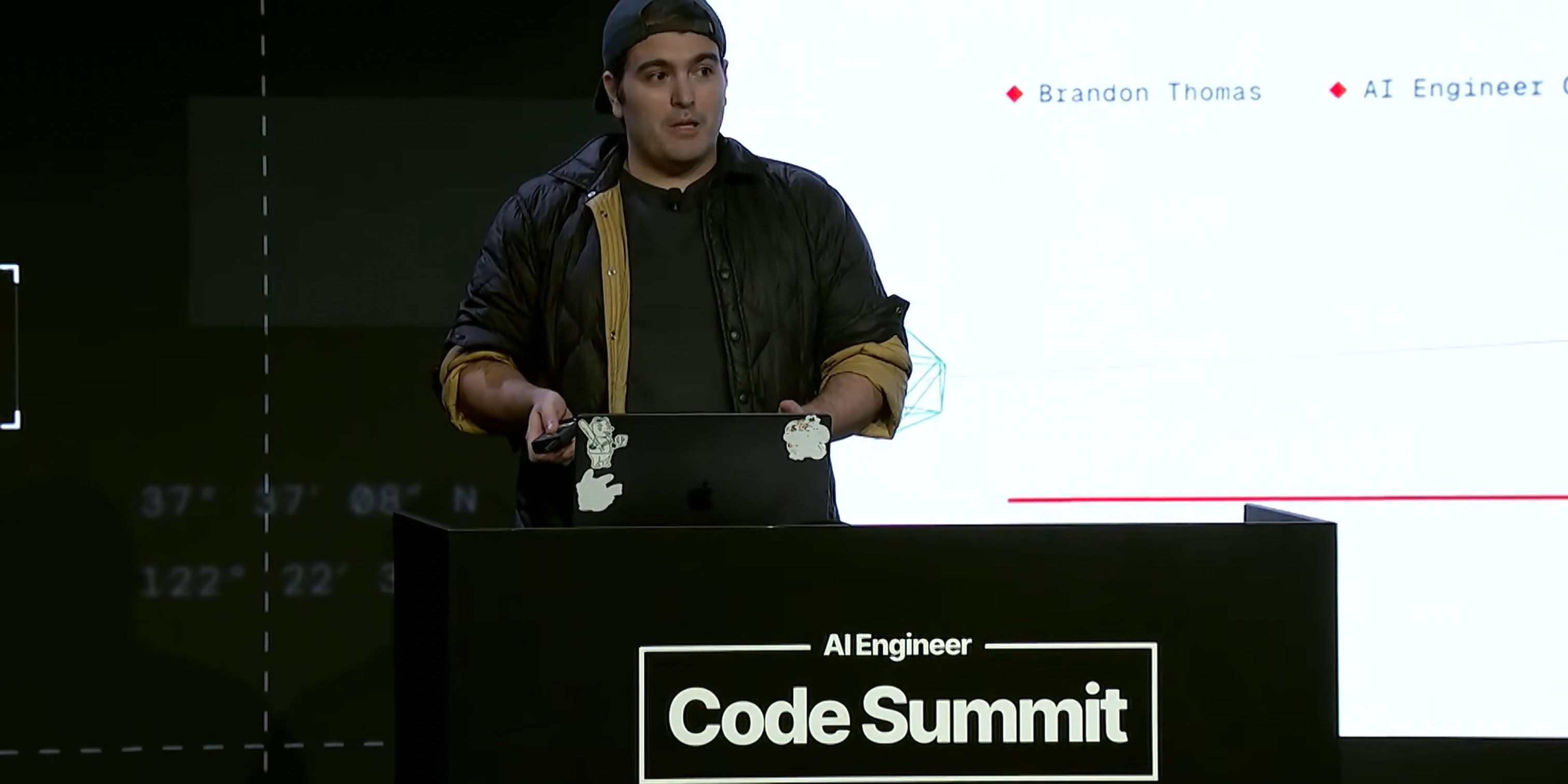
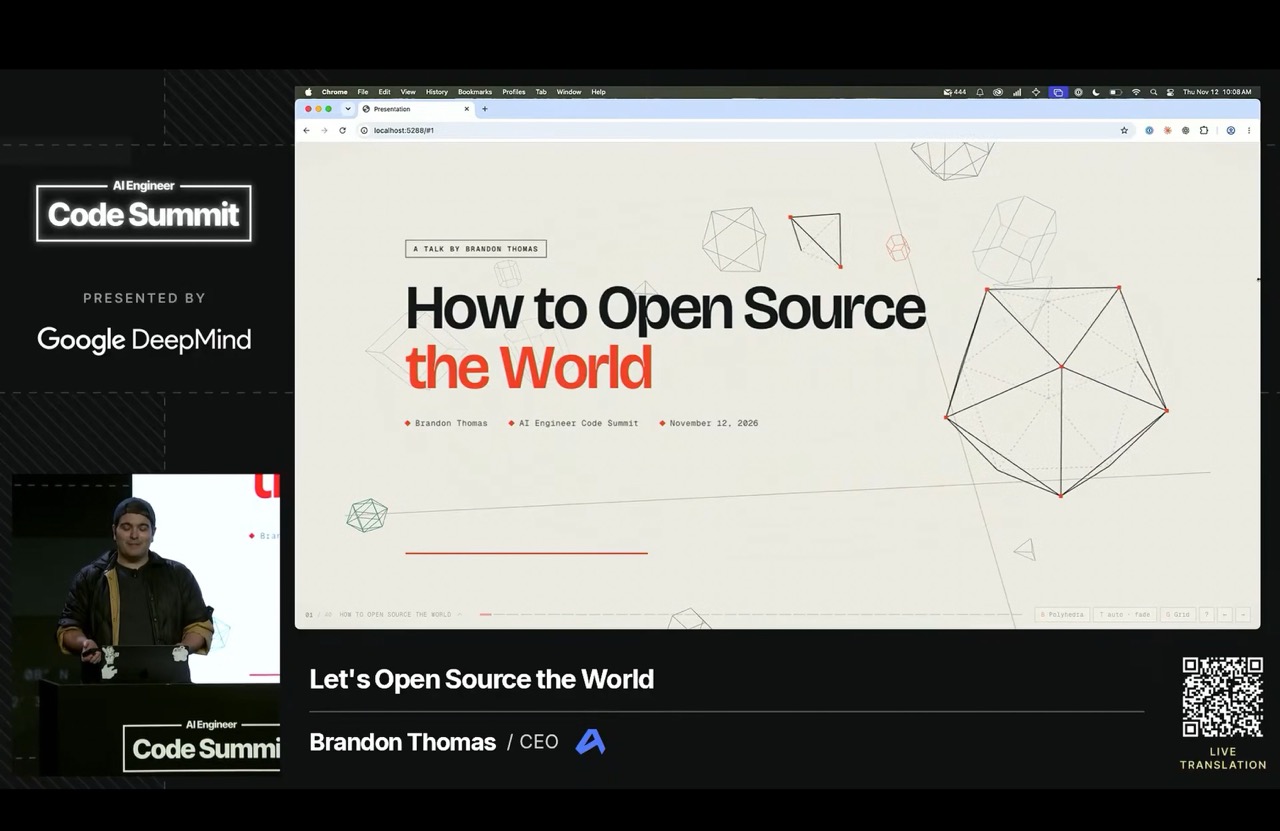
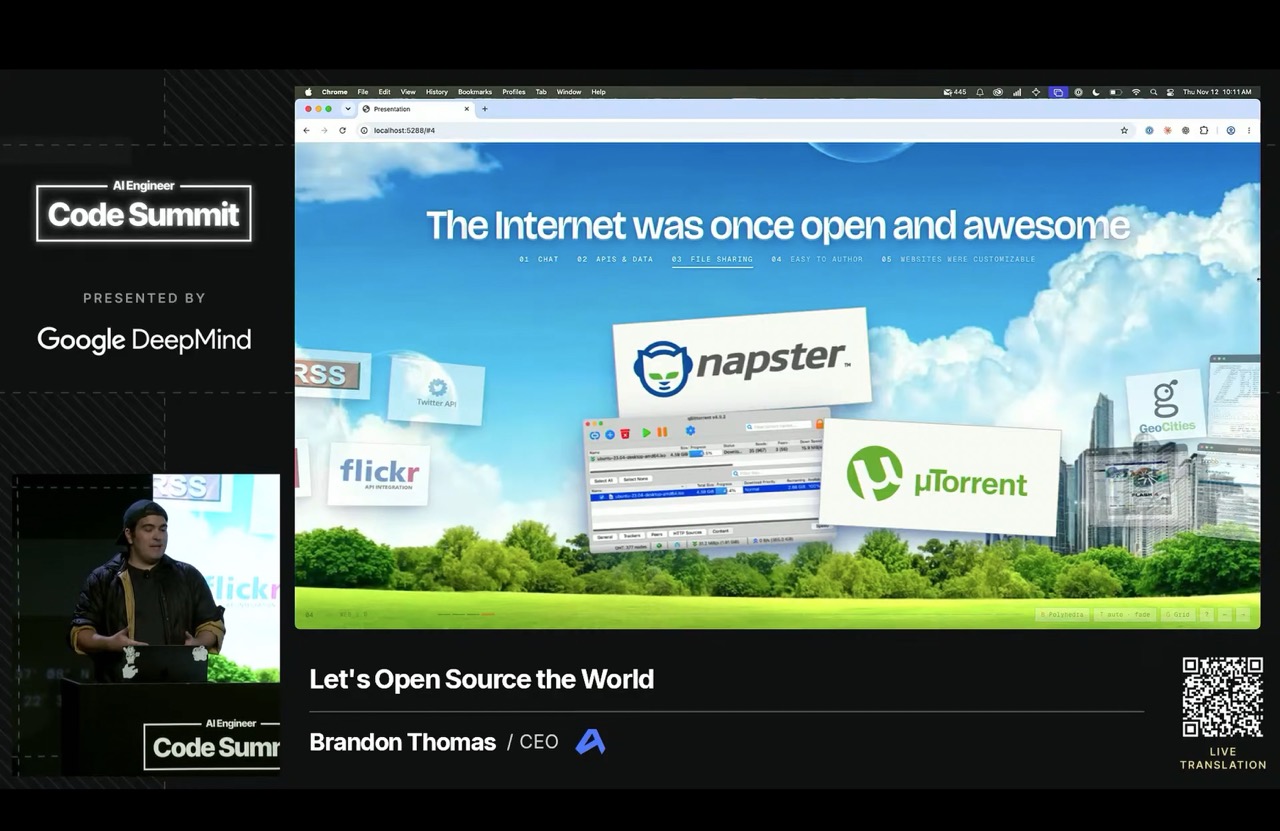
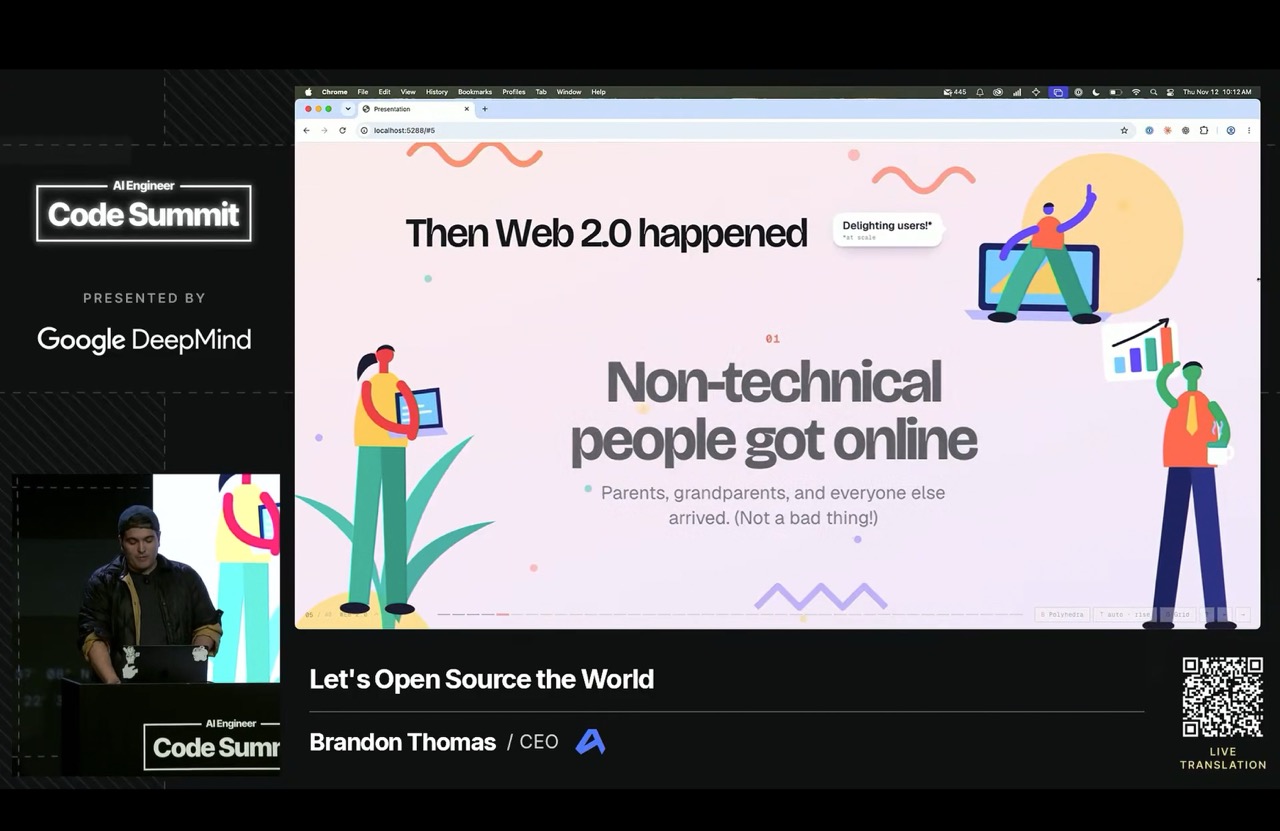
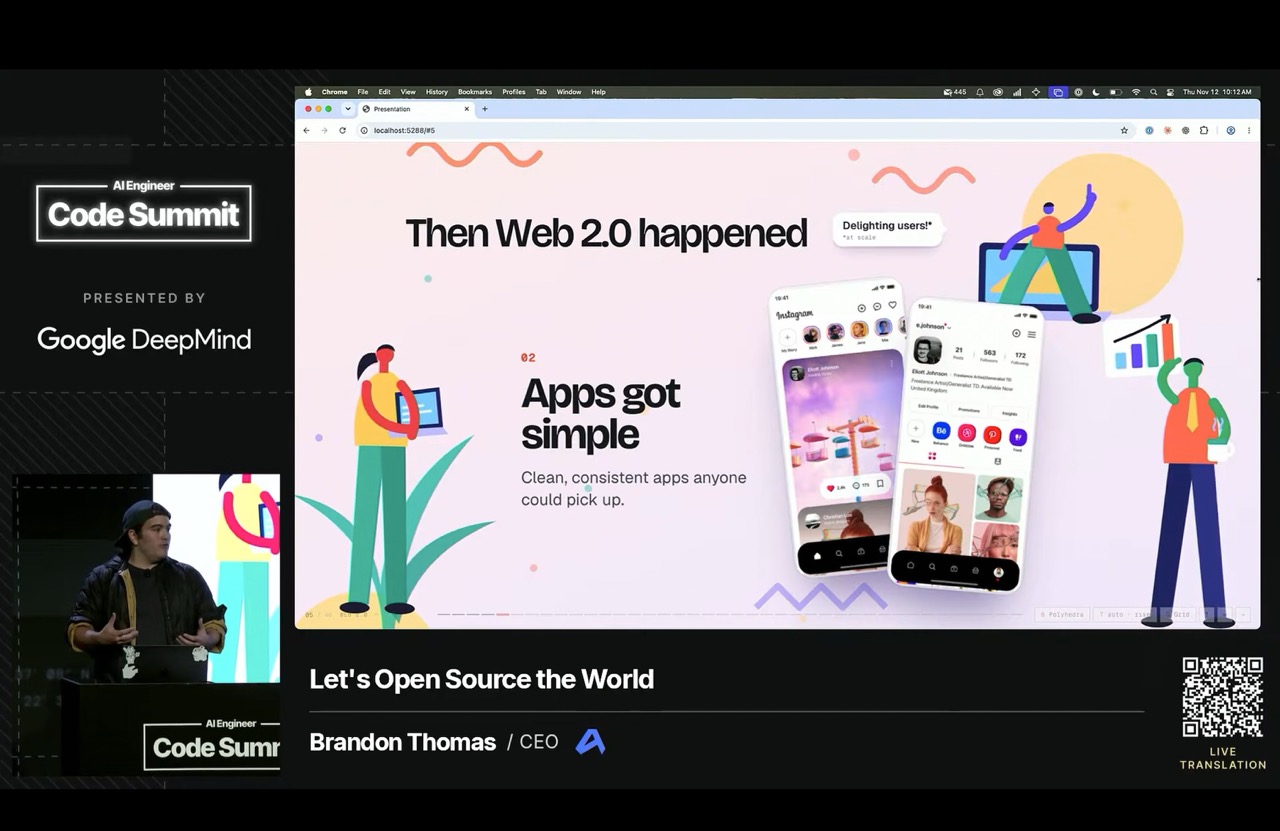
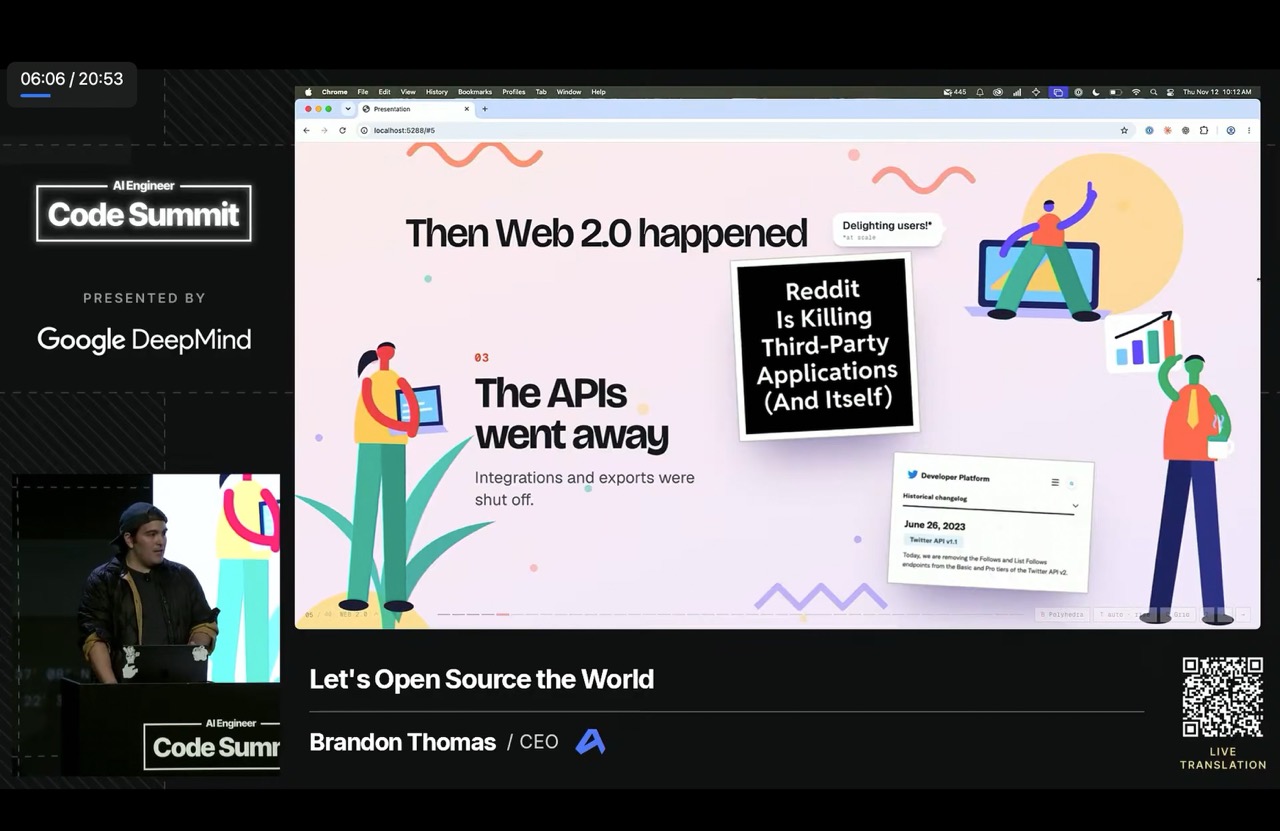
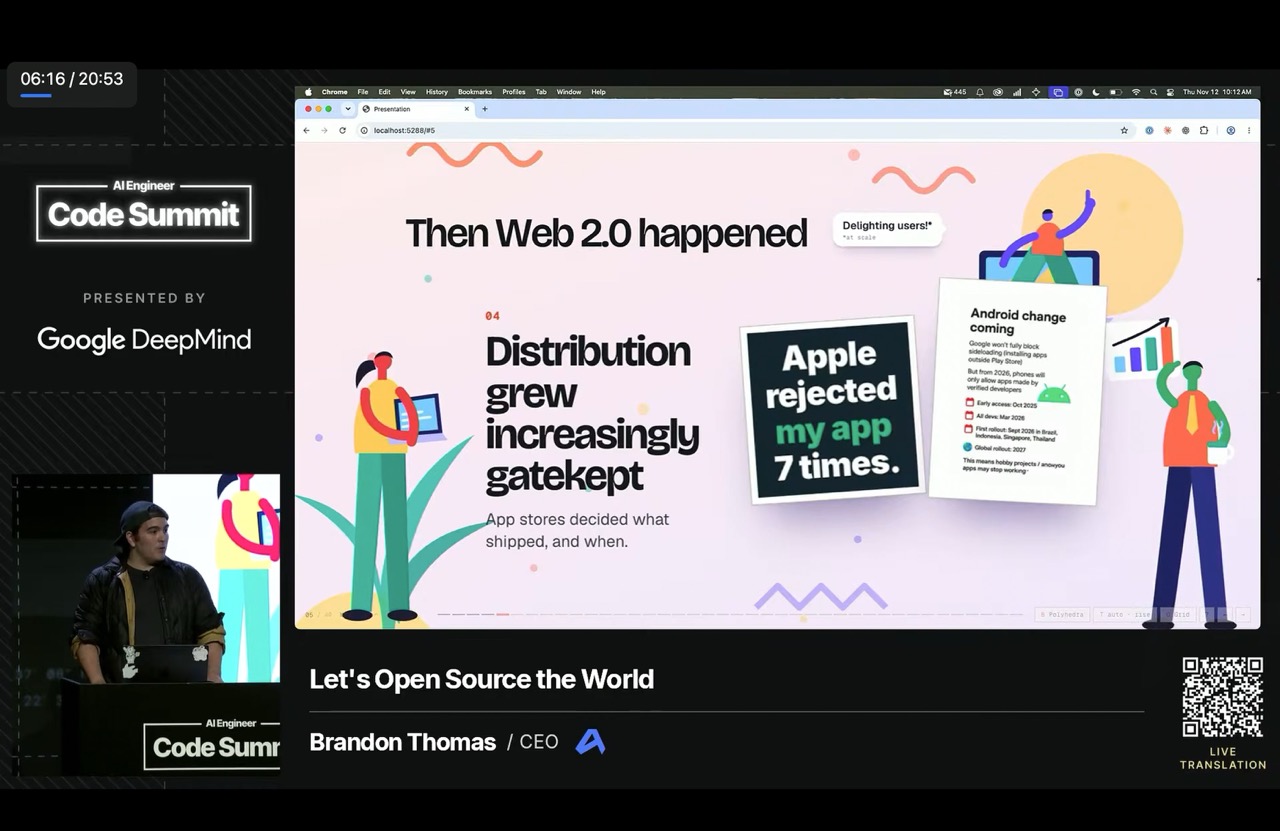
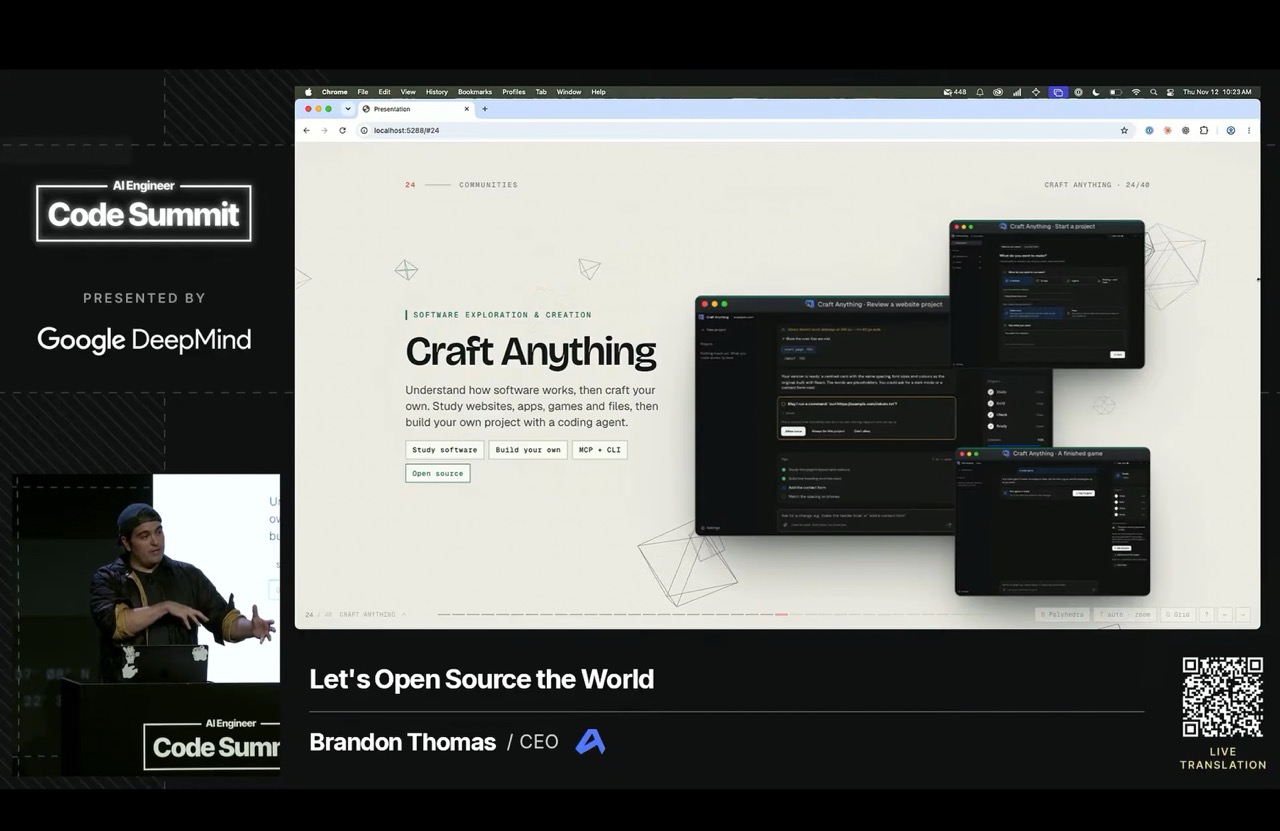
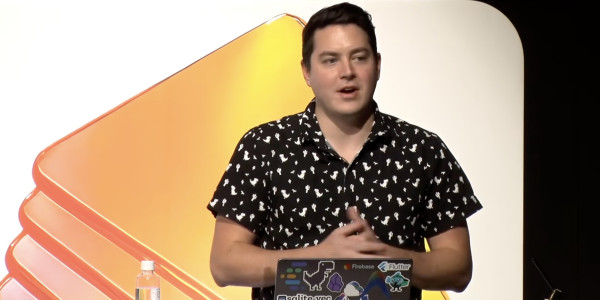
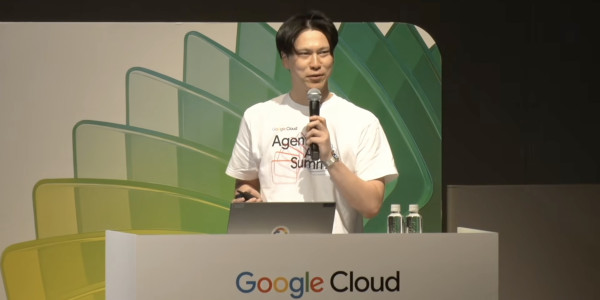
November 13 2026 10:21Brandon Thomas opened by taking the audience back to the 90s and early 2000s. Chat meant IRC servers you could run yourself. Sites offered data exports and APIs, so people built mashups out of Reddit, Flickr and Twitter. MySpace let you rewrite the HTML and CSS of your own page. His argument is that when broadband and smartphones brought everyone online, the technical edges were sanded off and protocols were replaced by platforms.
Thomas leaned on the term enshittification, which Cory Doctorow coined to describe
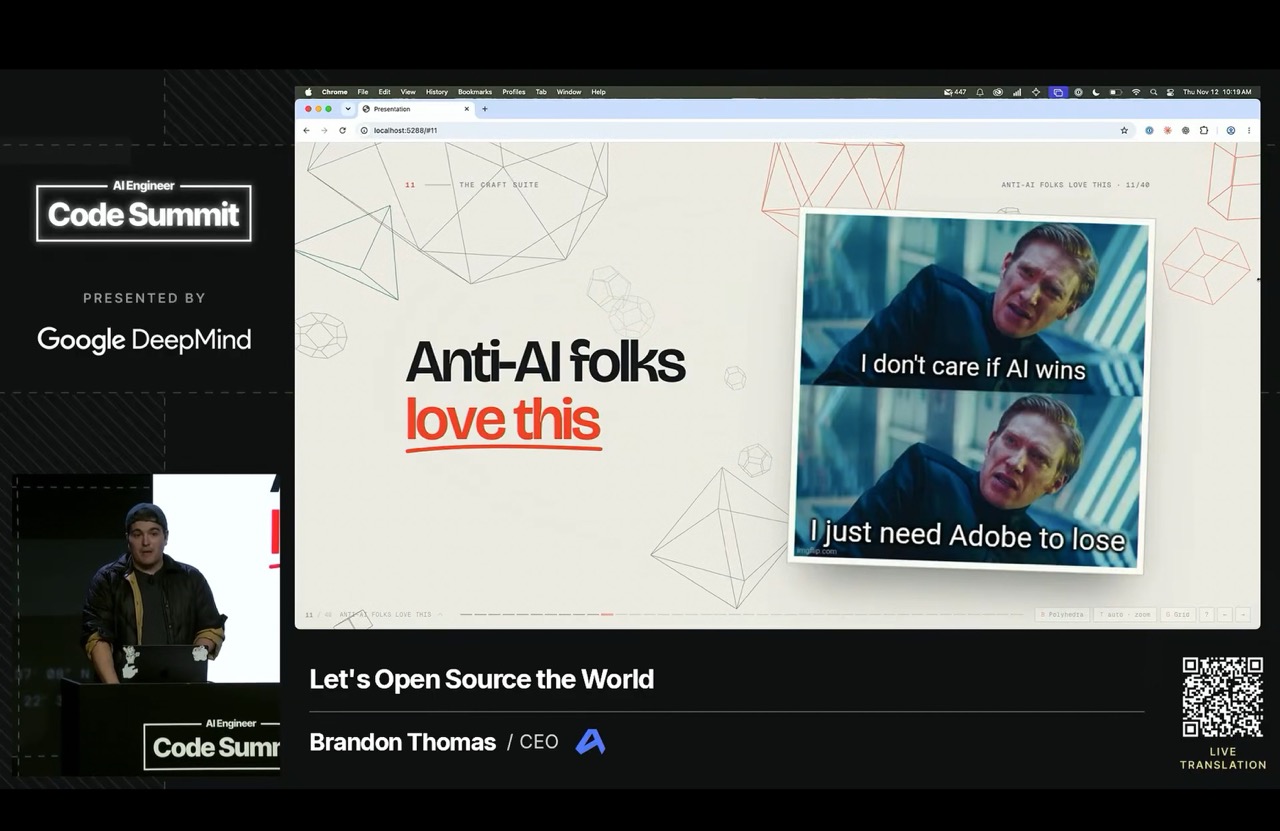
online platforms degrading as owners maximize profit. His own example is Adobe. In the talk he described a monthly plan that charges up to about $200 if you cancel early, which hurts when you only need the software for a weekend before a film festival.
That complaint has a paper trail. The US government
sued Adobe in 2024 over an early termination fee equal to half the remaining monthly payments on its most popular plan, and the company later
agreed to a settlement. An unredacted FTC complaint also
quoted an executive likening the fee to heroin, a sign of how much it mattered to the bottom line.
Who Brandon Thomas is
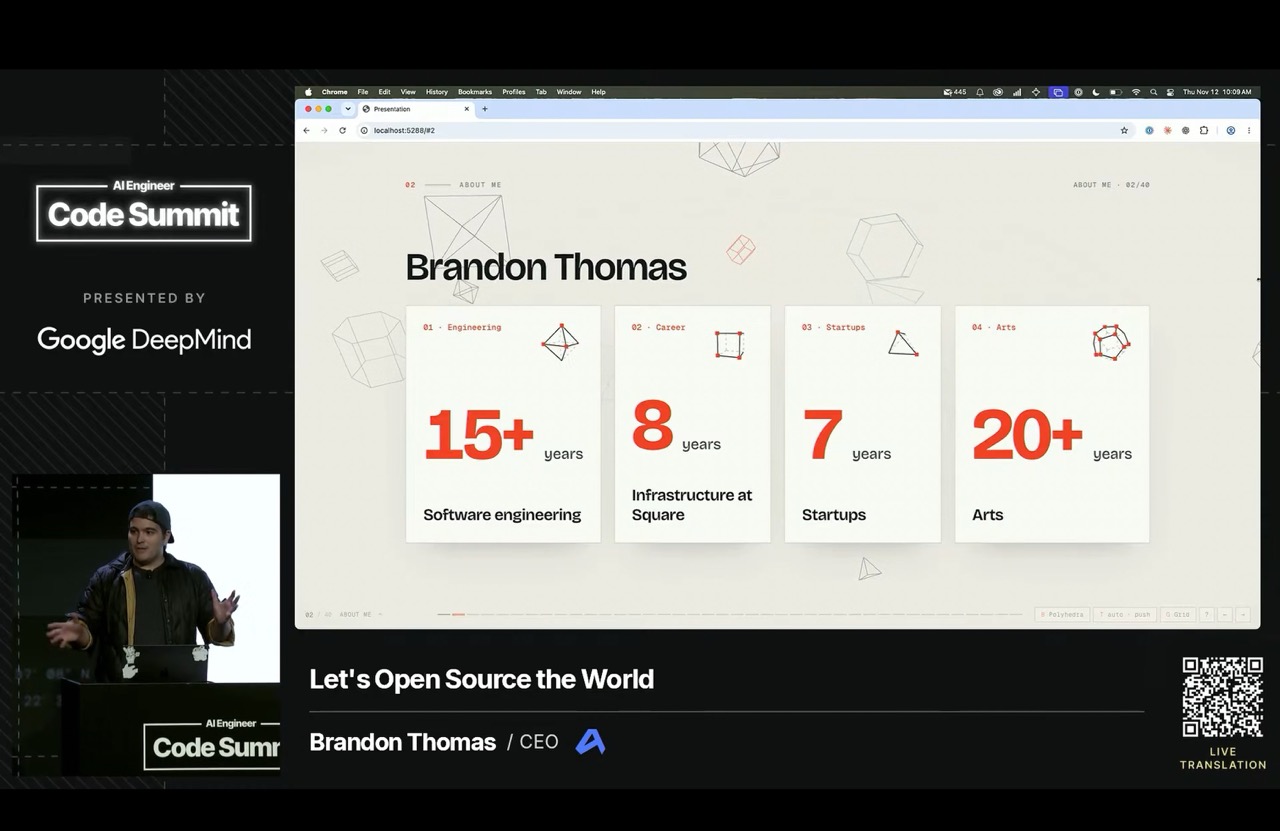
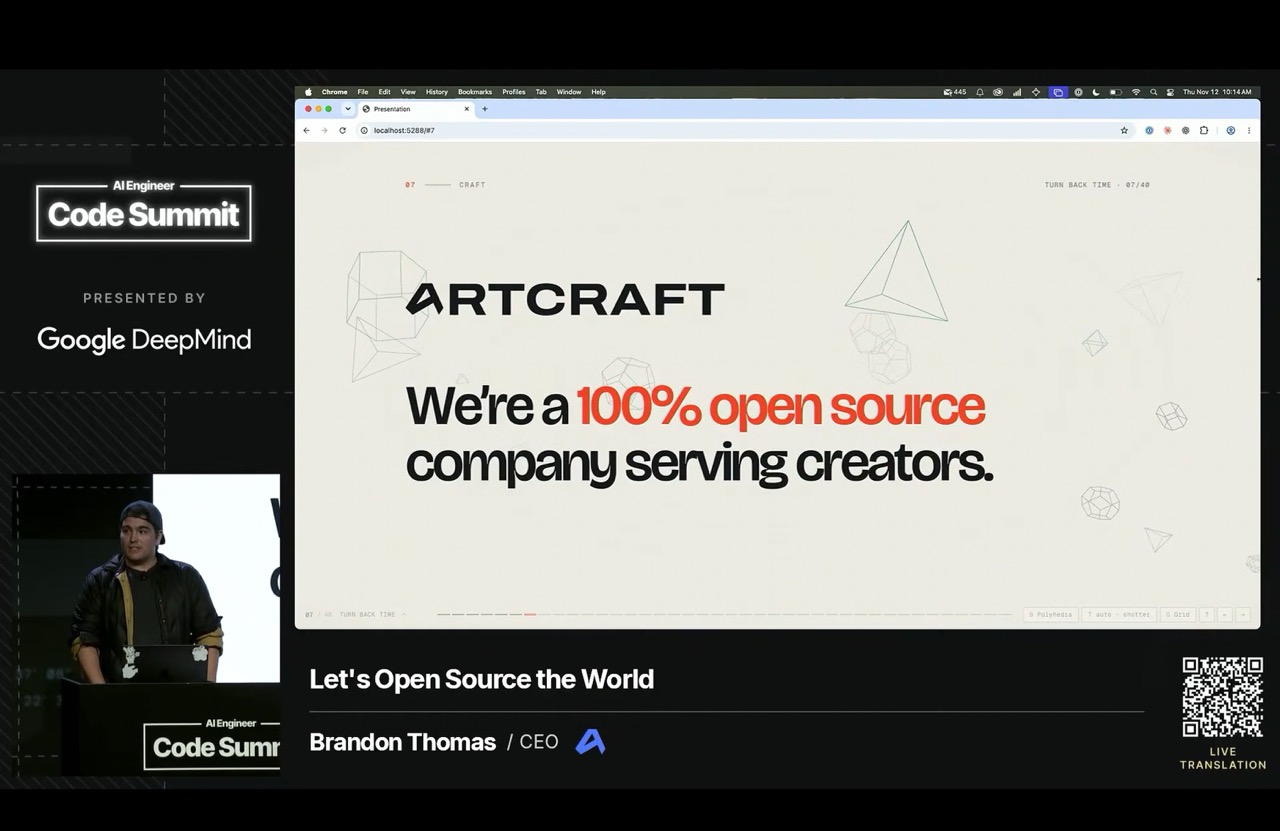
Thomas has about 15 years in software, including eight at Square working on payments and authentication infrastructure, and he says he now lives in Atlanta and has spent years building tools for filmmakers and artists. The conference listing for his talk presents ArtCraft as
aiming to become the Wikipedia of open source, with a plan to recreate every category of software in Rust. The same listing says he previously built FakeYou.com, a generative media site that reached 7 million monthly users.
That background matters because it explains the product choices. He started ArtCraft as a professional tool for filmmakers, a desktop app where generated files sit next to the editor. Then something surprised him and his advisors.
Artists who vibe code their own tools
Thomas said his advisors thought it was crazy to bring open source to artists, who rarely care what the term means. What he saw instead was artists using AI agents to build their own workflows on top of the software he gave them. One example he gave was a micro drama studio handling 30 to 50 thousand dollars of order fulfillment each month. No product fit its needs, but people in house knew Claude Code and could generate an interface around the APIs.
That led to the question behind the whole project. If the code is open and an agent can reshape it, why should an editor keep every feature a given artist never touches? Thomas pictures a version of Premiere or Photoshop trimmed to one person's job, and then repeated five or ten times across a team.
The 24 hour prototype
Thomas says the first Photoshop approximation took about a day. His method was to write very large prompts and lean on what the model already knows from years of tutorials and documentation about how Photoshop works. As he described it, the prompts covered a few things.
- The basic shape of a photo editing application.
- A clean split between the interface and the core logic.
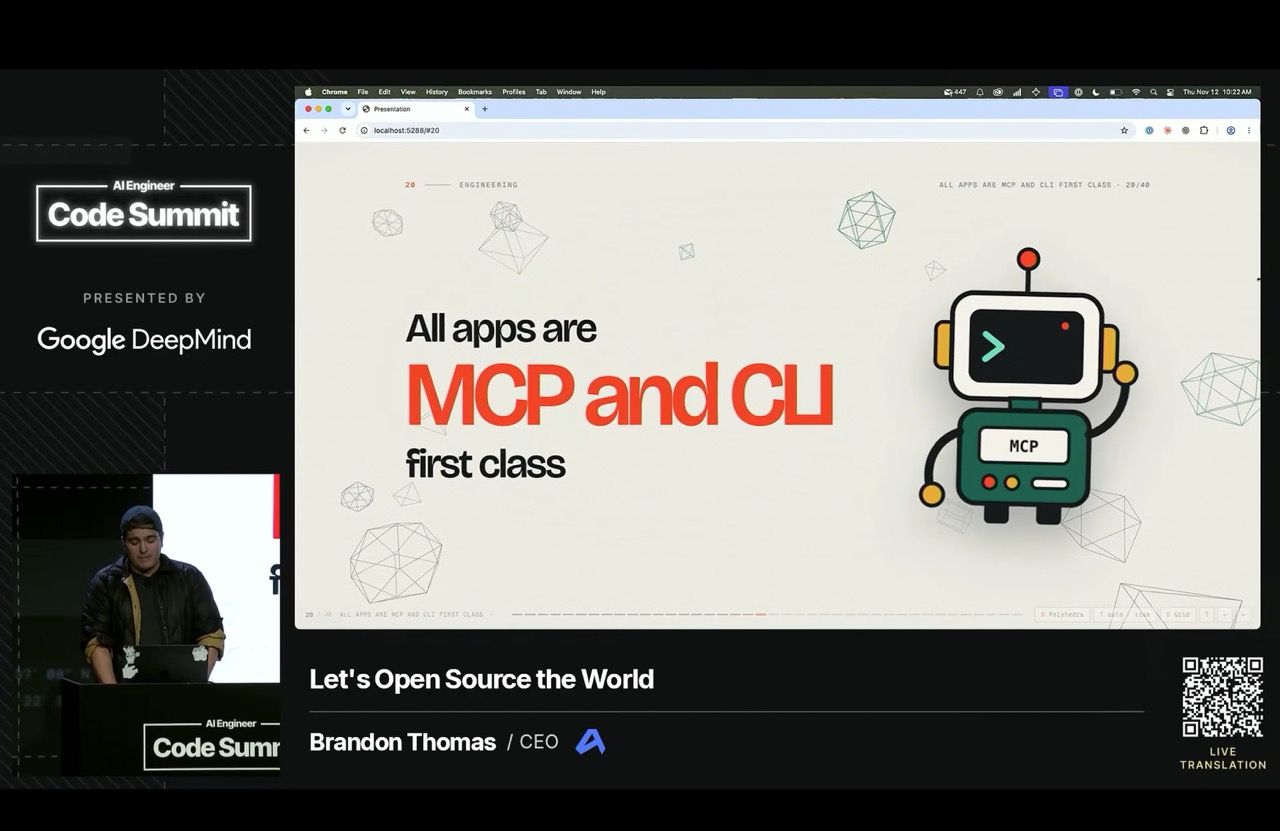
- MCP and command line access for every feature, so agents can drive the apps.
- A written plan for each tool, plus data structures and file format importers.
He says the result was familiar, functional and started about ten times faster than the original. He is careful not to claim full coverage. By his count the Photoshop work went from 50 percent parity to just past 60, and his aim for now is to match Adobe's look and feel so that muscle memory carries over. New, more agent friendly interfaces come later.
What shipped, and how it was received
In early October,
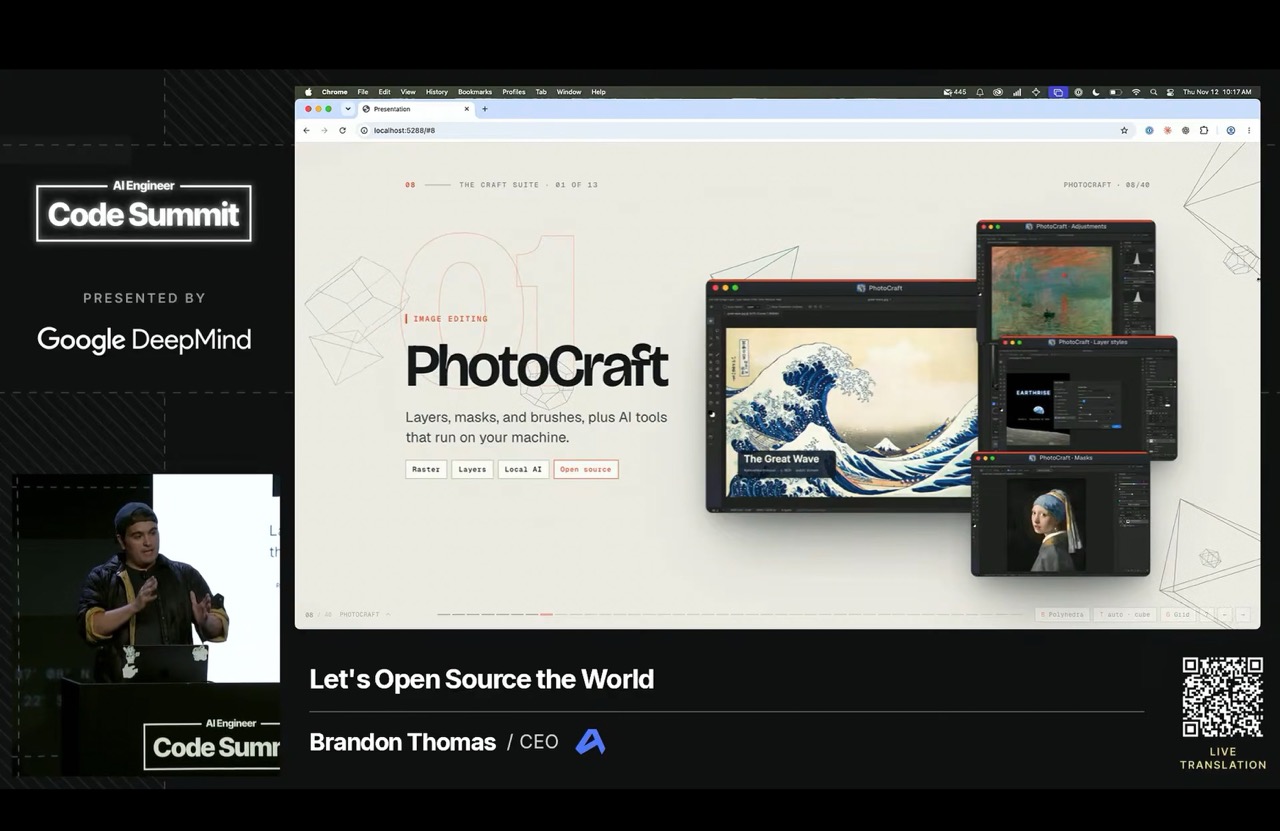
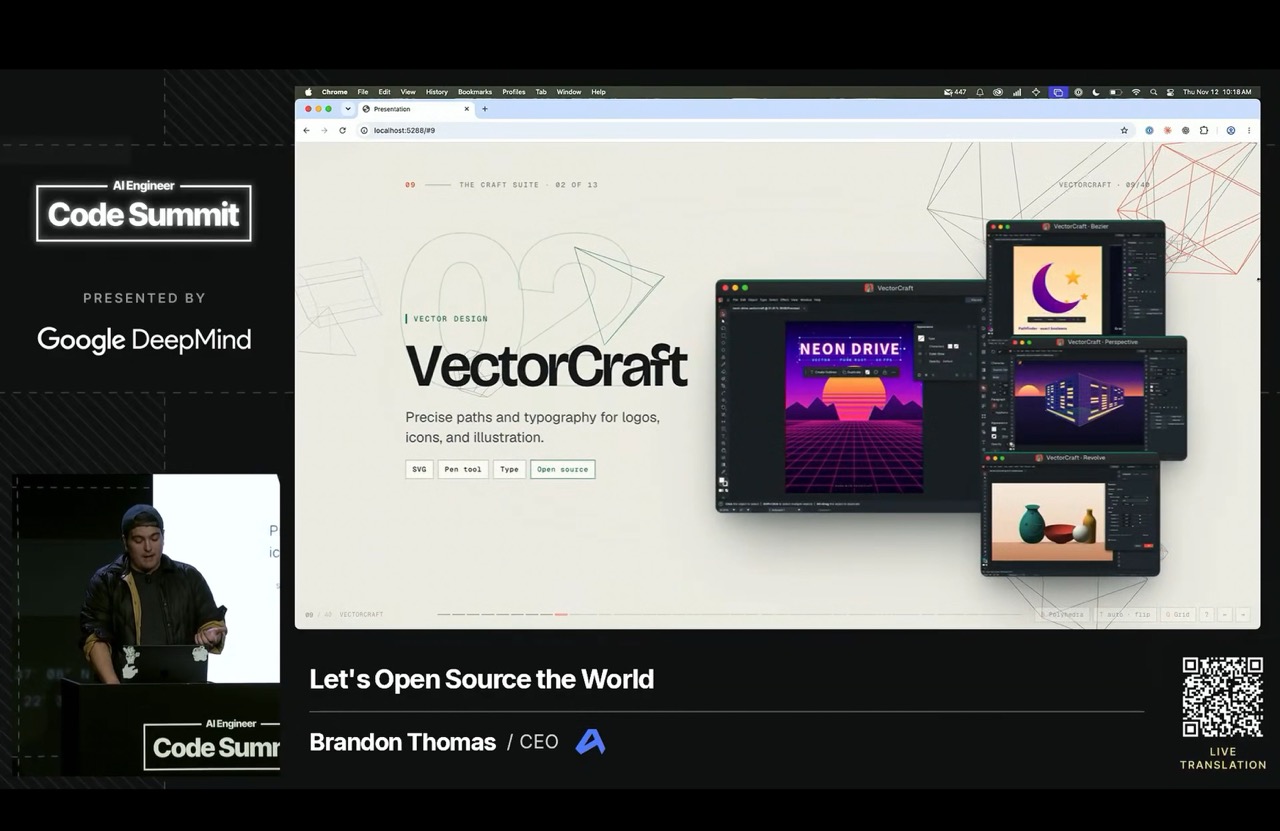
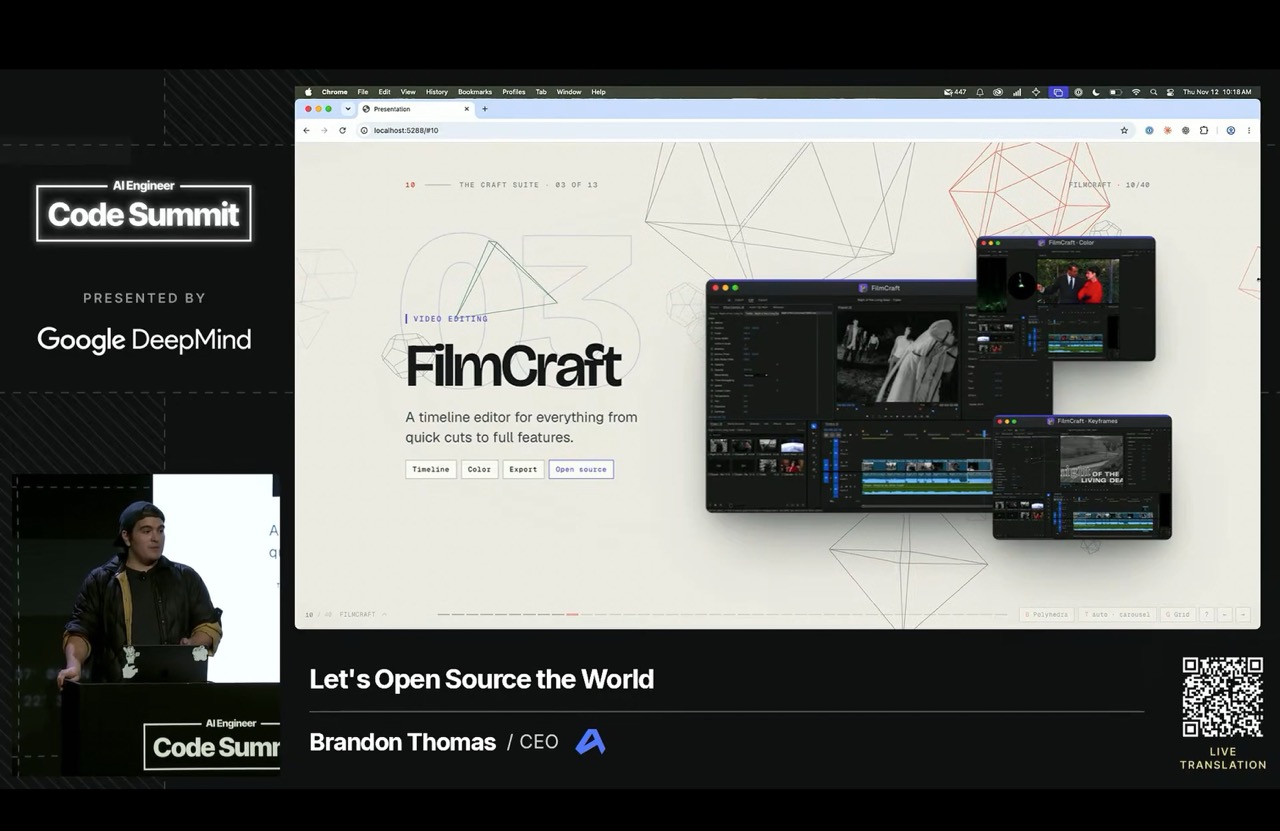
PetaPixel reported that Thomas had released free alternatives to seven Adobe products: Photoshop, Illustrator, Premiere, Lightroom, Acrobat, After Effects and InDesign. The apps carry names like PhotoCraft for Photoshop, FilmCraft for Premiere and LightCraft for Lightroom, and they
run on Linux, macOS and Windows.
Thomas describes the projects as
clean room reimplementations of Adobe's software, meaning they aim to reproduce functionality without using Adobe's code or assets. The legal picture is not fully settled by that label. TweakTown
noted the apps are early alpha builds and that Content Aware Fill is still missing, and it added that Adobe holds thousands of patents on specific features.
Attention arrived fast. One summary site said
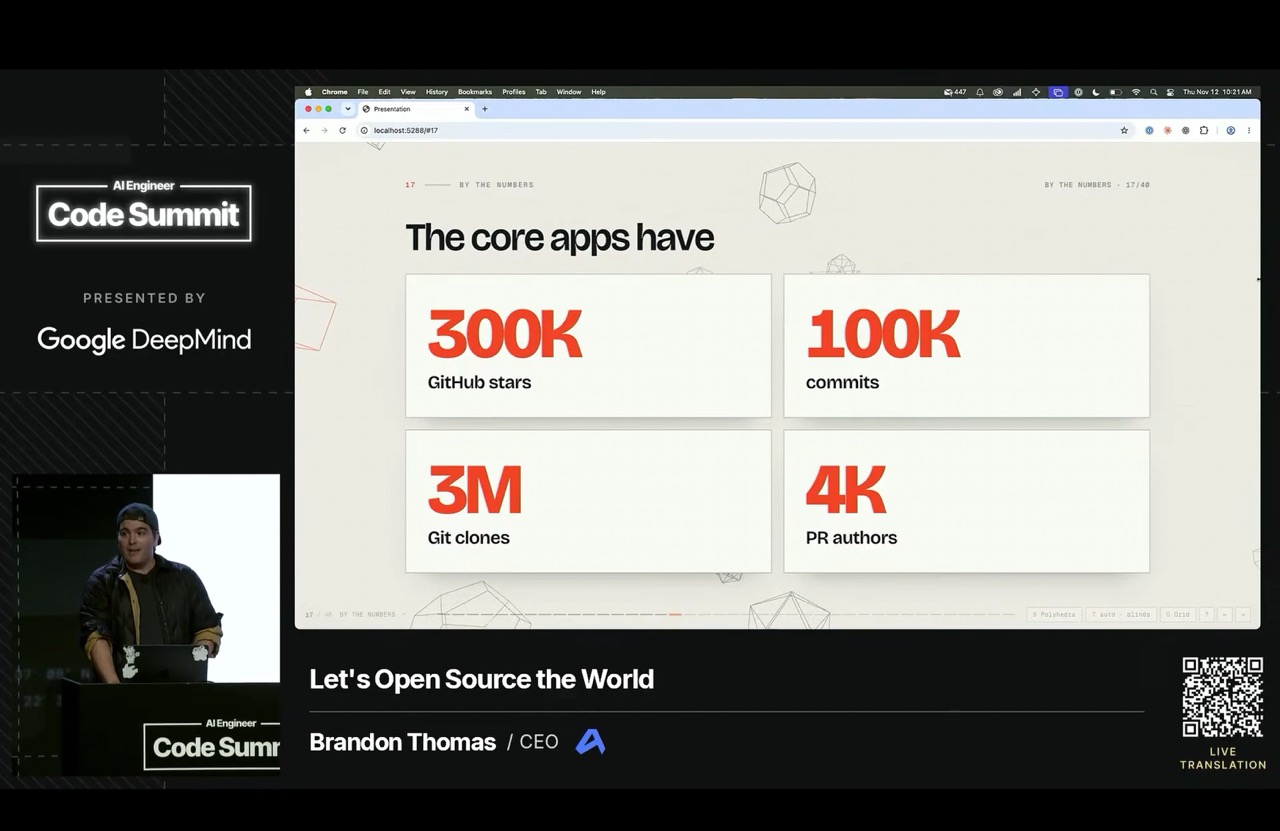
PhotoCraft alone had 44,000 GitHub stars eleven days after launch. In his talk Thomas went further and cited figures as below:
- Over 300,000 GitHub stars across the project.
- About 4,000 contributors.
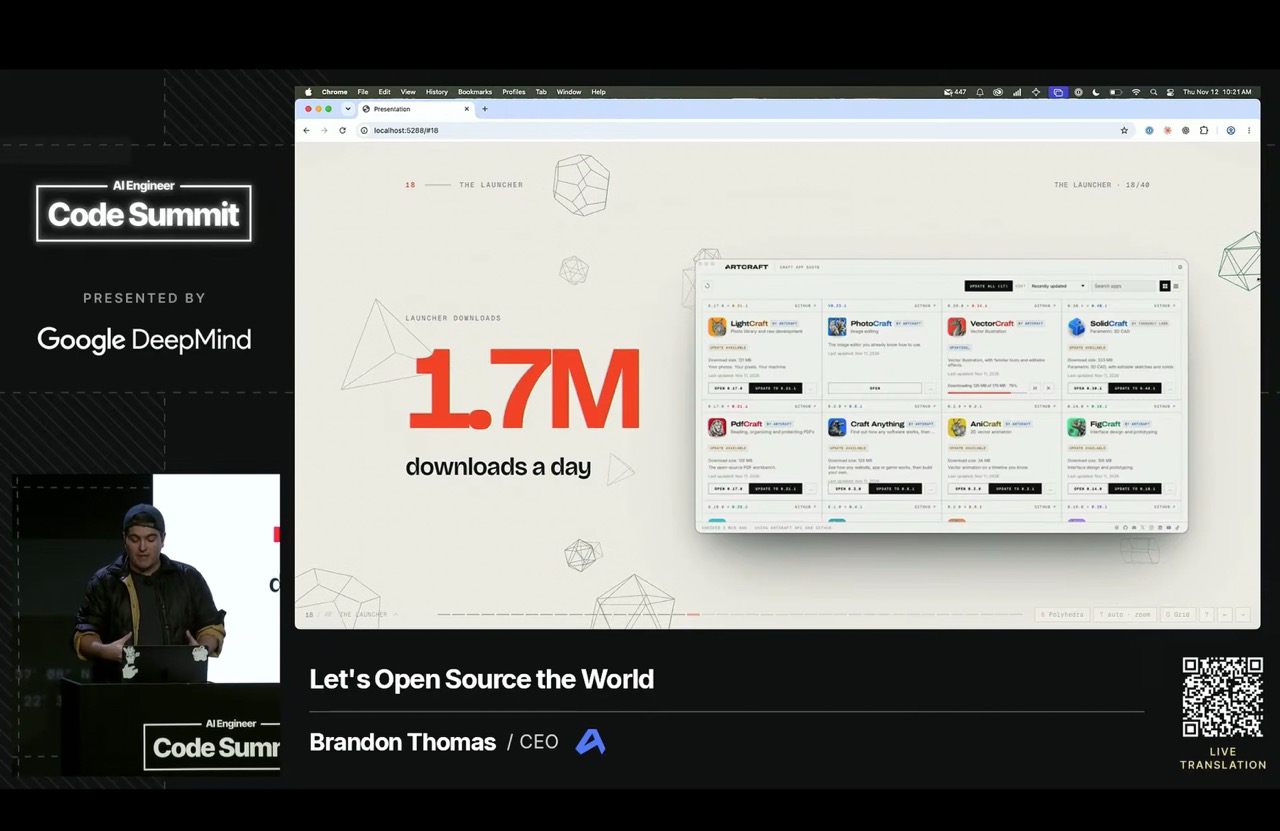
- Around 1.7 million downloads a day.
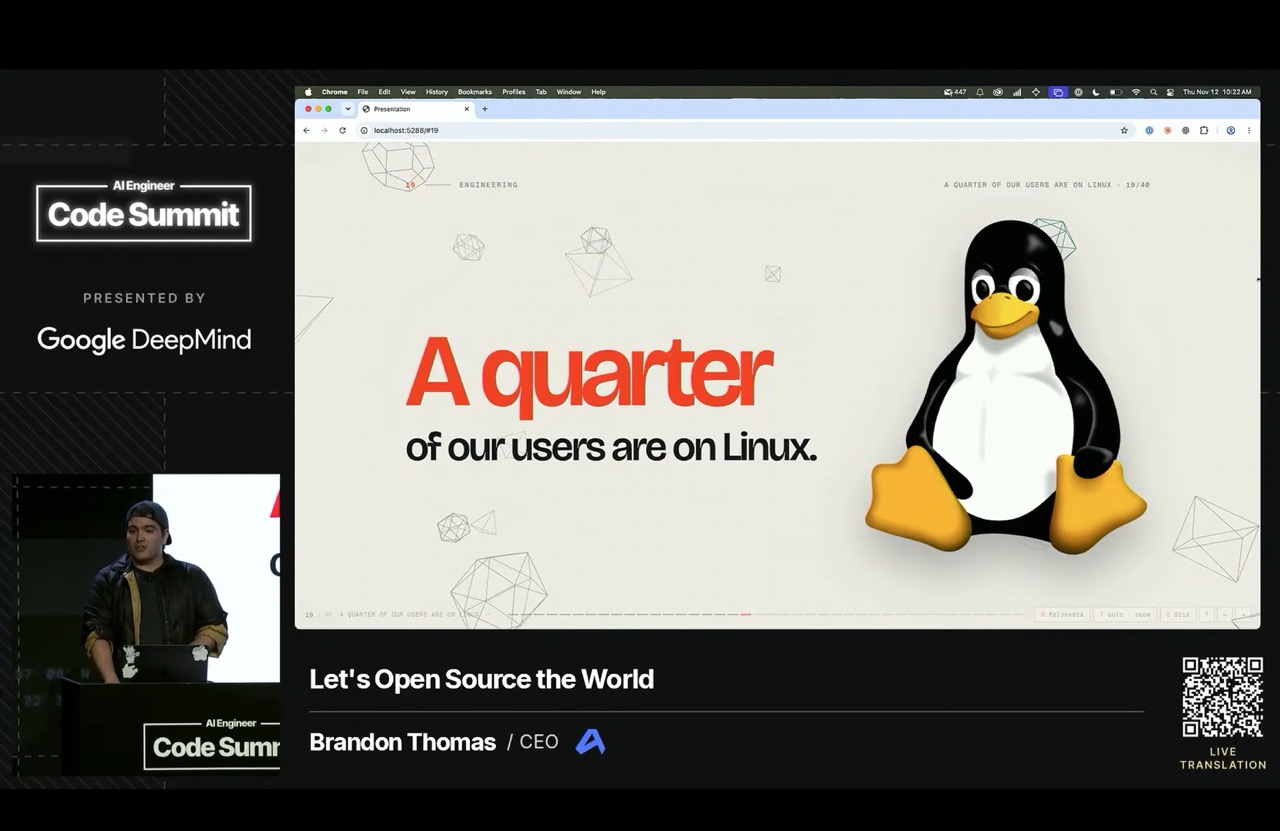
- A quarter of users on Linux.
- A Discord that grew from 3,000 members to more than several rival AI art tools.
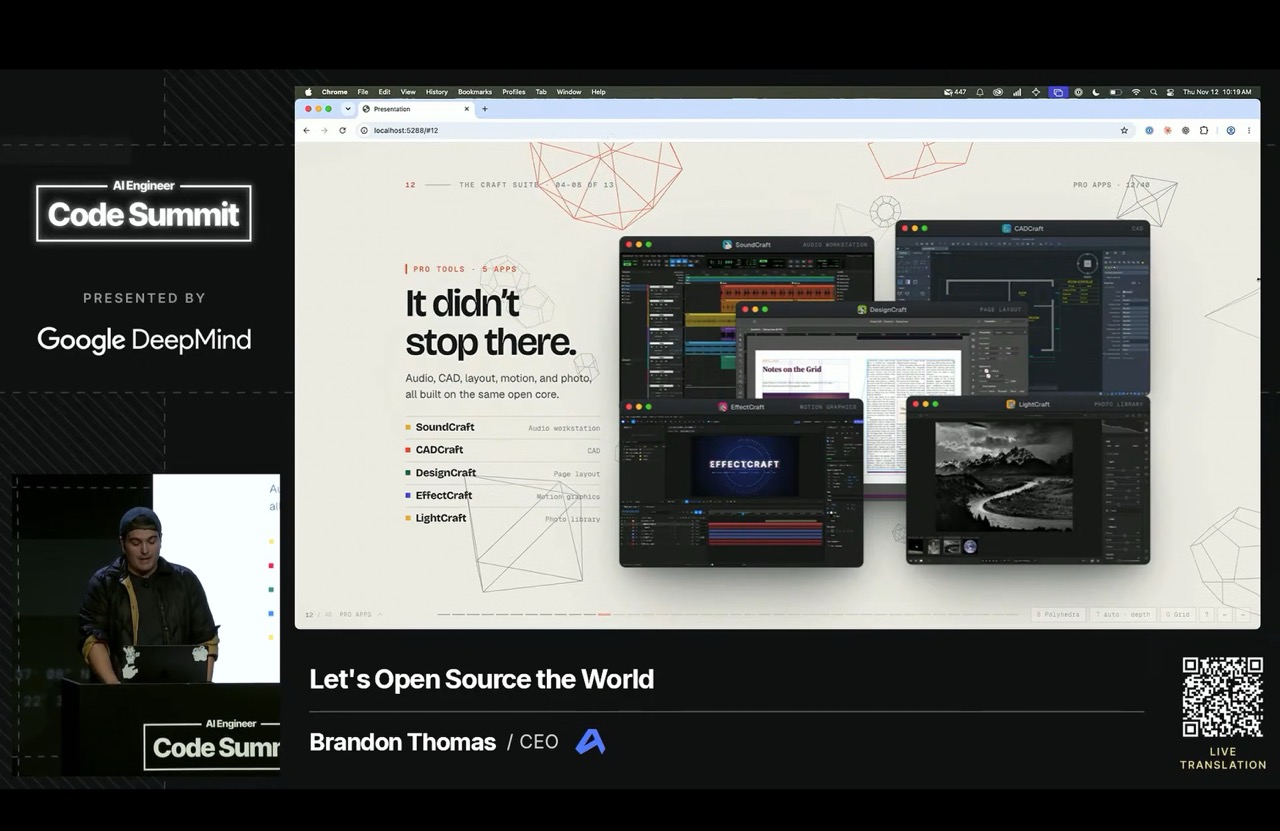
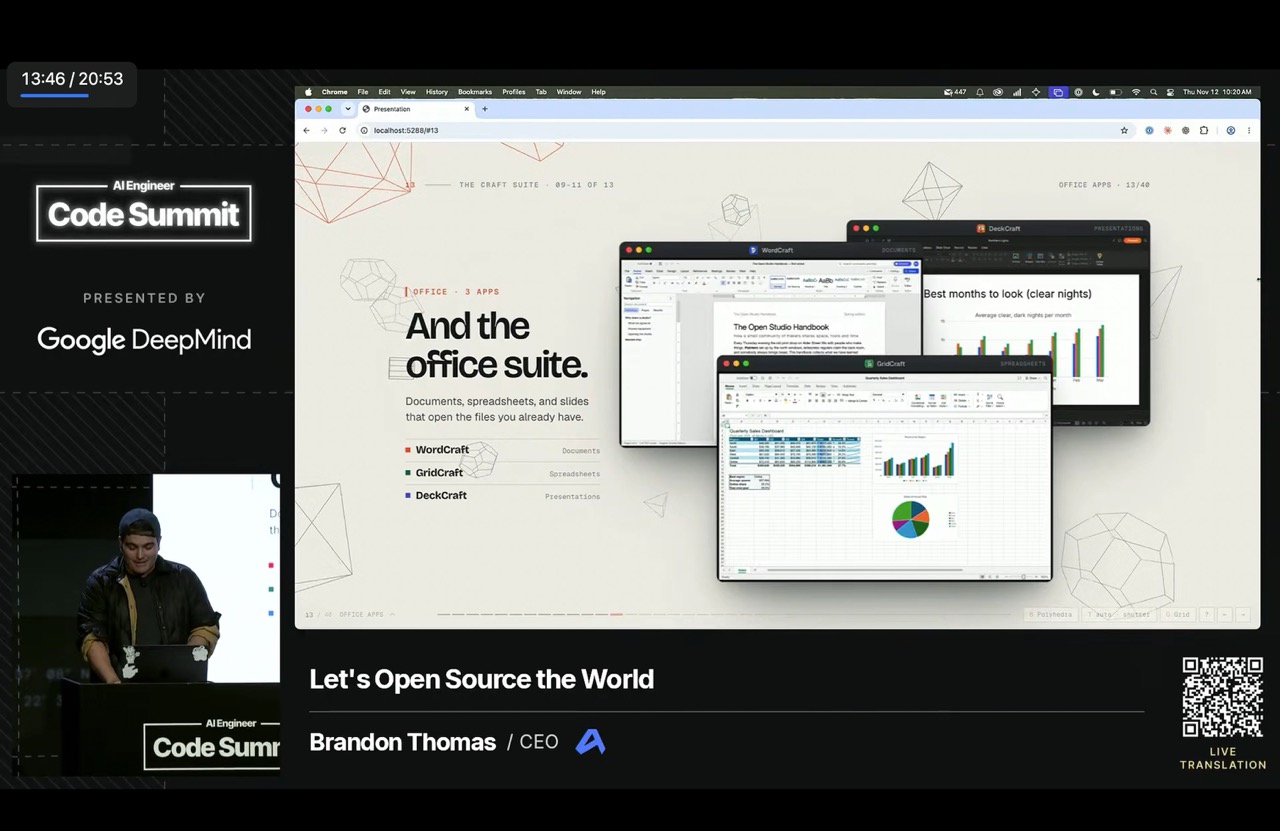
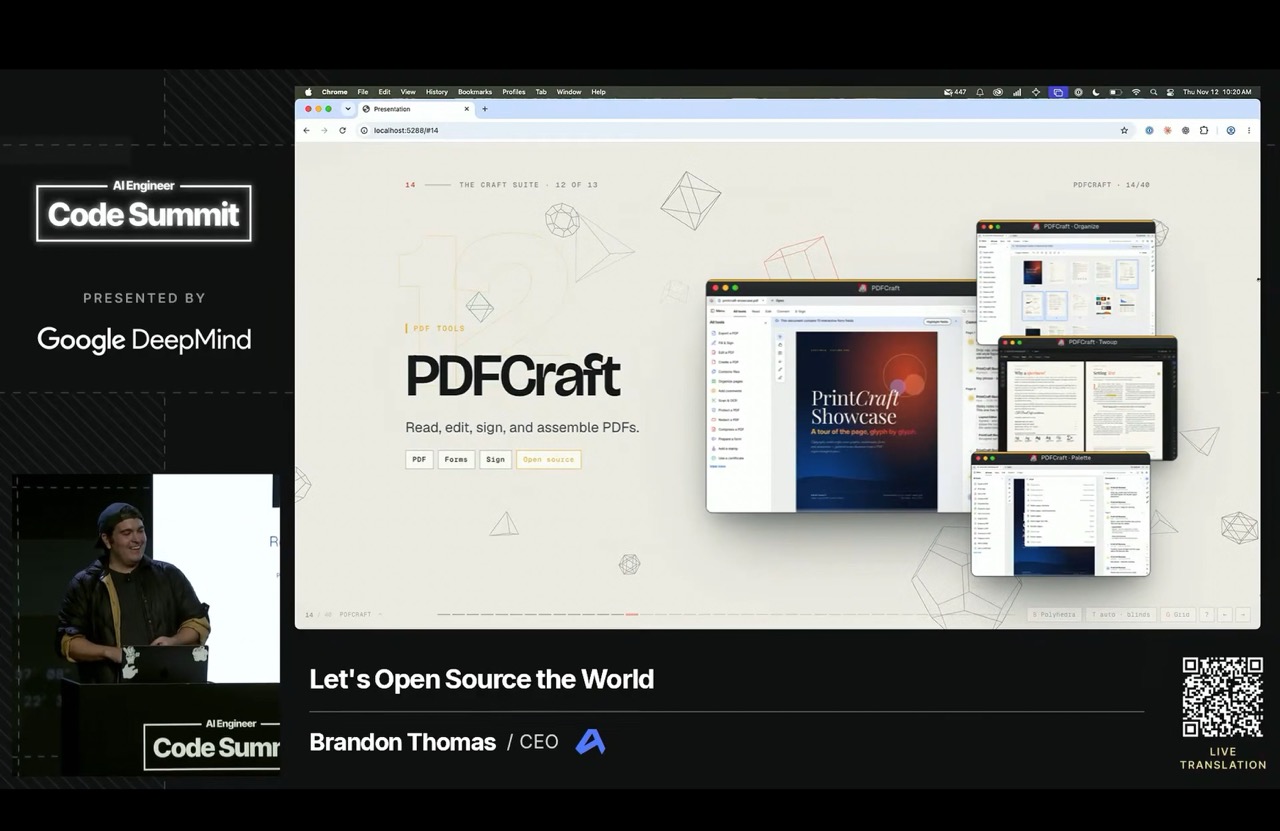
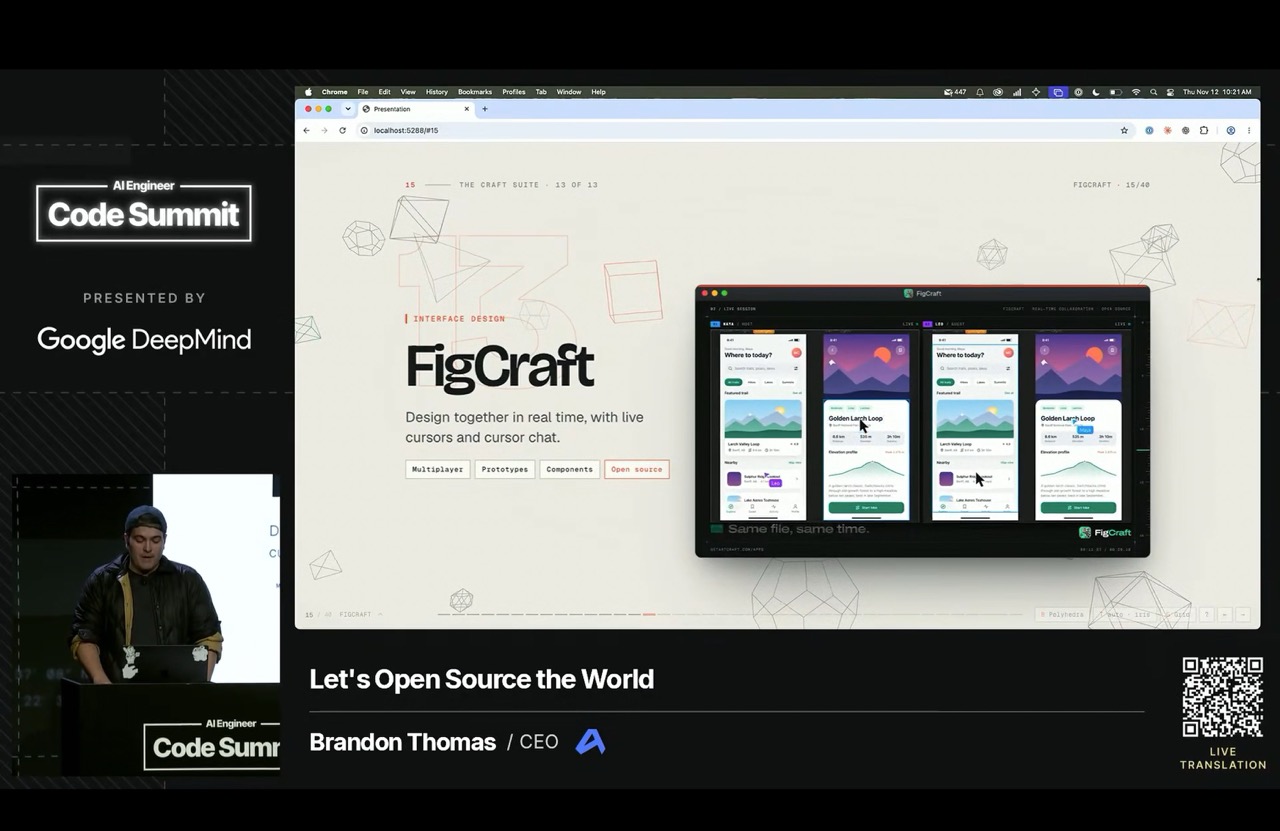
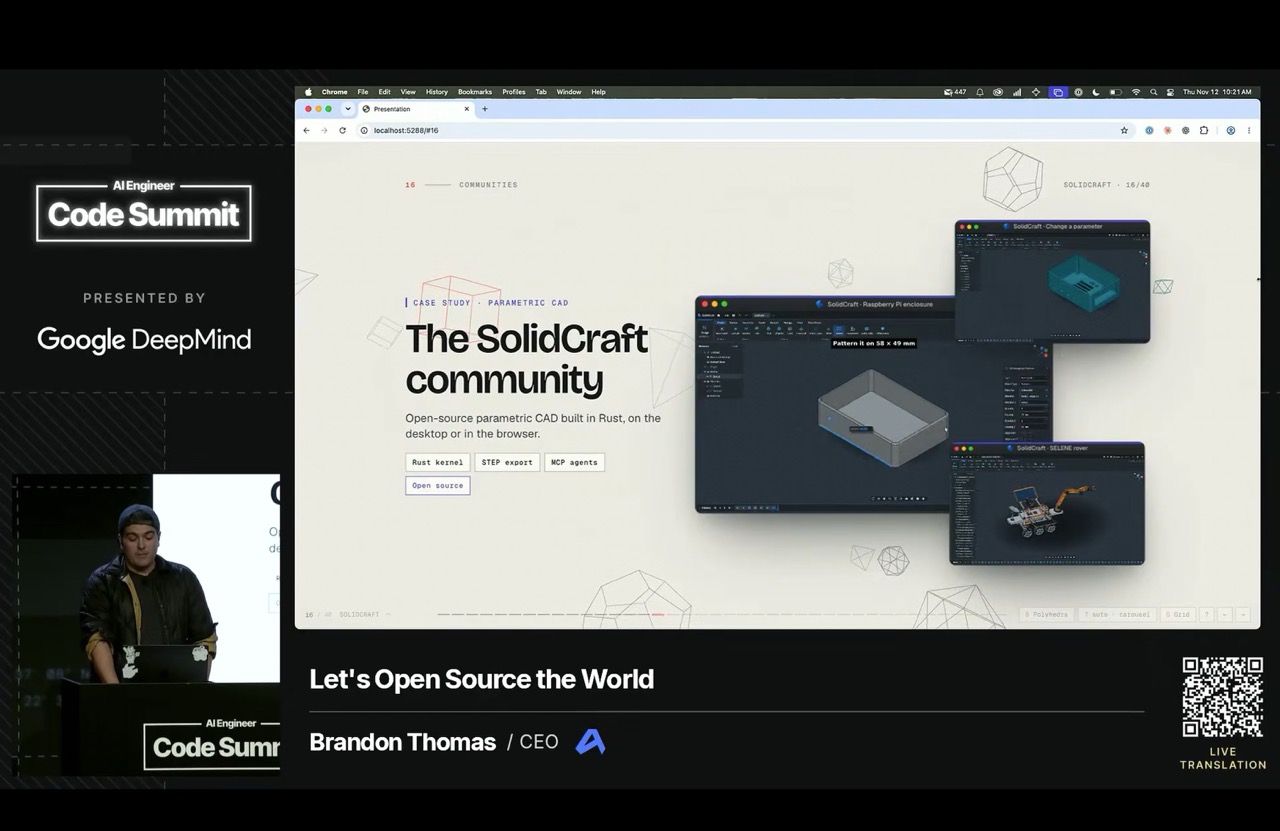
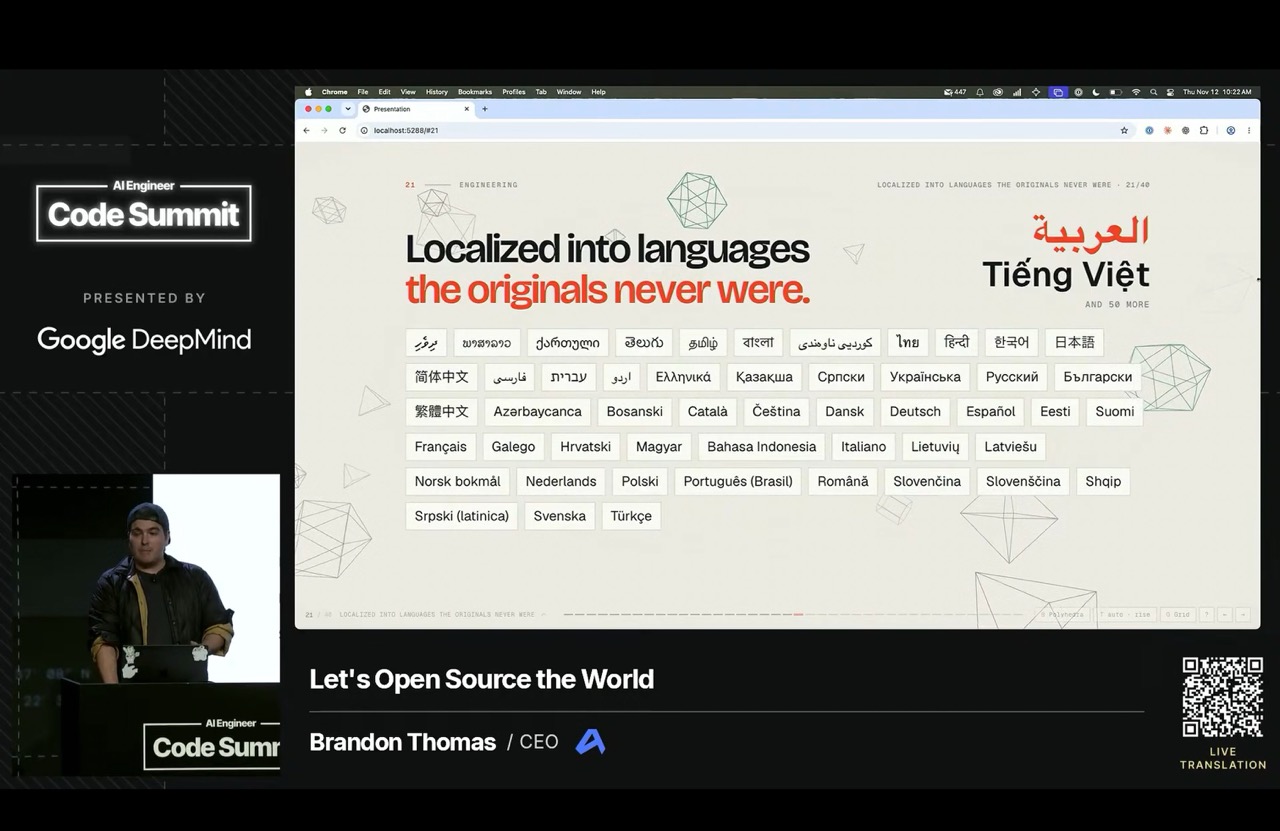
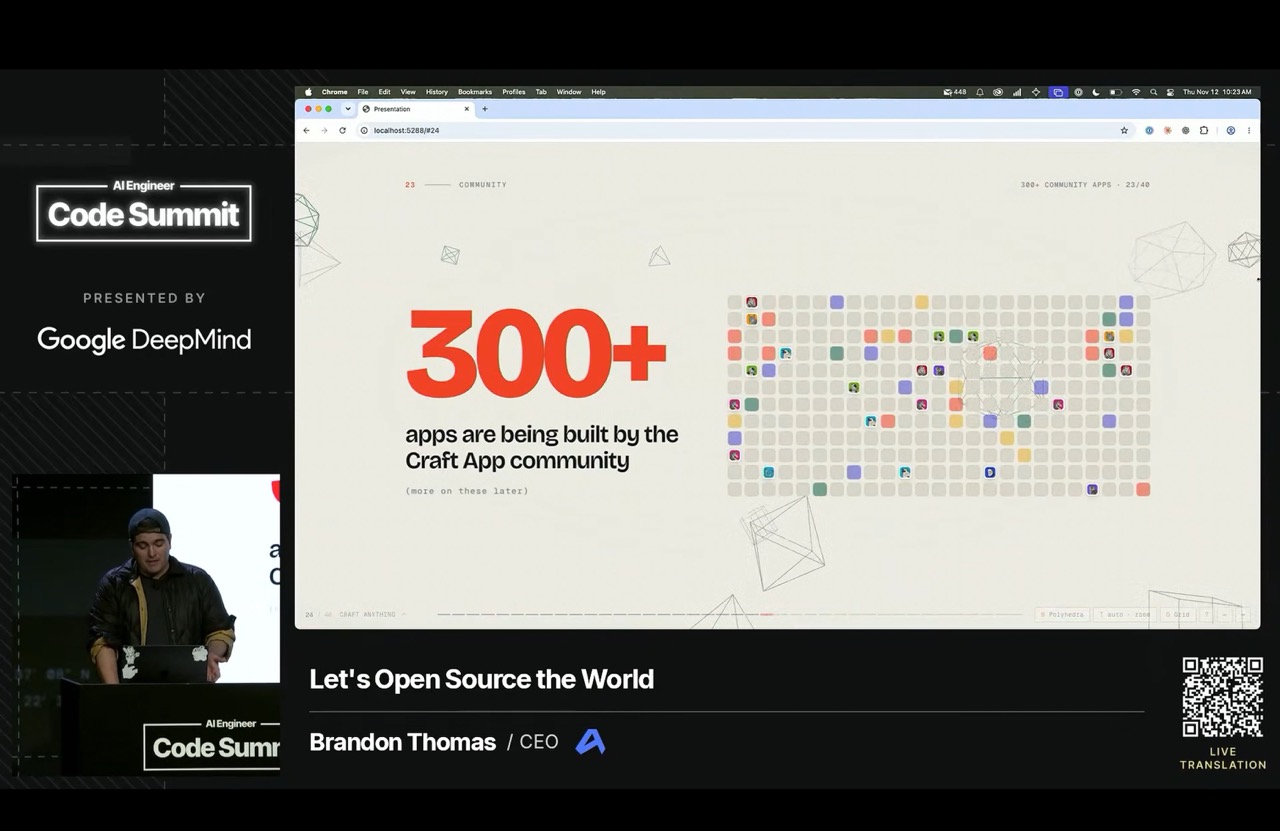
He also said the community has built roughly 300 apps, including CAD, Flash style animation, audio workstations, Office style tools, a Figma style editor with a collaboration server, and PDFcraft, which he called the best of the bunch. Some of the appeal is about reach rather than price. He pointed to Arabic localization in an InDesign style app and an Animate style tool picked up by animation studios after Adobe wound that product down.
The SaaSpocalypse backdrop
Thomas's timing is not an accident. In early February,
nearly $1 trillion was wiped from software and services stocks in a selloff that got nicknamed the SaaSpocalypse. Many accounts blame the jolt on
Anthropic's launches of Claude Cowork and Claude Code, which showed that agents could build software and automate whole workflows. It is worth noting that Thomas built ArtCraft with an Anthropic model, so the story is not entirely separate from that sell off.
The core idea is simple. If an agent can approximate a mature application in days, then years of accumulated features and user lock in stop looking like a guaranteed advantage. Thomas wants to push that logic as far as it goes, by turning platforms into protocols and rebuilding software category by category in the open.
Why Rust, and what it costs
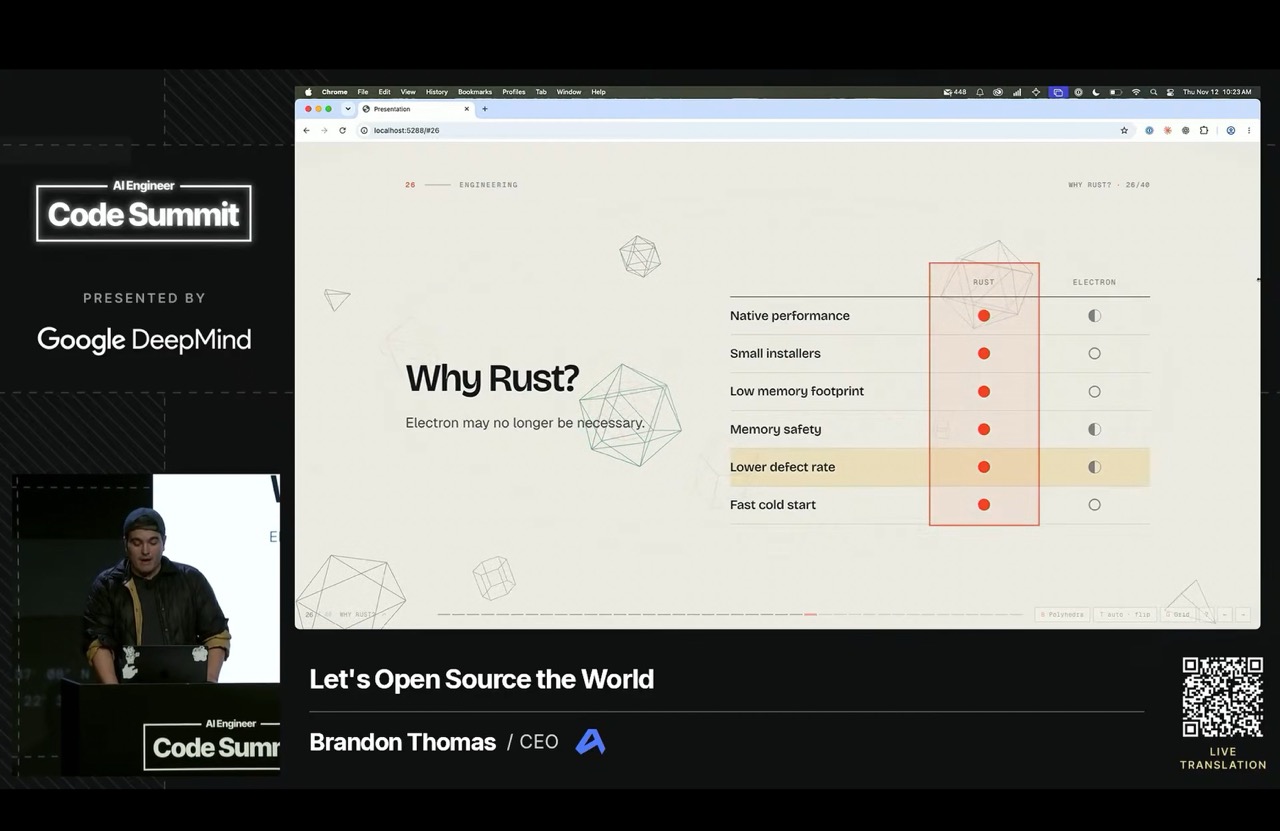
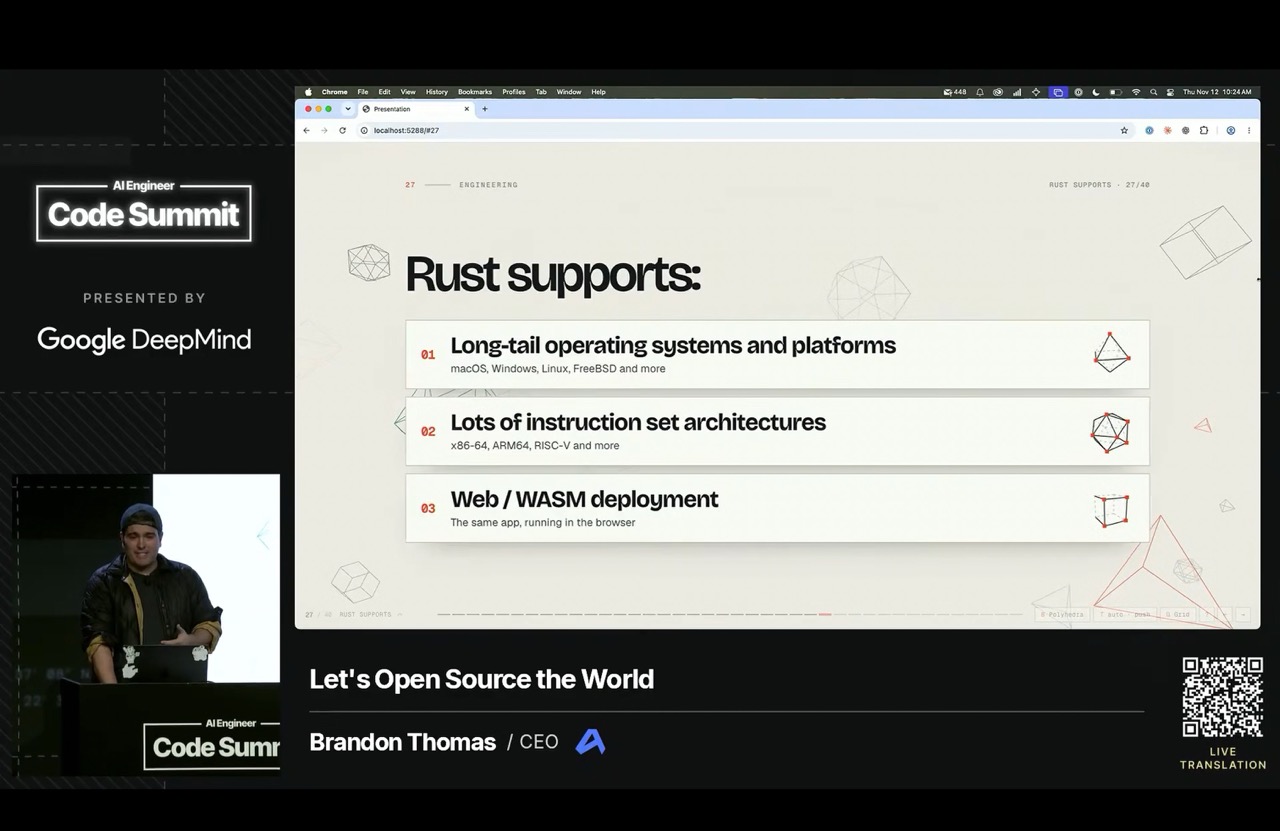
Thomas says Rust was essential. It compiles to native code, runs on many platforms including tablets and NetBSD, and reaches the web through WebAssembly. He argues you do not need to know Rust to use it today, because agents write it well, and his team includes people who had never touched the language.
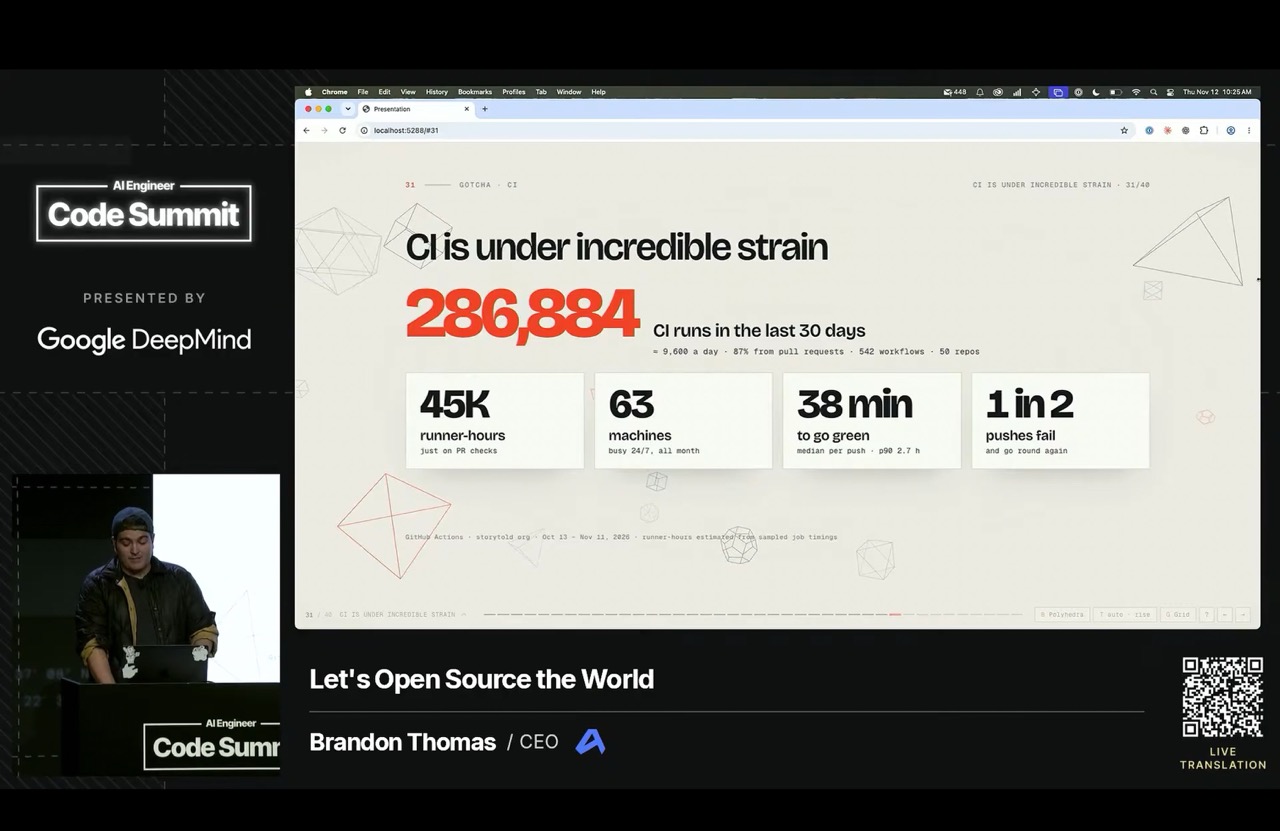
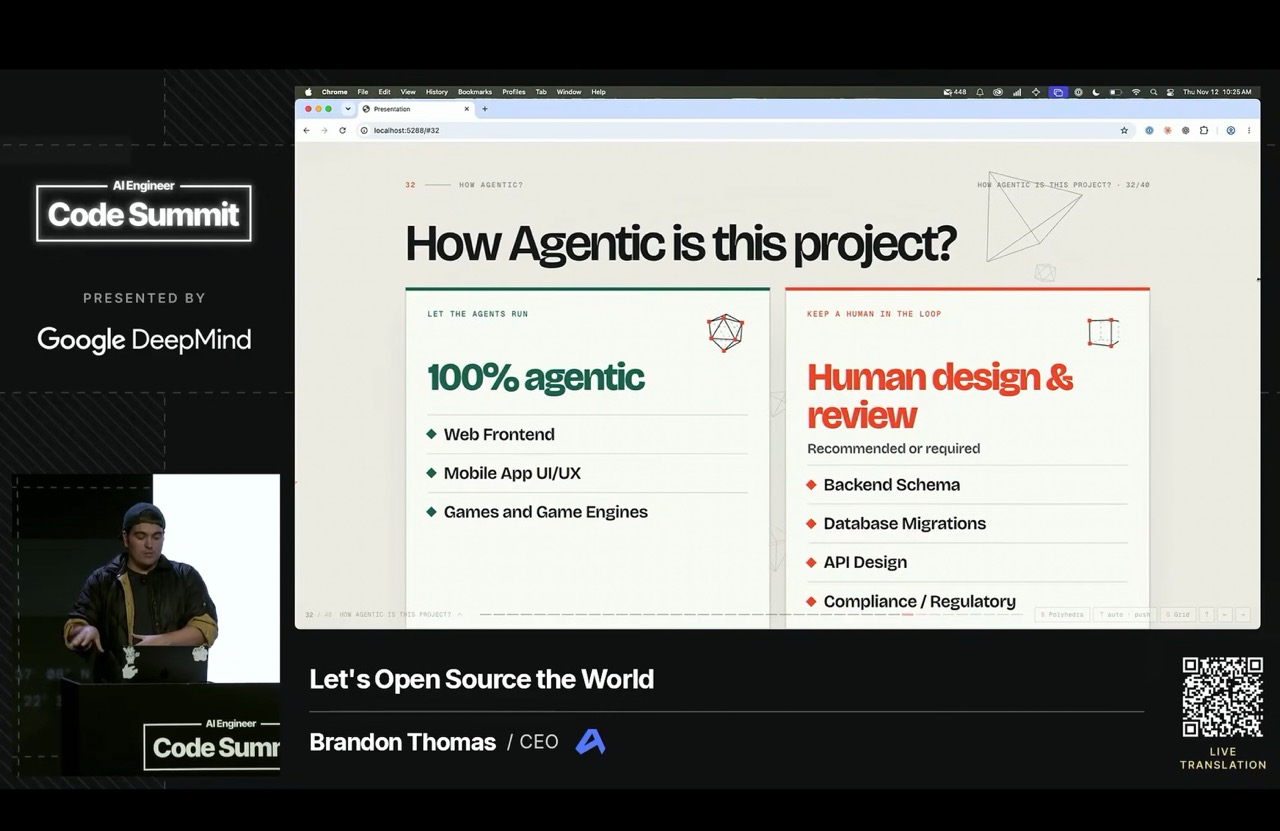
The cost is build time. Compile times were the big complaint, and he said GitHub's CI started falling over under the load, so the team began running its own and moving to colocated servers. He also drew a line on review. Backend work, schema migrations and API design should stay with humans, but for desktop apps and games he thinks agents can run with much more freedom. As proof of how far that can go, he said someone in the community has 40 machines rebuilding Unreal Engine in Rust.
The software factory
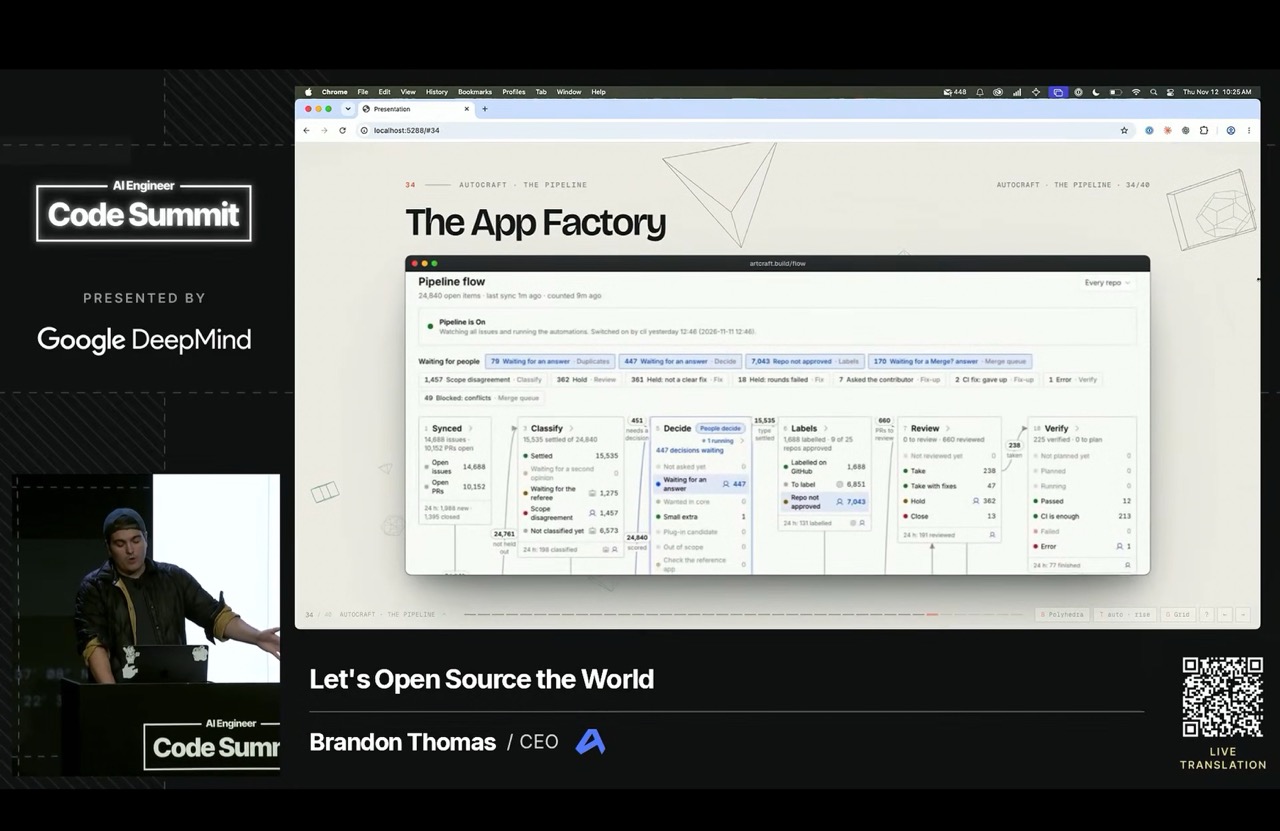
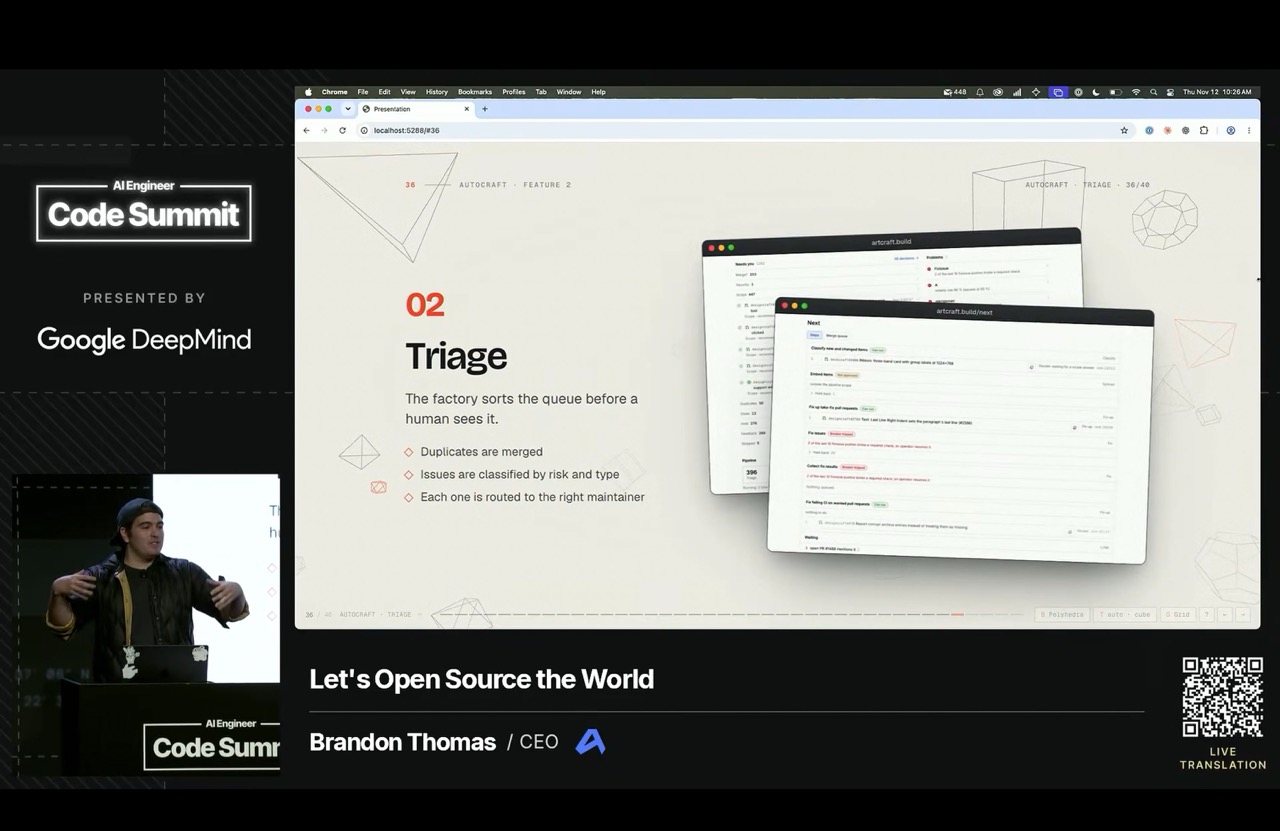
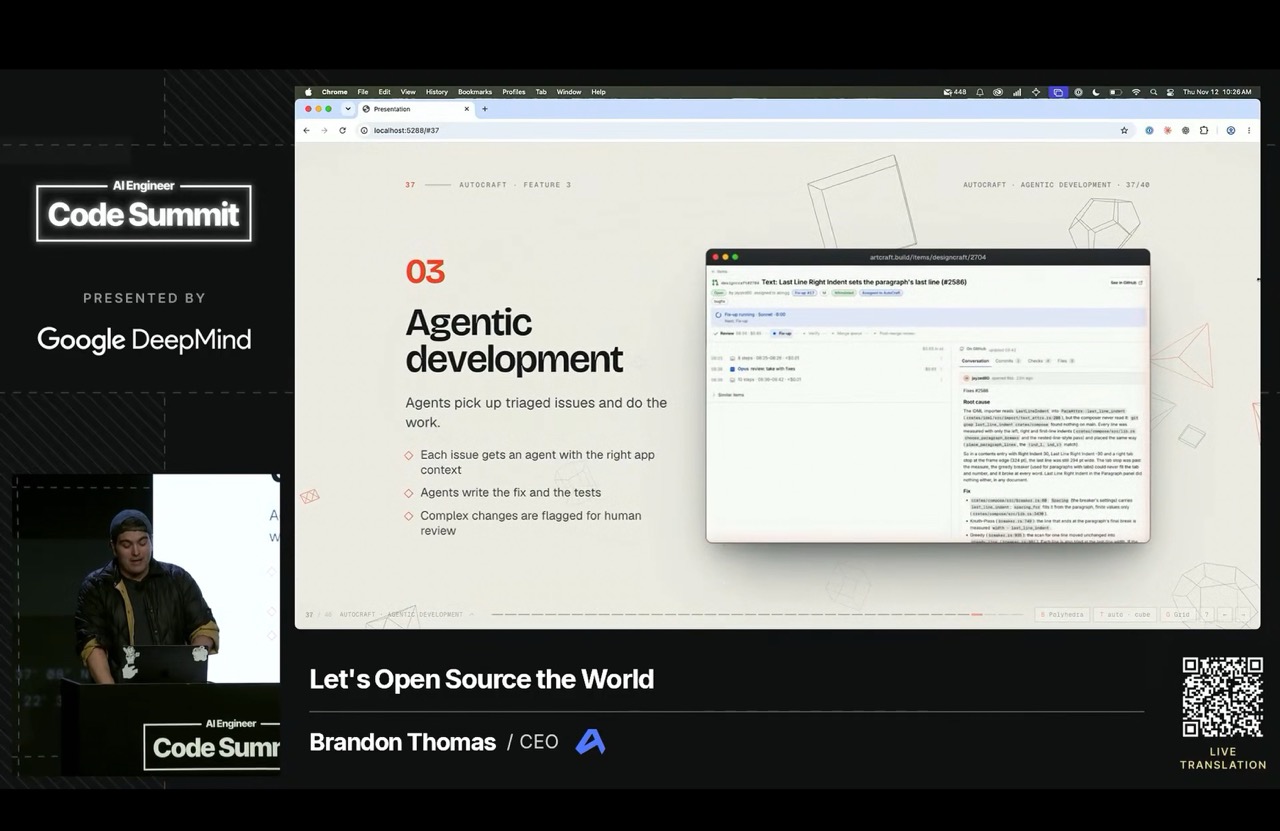
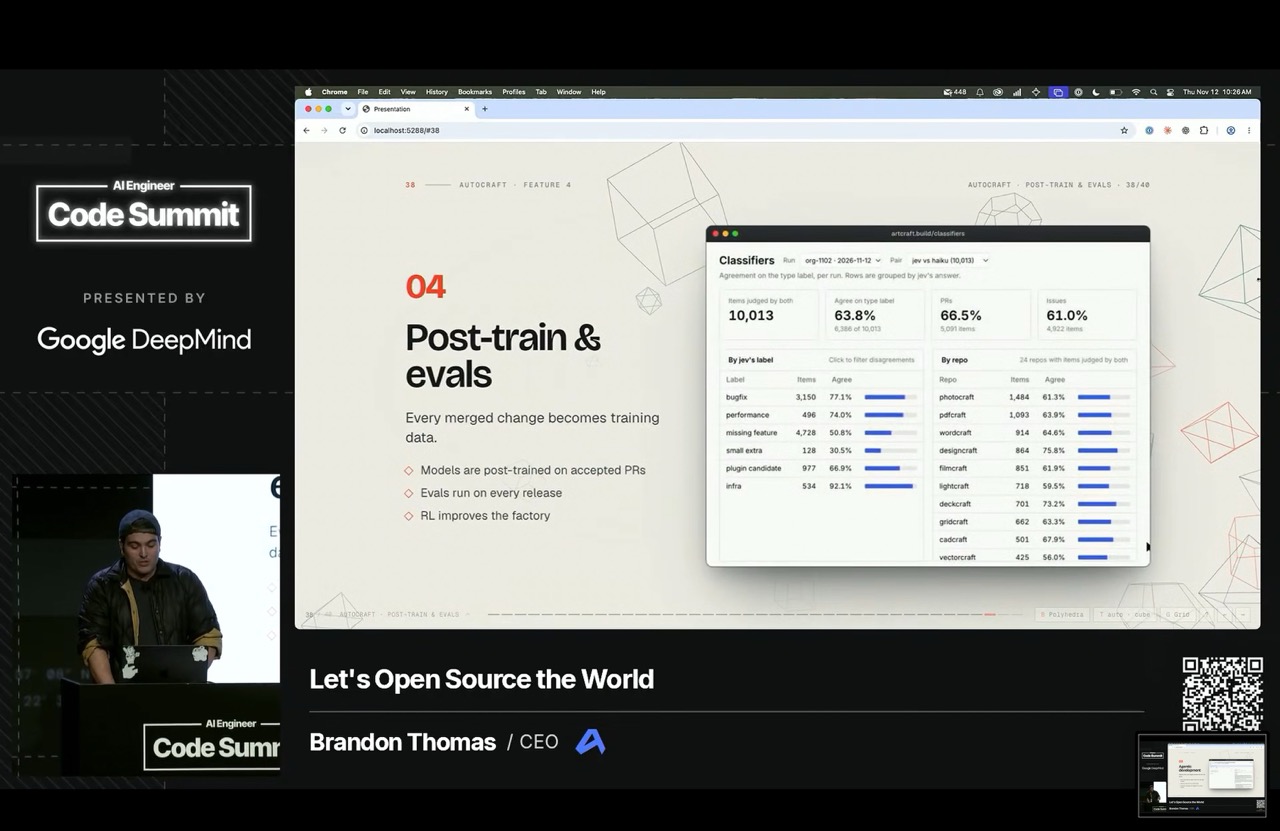
The last part of the talk was about AutoCraft, a system Thomas calls an autonomous software factory that he plans to open source. It takes in issues, triages them, does the development work, and then uses the decisions it made as training data for evaluations and post training. The aim is to keep a flood of contributors productive without a few maintainers drowning in reports.
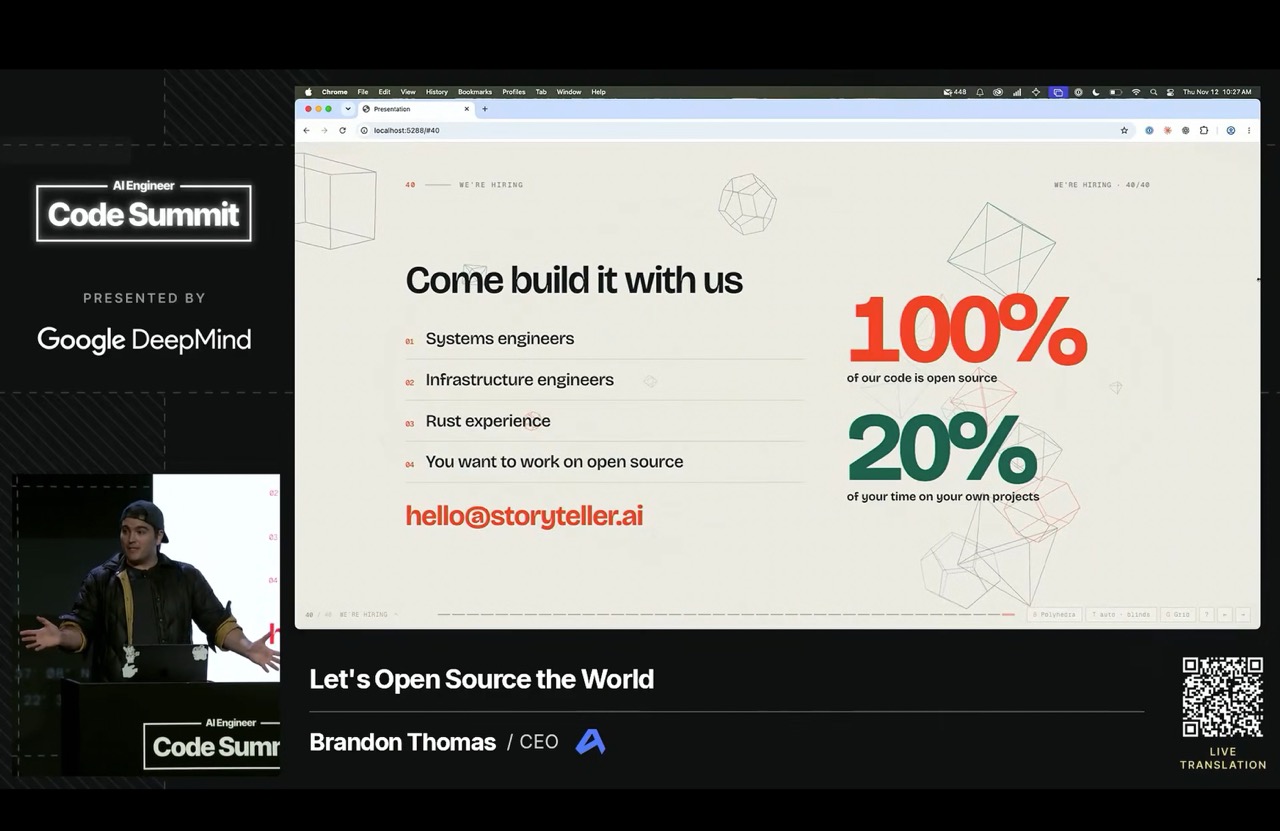
He closed with a hiring pitch for people who want to work on code that is all in the open, and a rallying line about owning our apps, infrastructure, protocols and models.
Where the skeptics have a point
The enthusiasm deserves some pressure. One early reviewer found
bugs that made it unusable for professional work, while noting the project was only two weeks old. InfoWorld's video raised the familiar worry that
open source projects often end up abandoned once building a community stops being as fun as writing code.
There are also open questions that no amount of star counts will answer. Professionals who depend on Adobe files, plugins and support contracts may not want to gamble on alpha software. Patents and design questions may arrive eventually. And agent written code still needs people who can review, maintain and fix it when it breaks.
The interesting test is not the first week of downloads. It is whether the community around these apps keeps fixing the dull parts, like file compatibility, crash bugs and documentation, after the novelty fades. If it does, subscription software loses a bit of its comfort zone, and every product with a hidden fee or a hard cancellation flow has a new reason to worry. If it does not, ArtCraft will still have shown how quickly an agent can produce a credible first draft of a very large application.
Recent Posts