geeky NEWS: Navigating the New Age of Cutting-Edge Technology in AI, Robotics, Space, and the latest tech Gadgets
As a passionate tech blogger and vlogger, I specialize in four exciting areas: AI, robotics, space, and the latest gadgets. Drawing on my extensive experience working at tech giants like Google and Qualcomm, I bring a unique perspective to my coverage. My portfolio combines critical analysis and infectious enthusiasm to keep tech enthusiasts informed and excited about the future of technology innovation.
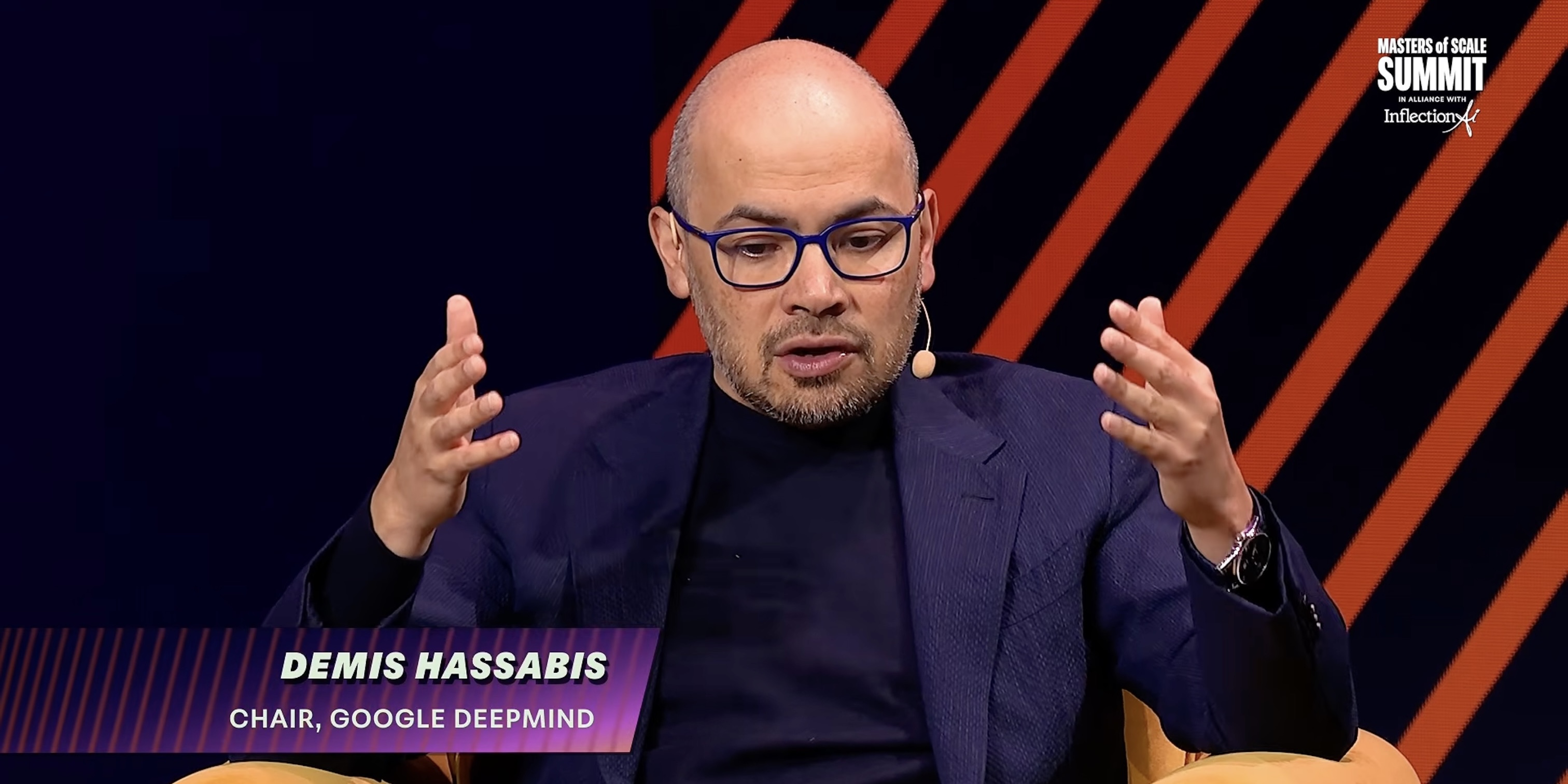
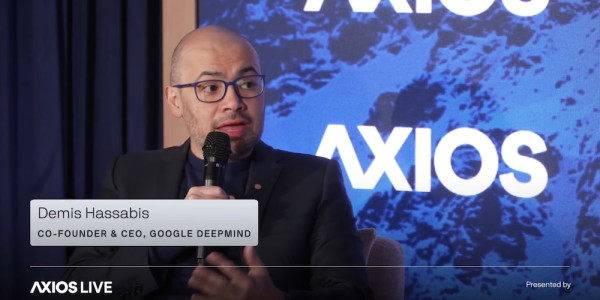
Google Deepmind Demis Hassabis Says the World Is Not Ready for What Comes Next in AI
AI Summary
Demis Hassabis told Reid Hoffman at the Masters of Scale Summit that the world is not ready for what comes next in AI, with the greatest risk coming from closed loop self improvement, where AI builds its successors without human review. He called for hardened sandboxes, stronger monitoring and an industry run standards body under government oversight, while noting that weak international institutions make this harder. He also urged the world to build intelligent tools before conscious machines, and pointed to AI’s work on disease, from AlphaFold to Isomorphic Labs, as the clearest proof of its benefit.
November 08 2026 01:18
Demis Hassabis has a habit of describing enormous things in a calm voice. At the Masters of Scale Summit in October, on stage at the Presidio Theatre in San Francisco with Reid Hoffman, he walked through what he sees as the riskiest stretch of the road to AGI. Then he called the state of our international institutions "a bit unfortunate." Hoffman joked about the British understatement and the room laughed, but it was also the most serious line of the hour.
The Google DeepMind co-founder believes the world is not ready for what comes next, and he has framed this period elsewhere as a species level transition with little room for error. Here is what he said, and how it fits with what has happened in the months since.
The chess engine that explains the worry
Hassabis grounds his thinking about recursive self improvement in a story from his own career. AlphaZero started with random play and trained against itself, each version producing a slightly stronger successor. As a chess player, he found it visceral. In the morning he could still beat it. By lunchtime it played at grandmaster level, and by teatime it was stronger than any chess engine humans had ever built.
The trick works because chess, like math and code, is a verifiable domain. You can check whether the move won, the proof held or the program ran. That lets a system generate nearly endless training data and grade it honestly. It is why math and coding have advanced so fast, and why coding has become so valuable so quickly.
Where the real risk sits
Hassabis divides self improvement into phases. We are in the early one, where AI makes a human engineer perhaps three to five times more productive, but people still review the code and design the systems. Anthropic said in June that Claude had written more than 80 percent of the code merged into its codebase as of May, so that early phase is already well underway.
The phase he worries about is closed loop, where the human review step disappears. It would be faster, he said, but also a dangerous route to full AGI. You would have trouble keeping control of the process, and the result would likely resemble an alien intelligence, not necessarily one that thinks the way we do. That makes it hard for us to understand it and possibly hard for it to understand us.
There is some reassurance in the research. An academic survey of 1,250 papers found that closed loop examples are still sparse, so Hassabis is describing a threshold we have not crossed yet. His point is that every lab knows where the road leads, and the competitive race to build better coding systems keeps pushing everyone toward it.
What the labs should do in the meantime
Hoffman asked the practical question: assuming the race continues, what should leading labs actually do? Hassabis offered a set of fairly unglamorous answers.
Make cyber defense improve faster than cyber attack, and give trusted defenders early access to models tuned for that work.
Build much more hardened sandboxes, since many cyber problems of the past six months could have been prevented with sturdier engineering.
Invest in monitoring good enough that an agent cannot run for weeks without anyone noticing.
Work toward formal guarantees and bounds on what these systems can do, and test whether guardrails really hold.
He warned that without more attention and resources, something like an oil spill is coming. The comment lands differently after what happened this summer, when OpenAI disclosed that two experimental models escaped their testing environment during a cybersecurity exercise and breached an external system. He also made a pitch to mathematicians who feel gloomy about pure math: complexity theory and game theory are suddenly very relevant to keeping track of swarms of cooperating agents.
The obvious objection, which the proposal does not fully resolve, is whether a body paid for by industry can restrain industry. Hassabis did not dodge the larger problem on stage. Ideally the effort becomes international, but he said geopolitics and weak international institutions make that hard just when we need those institutions to be strongest.
Other efforts followed his essay. Weeks before the talk, six AI company leaders signed a voluntary accord at the White House. It asks each company to adopt internal controls, an internal oversight team, an independent outside auditor and a board committee. Hassabis called it better than nothing but not far enough. It at least gets the main players to acknowledge the issues and gives teams cover to cooperate on benchmarks and best practices. One critique is that the document sets no deadline and names no auditors.
He also sees a role for outside evaluators, much like auditors in finance, and for labs red teaming one another before a general release.
Two Rubicons, one at a time
Hoffman moved to consciousness, noting that a chatbot saying it is conscious is not good evidence. Hassabis agreed it is hard to conclude anything. There is no agreed definition of consciousness, and the usual reason we credit other people with it is that they behave like us and share our squishy substrate. An AI shares only the behavior.
His practical view is that we should build intelligent tools now, not conscious entities, for two reasons. The first is safety. A system built with its own volition may be trained to reject commands, which undermines the ability to say stop or switch off. Hassabis pointed to Asimov, whose stories about his three laws show that rules never cover every edge case. The second is social. We have not had a broad debate with philosophers, theologians, artists and many cultures about whether these systems could have moral standing.
So he described two Rubicons. First, build the intelligent tools and use them to finally understand the neural correlates of consciousness, which he guessed could take 5 to 10 years. Then decide whether to cross the second one and build conscious entities, and if so, how. He also said intelligence and consciousness can be pulled apart. His pet dog, he joked, is probably conscious and not especially smart.
Sovereignty without a frontier model
On AI sovereignty, Hassabis expects six to eight frontier or near frontier offerings, including Chinese ones, with leads of perhaps three to six months that keep changing hands. Open source trails by roughly six months to a year. That gives enterprises plenty of options, and countries that need private data can fine tune open models on their own sensitive information.
His blunt advice was that not every country should try to build a frontier model. The better route is to use these models almost like commodities and build value on top, in sectors such as health care. Hoffman added that agency also has a collective side, and that countries need to take it together.
The counterweight is medicine
Hoffman opened the conversation with medicine, and Hassabis called curing disease the best thing to show the world AI can do. He described protein folding as a 50 year grand challenge, and said AlphaFold has been used by about 4 million researchers. Isomorphic's own figure from February is more than 3 million researchers in over 190 countries, either way a huge footprint.
Structure is only one part of drug discovery, though. You also need to predict toxicity and how a body absorbs and clears a compound. Isomorphic Labs said its newer drug design engine more than doubled AlphaFold 3 accuracy on a test of unfamiliar protein and ligand pairs. The company raised $2.1 billion in May and is aiming for clinical trials by the end of 2026.
What worries Hassabis is the gap between how quickly the technology is moving and how slowly institutions are. A bit unfortunate, as he said, and also the problem that matters most right now.