geeky NEWS: Navigating the New Age of Cutting-Edge Technology in AI, Robotics, Space, and the latest tech Gadgets
As a passionate tech blogger and vlogger, I specialize in four exciting areas: AI, robotics, space, and the latest gadgets. Drawing on my extensive experience working at tech giants like Google and Qualcomm, I bring a unique perspective to my coverage. My portfolio combines critical analysis and infectious enthusiasm to keep tech enthusiasts informed and excited about the future of technology innovation.
How Japan Beauty Brand Shiseido Is Teaching AI to Support Its Advisors
AI Summary
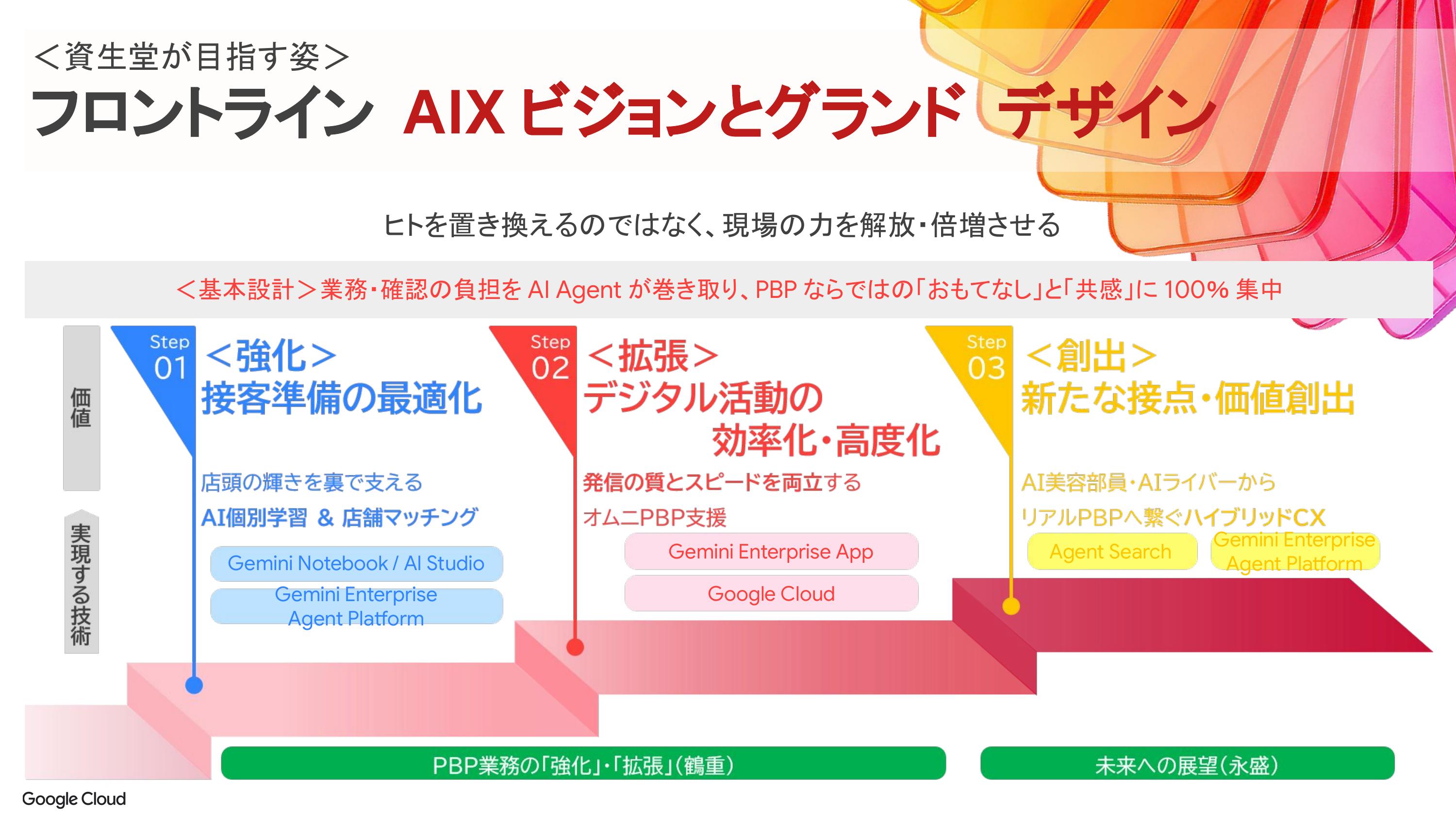
Shiseido’s Japan team leverages AI behind the scenes to optimize its "Personal Beauty Partner" (PBP) operations—removing administrative burdens like training podcasts, complex multi-store scheduling, and social media compliance checks—so beauty advisors can dedicate more time and authentic warmth (omotenashi) to customer conversations.
November 06 2026 06:31
Picture a department store beauty counter in Tokyo on a Saturday afternoon. A customer has been waiting a few minutes. The advisor is already helping someone else, and the customer glances at the line, decides it is not worth it, and walks away. Nobody records that loss. It simply never happens on paper.
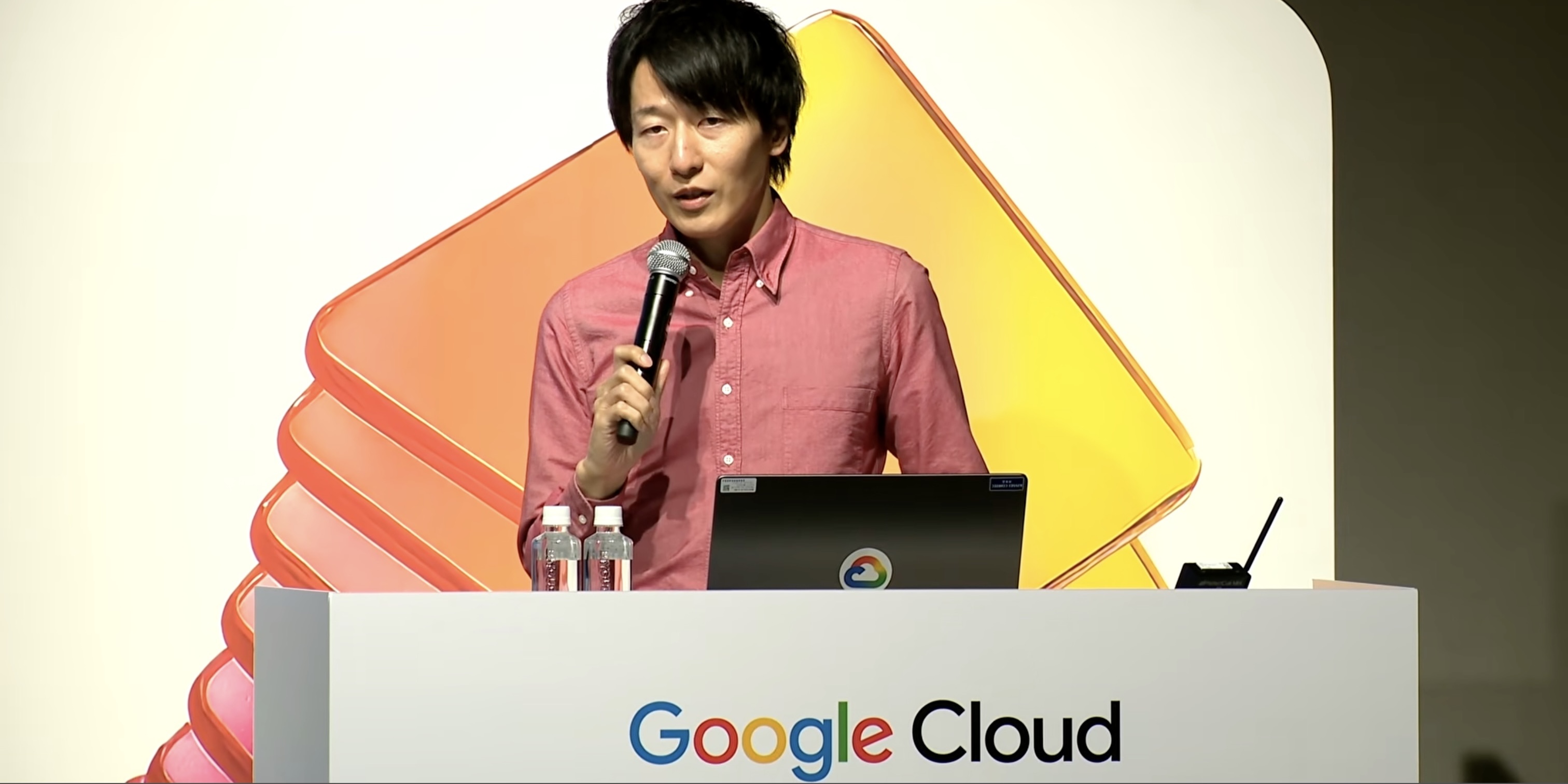
That small moment sits at the center of a talk I recently read from Shiseido's Japan team, where two leaders from the company's Digital and AI Transformation Strategy Department described how they use AI with their beauty advisors. What makes it interesting is not that a big cosmetics company is using AI. Everyone is doing that now. It is that Shiseido deliberately aims AI at the work around the customer conversation, and protects the conversation itself.
A Job With 90 Years of History
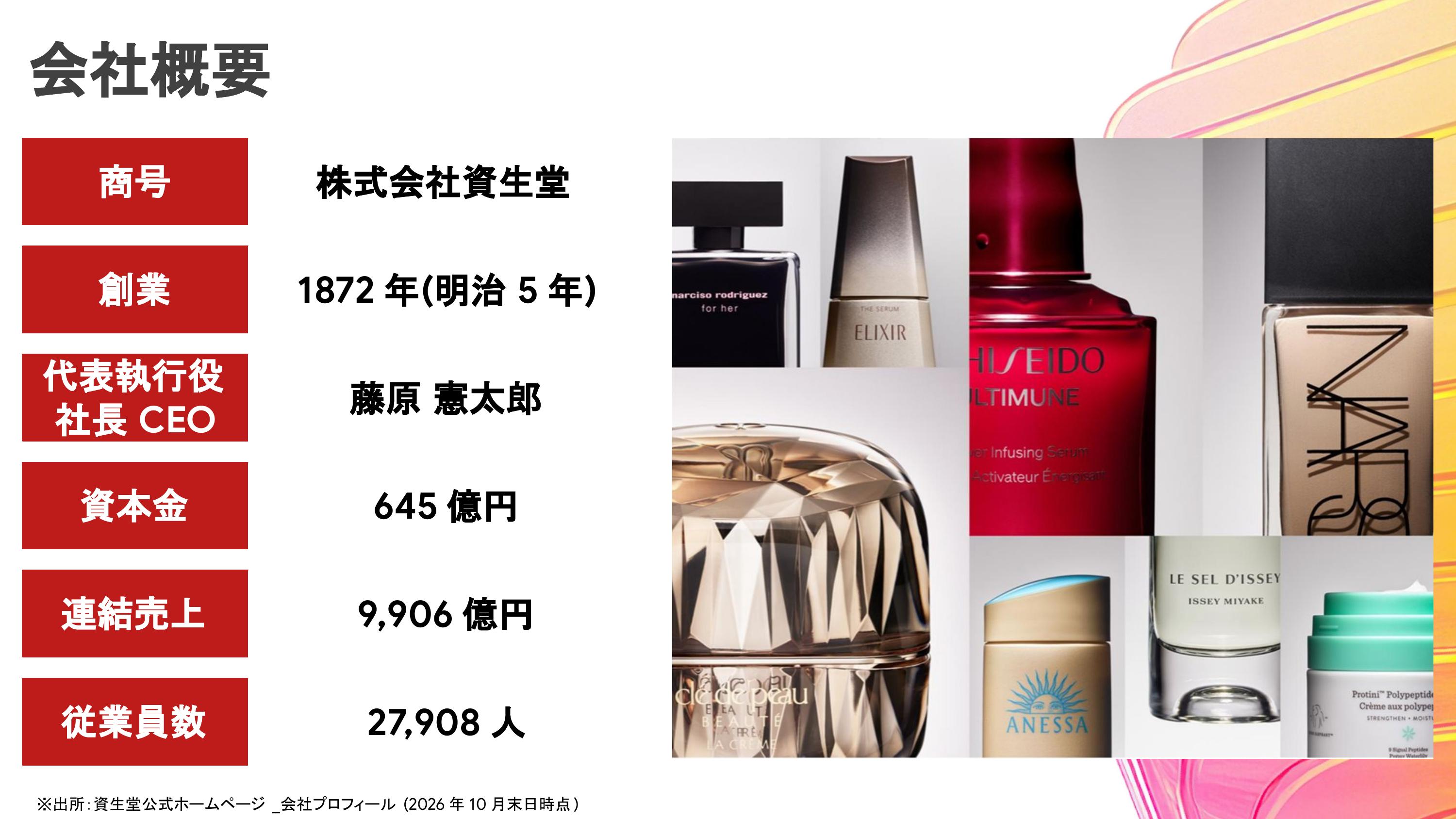
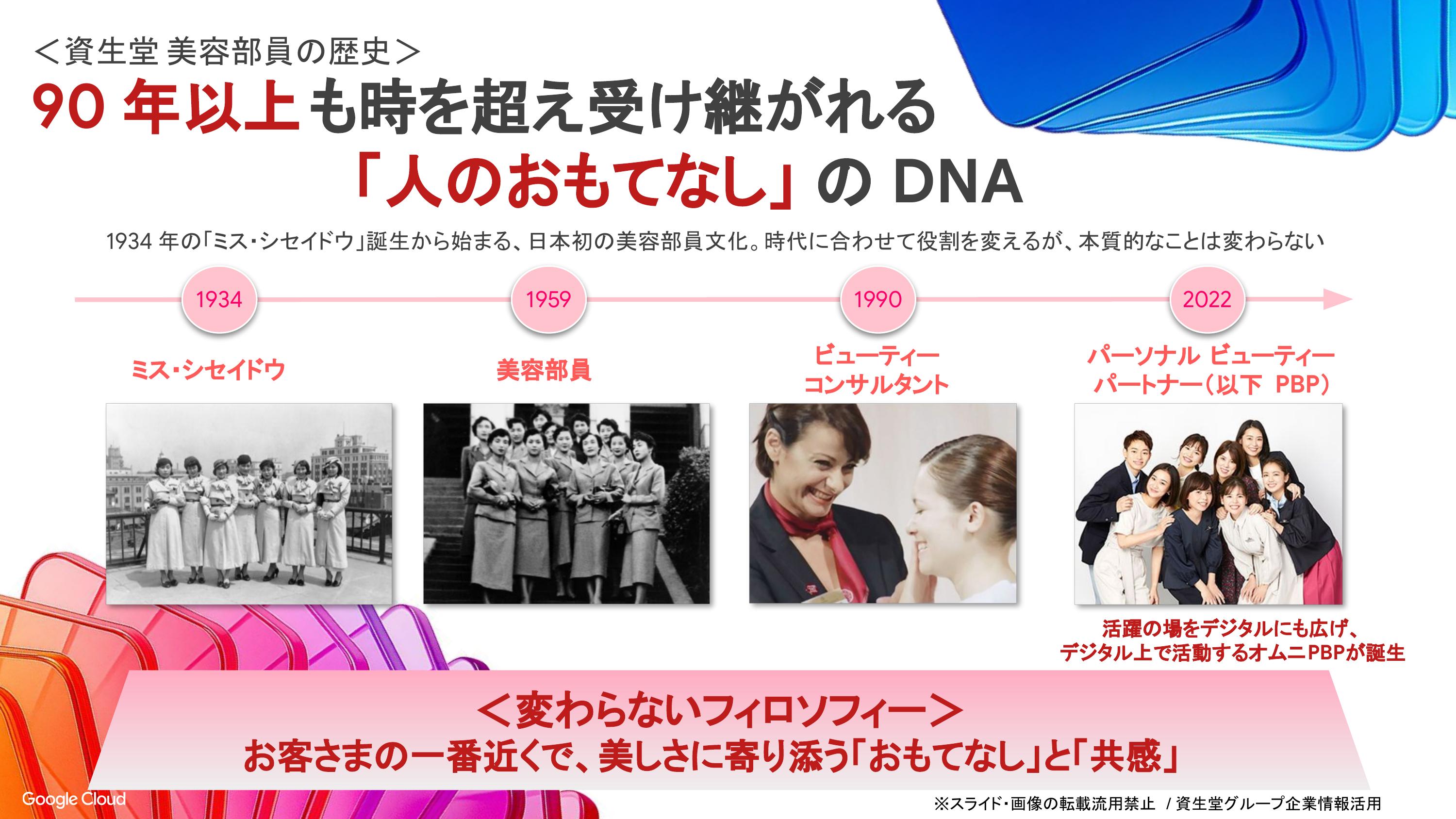
Shiseido is around 150 years old and does roughly one trillion yen in sales. Its beauty advisors have a history of about 90 years. The first ones, known as Miss Shiseido, were closer to cultural ambassadors than salespeople. They represented beauty itself. Over time, as products spread across Japan, the role grew into the counter staff many shoppers know today. In 2022 the company renamed the job Personal Beauty Partner, or PBP, to signal a relationship with each customer rather than a transaction.
The company's mission is Beauty Innovations for a Better World, and its slogan translates roughly to "every moment and a lifetime of beauty." The speakers kept returning to one word: omotenashi, the Japanese idea of wholehearted hospitality. They described it as the core strength of the business, the thing that has stayed constant while the role changed from cultural symbol to seller to personal partner.
The Homework Nobody Sees
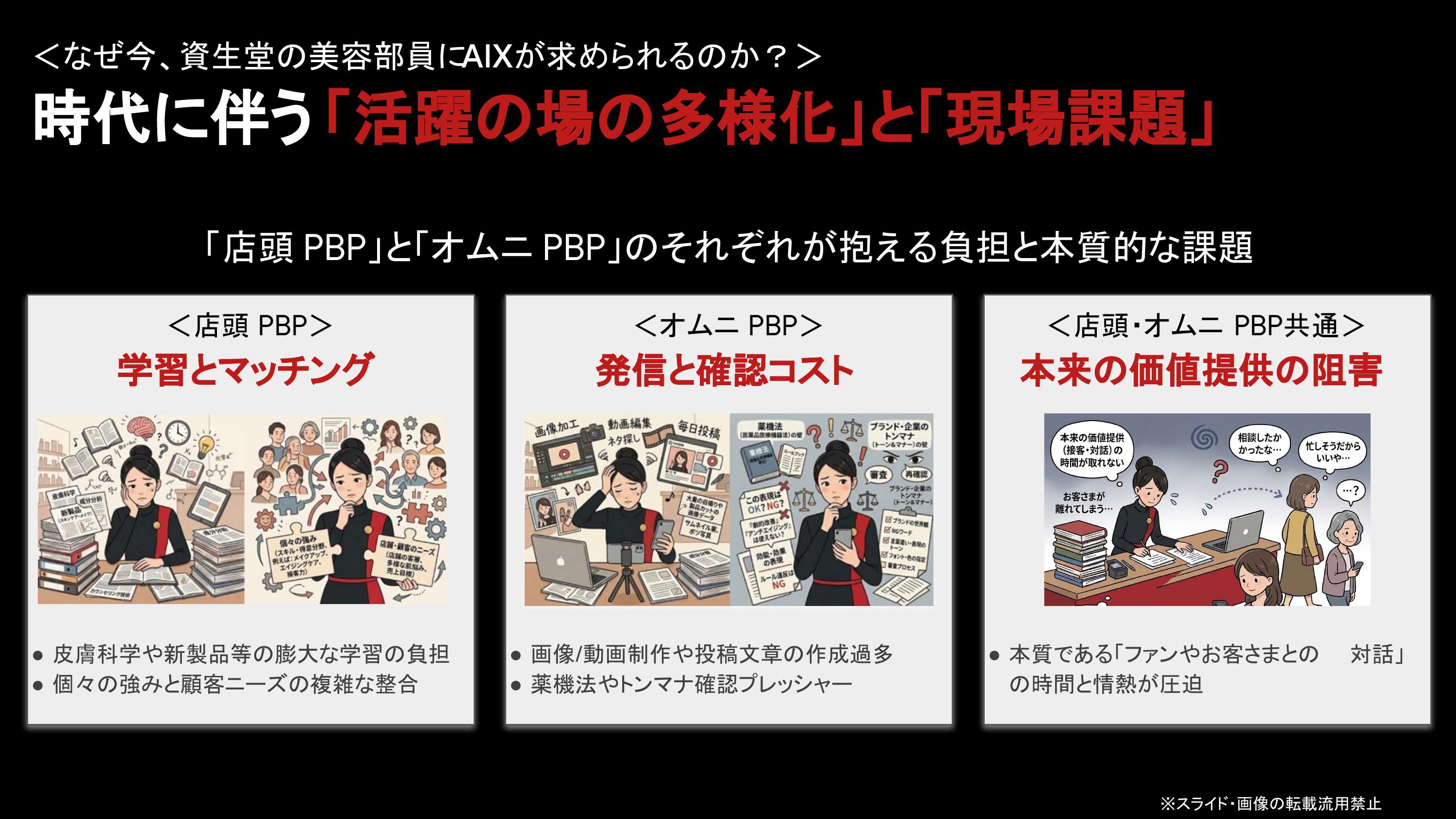
Beauty advisors do a lot more than talk to customers. They study new products constantly. Skincare, makeup, and trends keep multiplying, and customers are more varied than ever, from long time loyalists to shoppers who arrive with Korean cosmetics knowledge and strong opinions. Learning all of that takes hours.
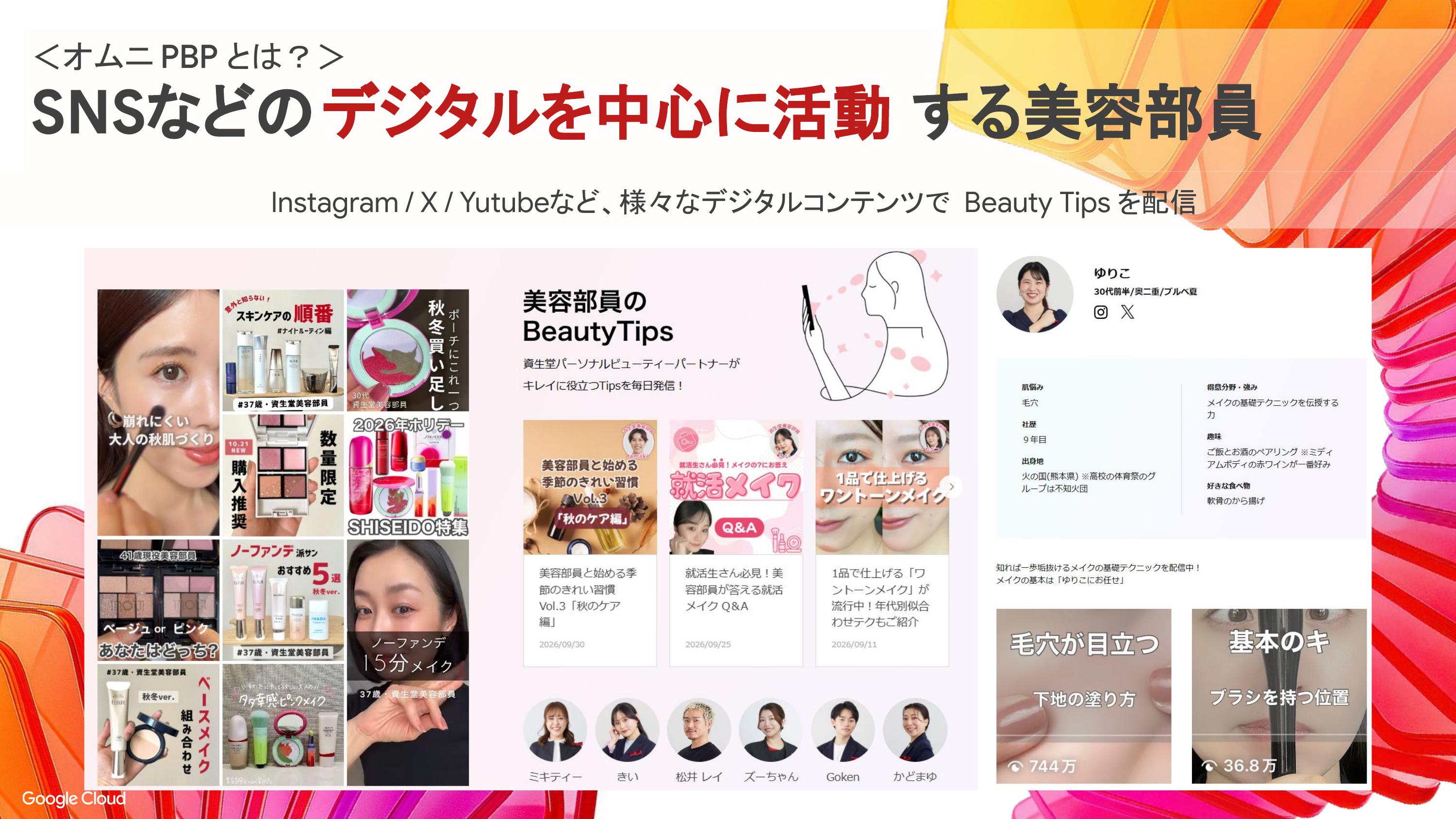
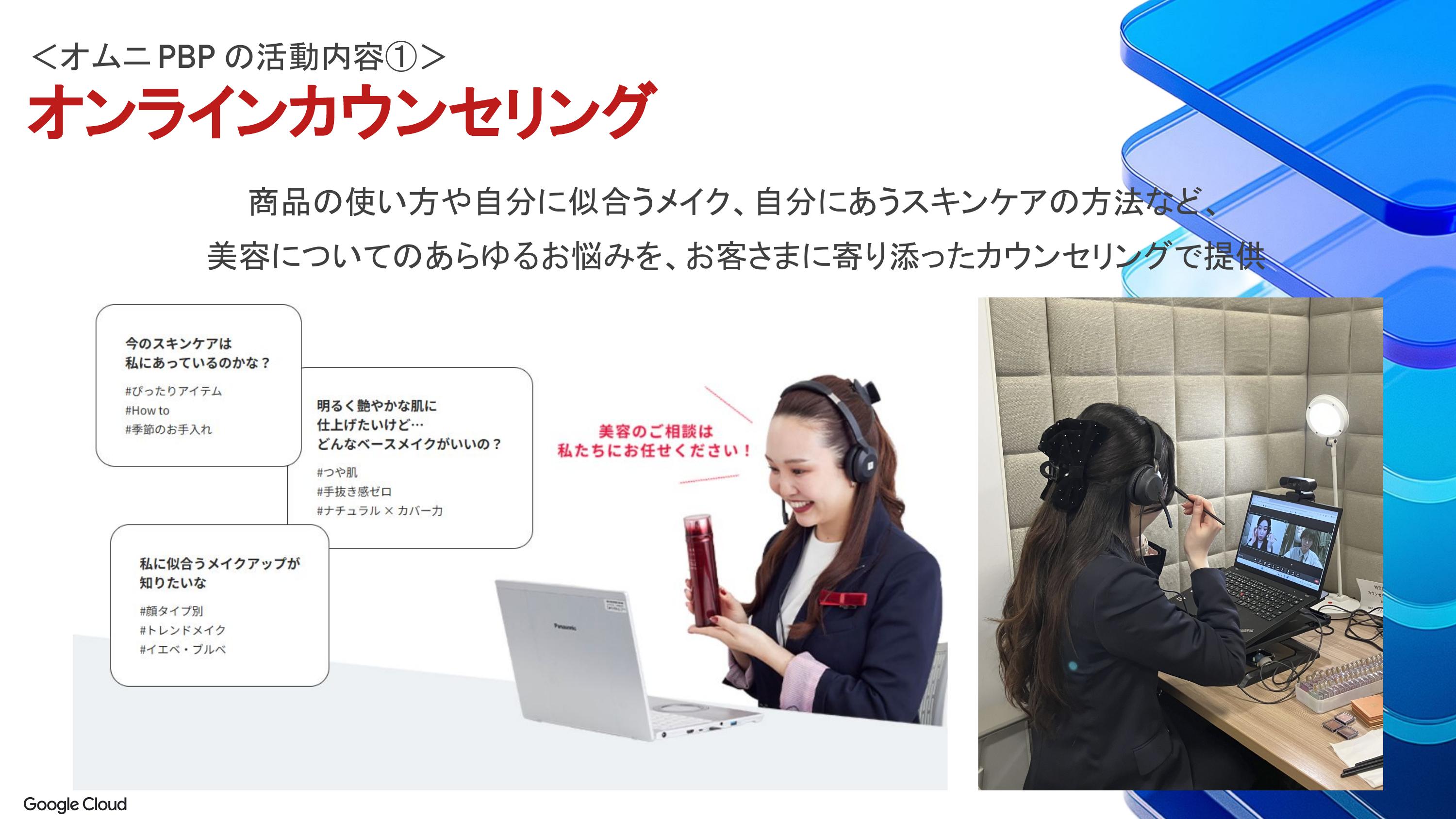
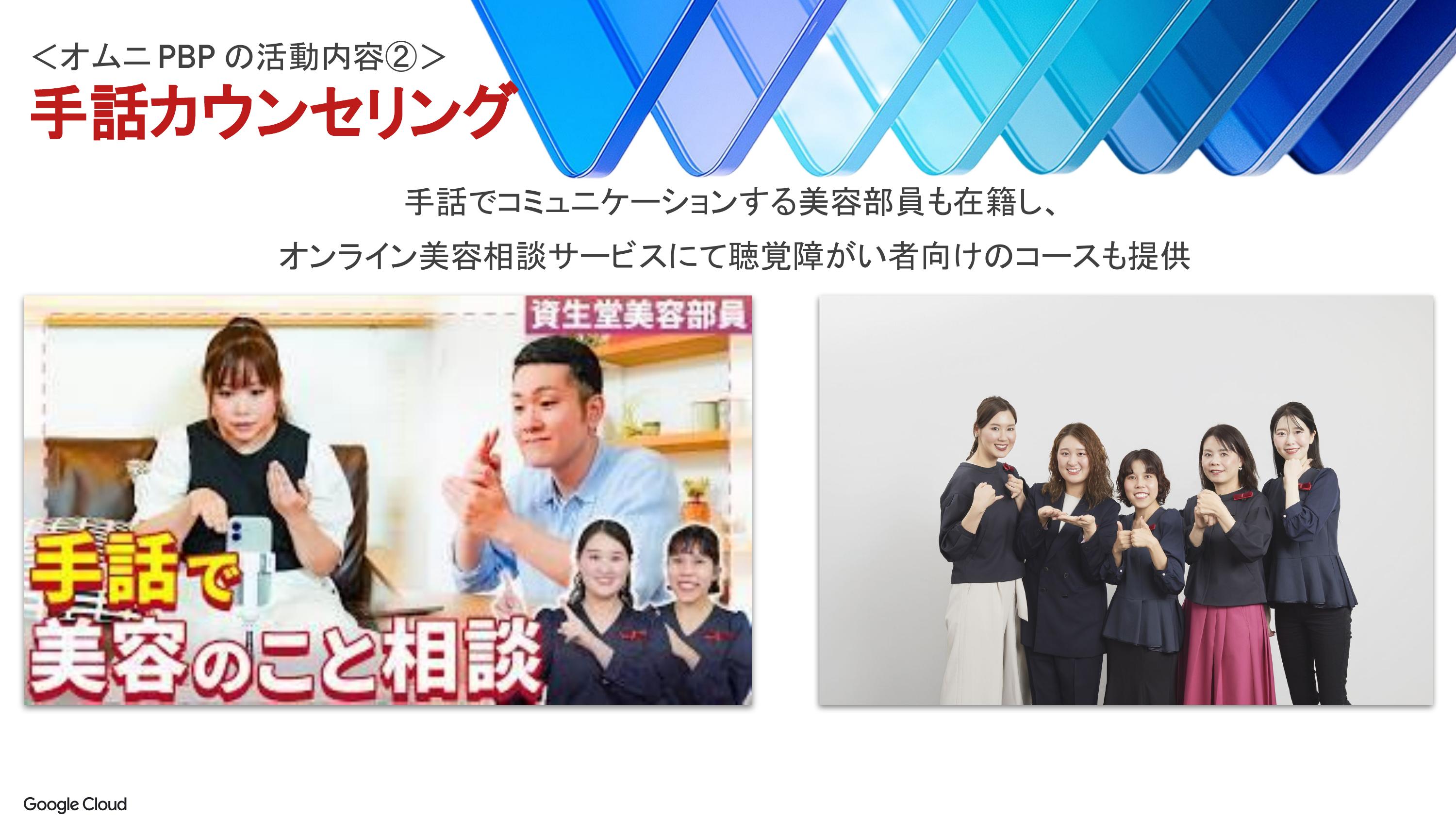
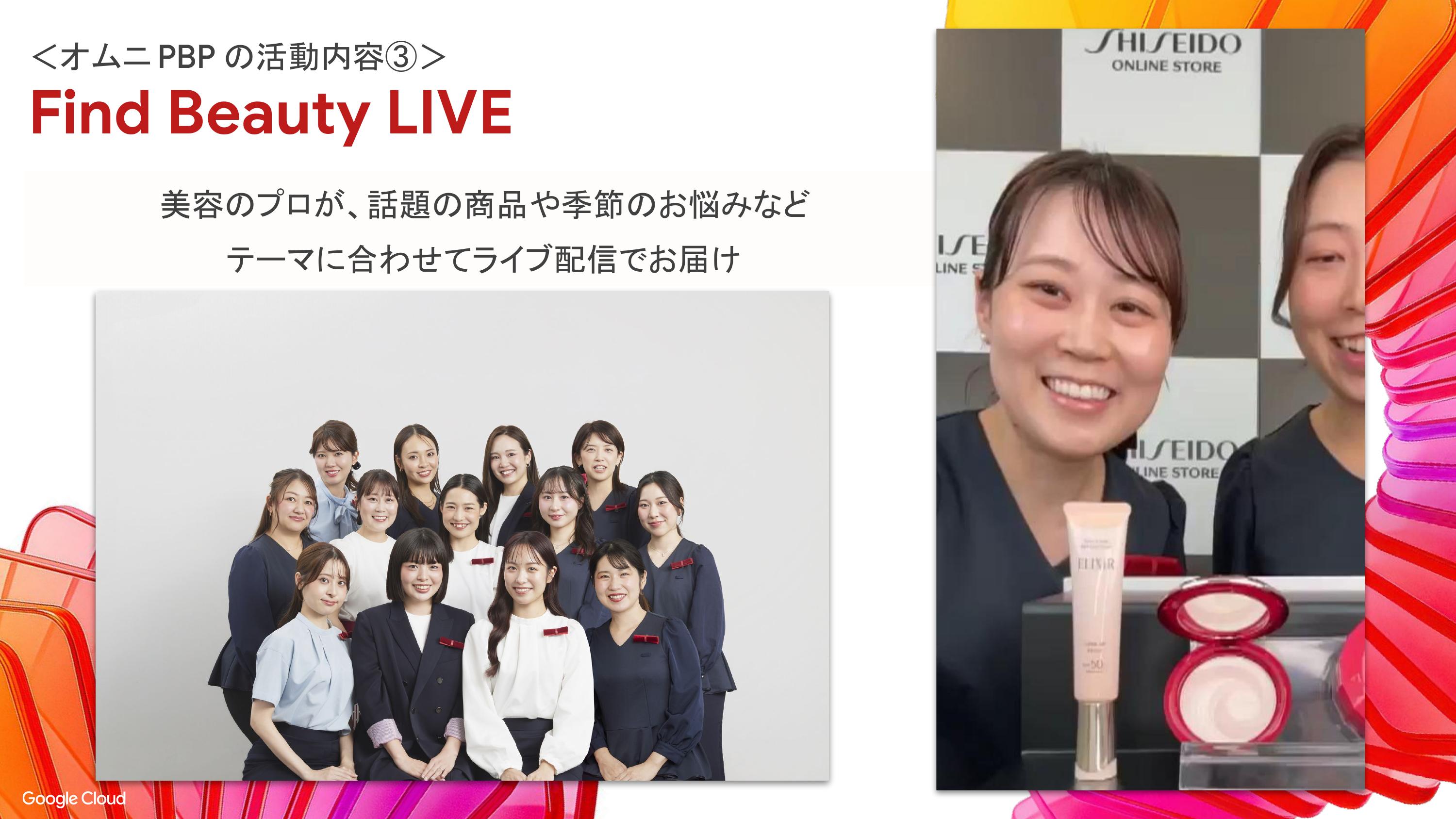
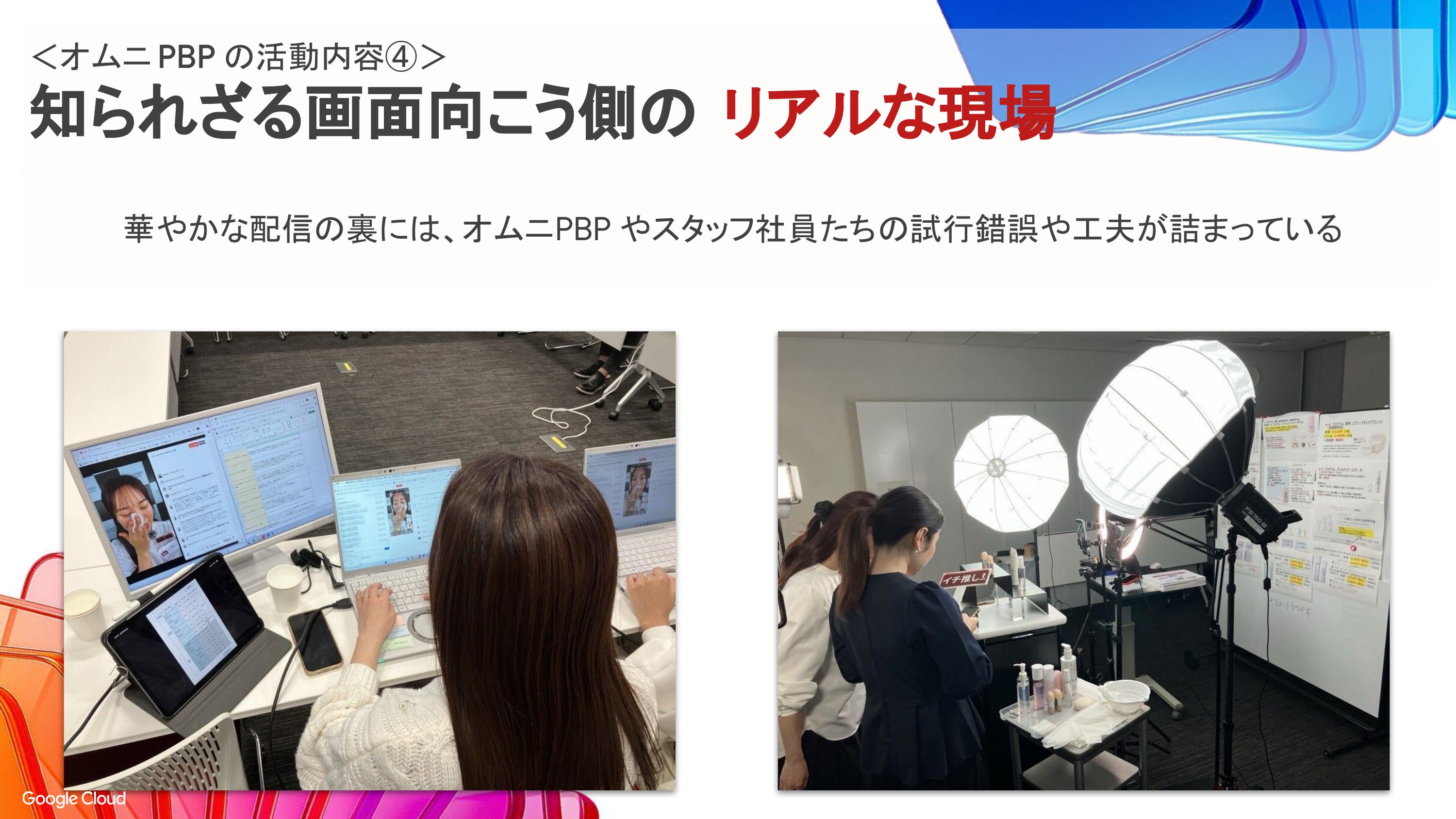
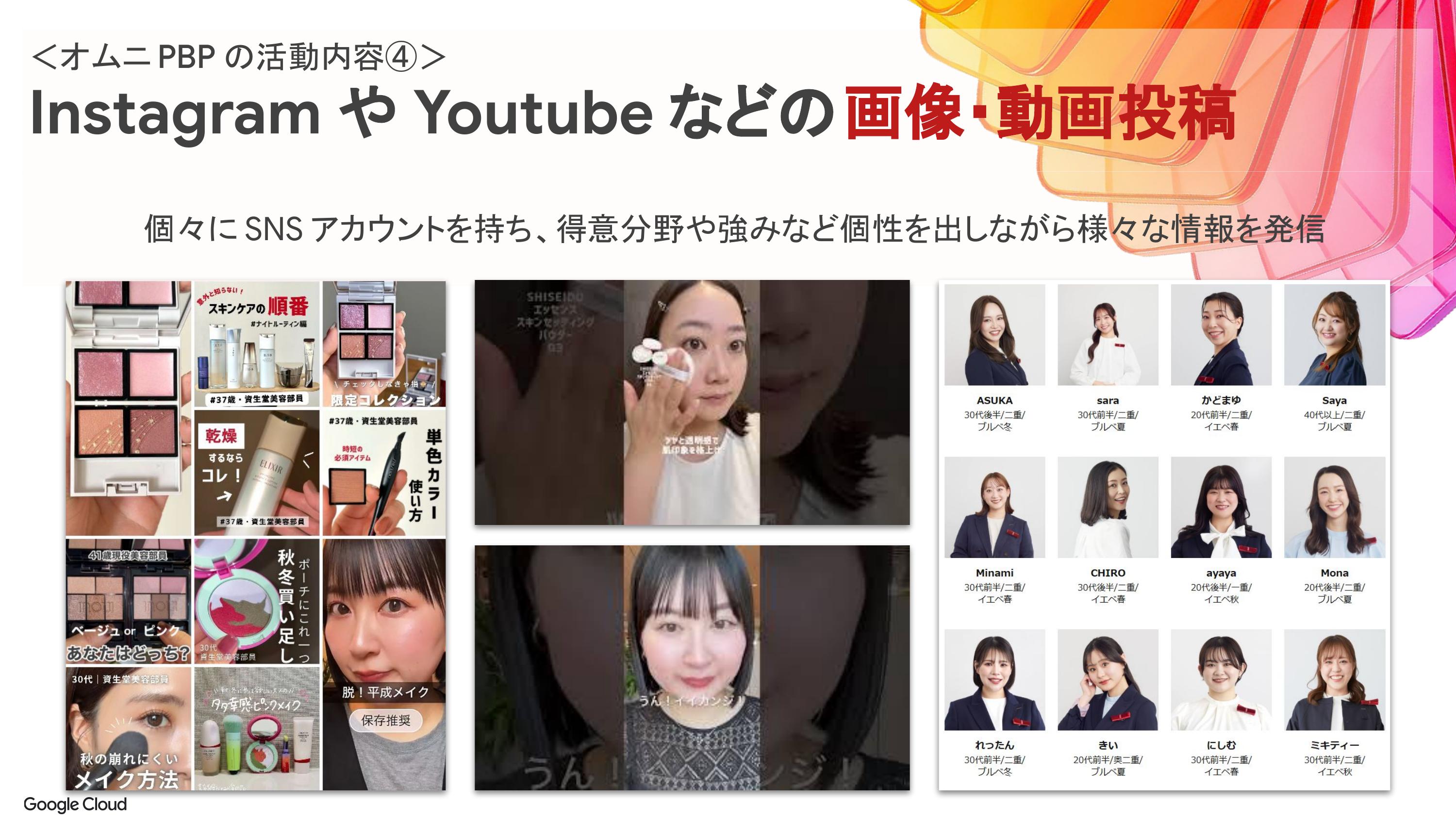
The digital side of the job has its own burden. Shiseido now has what it calls Omni PBPs, advisors who work online. They run one to one video counseling, offer sign language counseling for customers with hearing loss, host live streams, and post to social media from their own accounts. Anything posted online lives forever, and cosmetics are regulated, so there are claims an advisor cannot make. Checking every caption against company rules and past feedback from the pharmaceutical affairs team takes time and creates real anxiety.
Fix One: The Podcast You Listen To on the Train
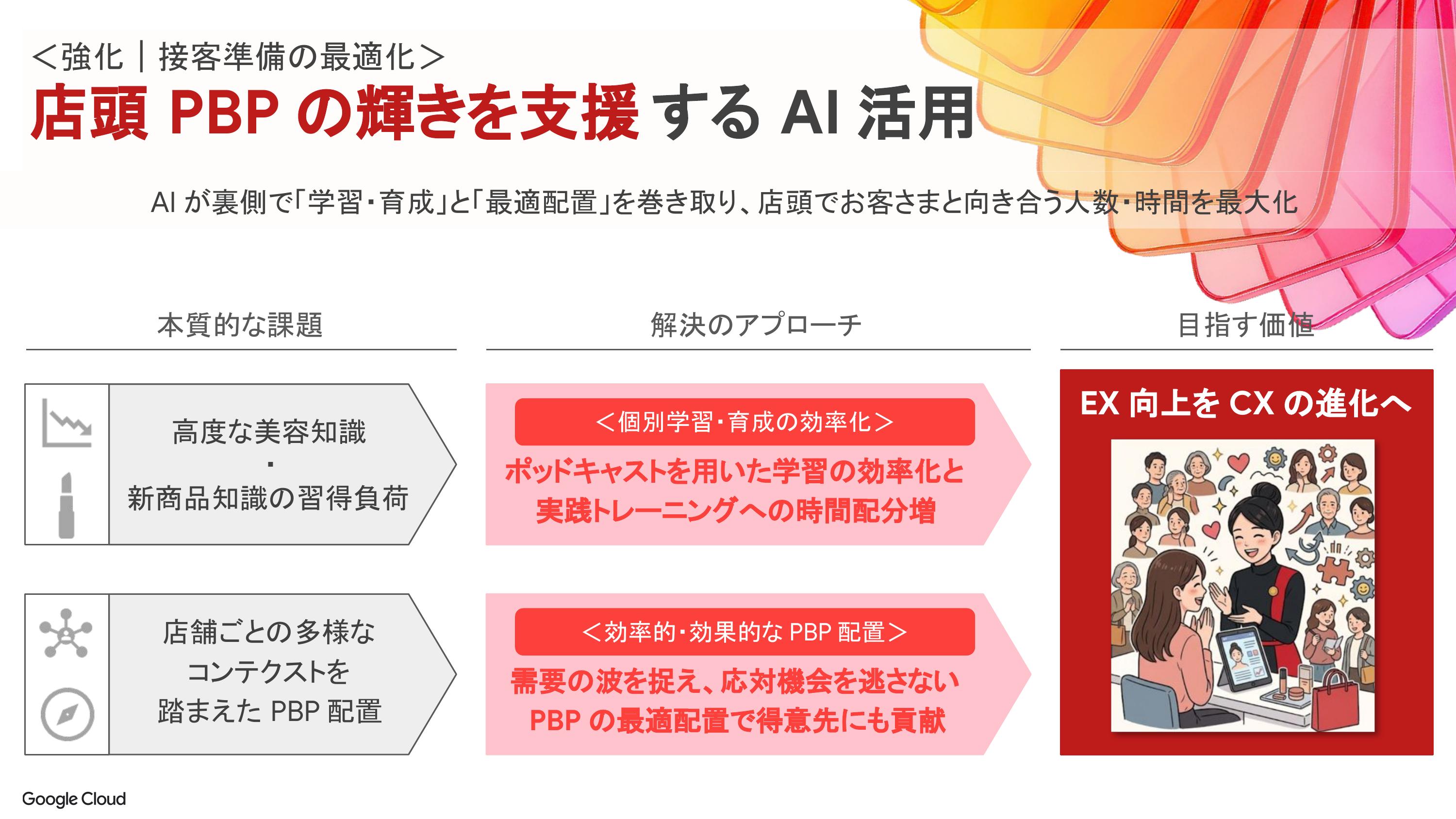
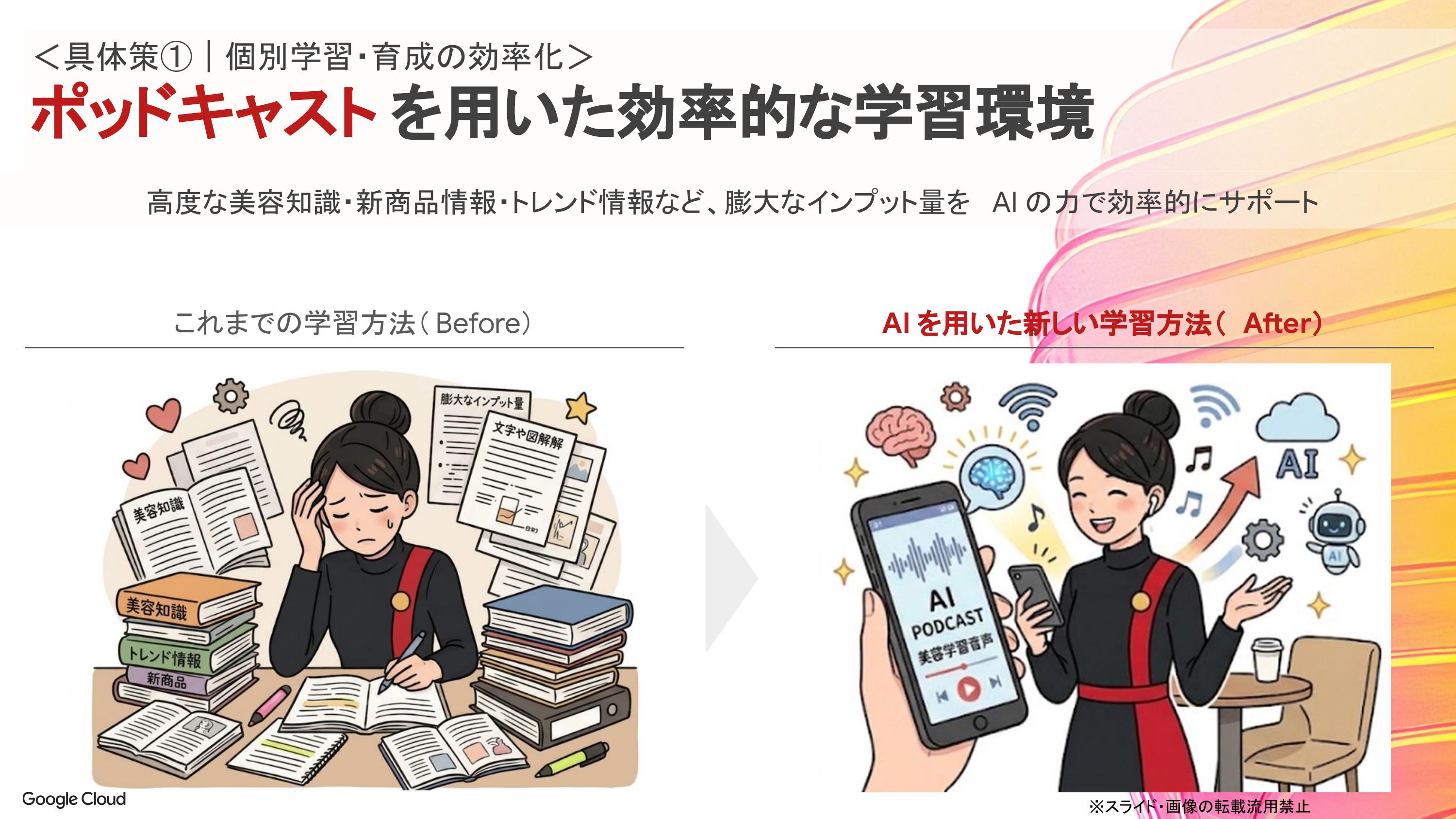
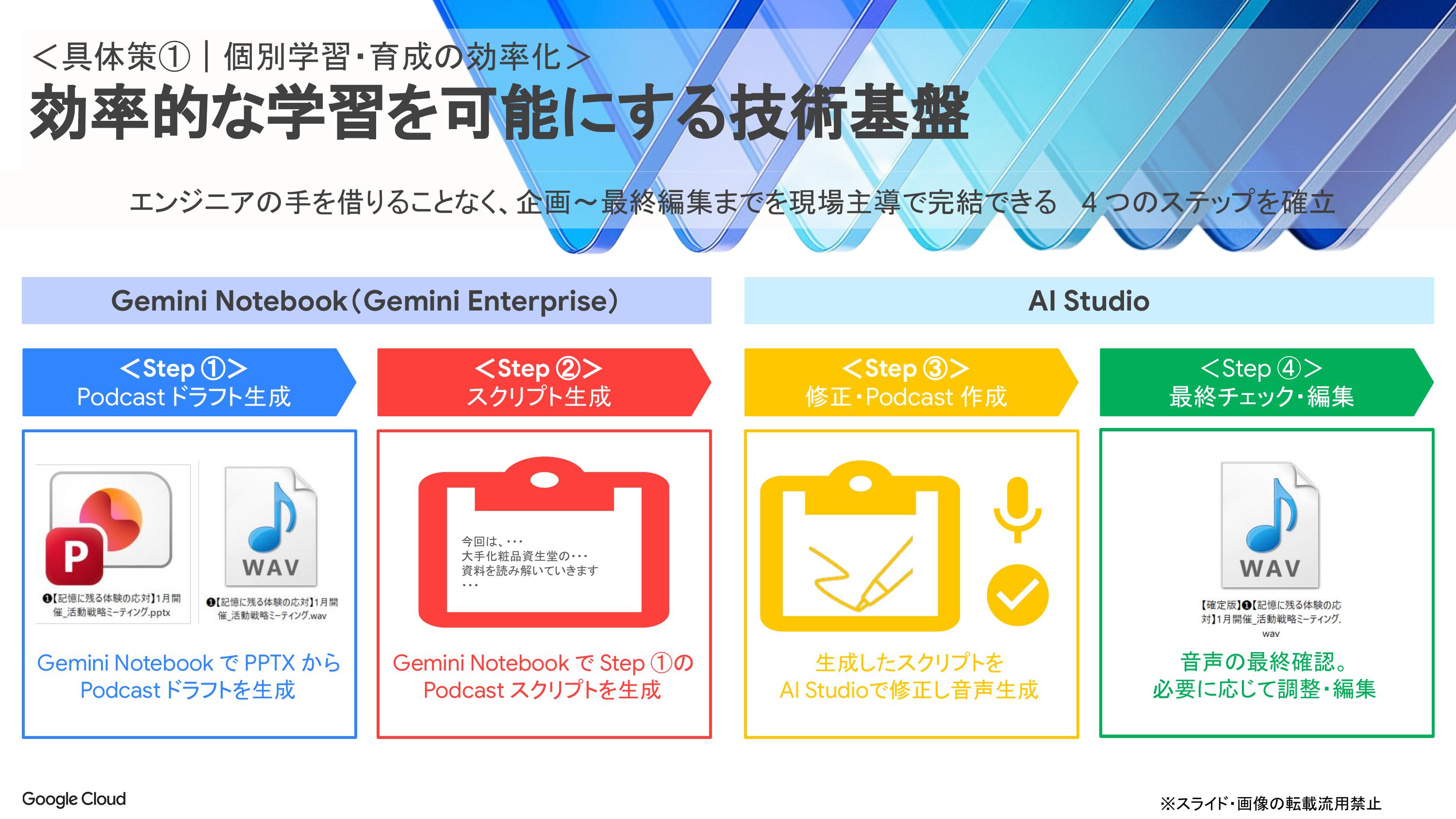
The first fix is almost charming. Instead of asking tired staff to read slide decks after a shift, the team converts internal training material into podcasts that advisors can listen to on a commute or while setting up before opening. The workflow has four steps, and field staff run it themselves without engineers:
Load an internal PowerPoint into Gemini's NotebookLM and generate a structure and a draft conversation script.
Refine the script in Google AI Studio, adjusting wording and pronunciation.
Generate the voice track with text to speech.
Have a field staff member check and edit the audio before it is published.
Why not just use NotebookLM's audio feature on its own? Because of a limit many people run into. Public guidance on the tool notes that you cannot edit the generated audio directly inside NotebookLM and need outside software to change the file. For a general summary that is fine. For material that includes qualification exam content, a wrong pronunciation or an off tone is not fine. The team wanted to change one phrase without regenerating everything, and to switch between a cheerful two person chat and a serious explanation depending on the material.
The reported results: across ten episodes a year, more than two million yen in production savings and roughly ten months of working time saved. In a survey, 90 percent of advisors called the podcasts very useful. They said the radio style was easy to follow and that they could listen while doing other things.
Fix Two: Deciding Who Works Where
The second fix tackles something that sounds dull and turns out to matter a great deal. Advisors used to work fixed shifts at one store. Demand, though, does not stay still. When a store is busy and the advisor is occupied, customers wait or leave. When it is quiet, the advisor is underused.
Shiseido's answer is to have each advisor rotate among three or four stores, with the assignment changing by day. That is nearly impossible to schedule by hand, so the team built a three stage model:
Forecast demand for each store and each day, using past sales and event information such as in store campaigns.
Calculate how many advisors each store needs on each day.
Assign specific people, while respecting days off, training days, and rules such as no more than five consecutive working days.
The last stage is where many scheduling projects fall apart, because real people have real constraints. The speakers said they built the model around the shift planners' detailed requests. Part of the old process had also depended on one or two experienced people, which is a risk of its own. The team projects a reduction of about 53,000 hours a year in shift creation time. They were candid that the customer side results, such as how many more customers advisors meet, were still being tallied.
This kind of forecasting is spreading across retail. One industry summary of workforce software describes forecasting accuracy gains of 20 to 25 percent for organizations that apply AI to scheduling, alongside labor cost reductions, though adoption is still uneven. Gartner's 2026 market guide goes further and predicts that by 2027 more than half of the largest unified commerce retailers will merge scheduling, tasking, and frontline communication into one app for store associates. Shiseido is ahead of the curve here.
The Hardest Part: Making AI Sound Like You
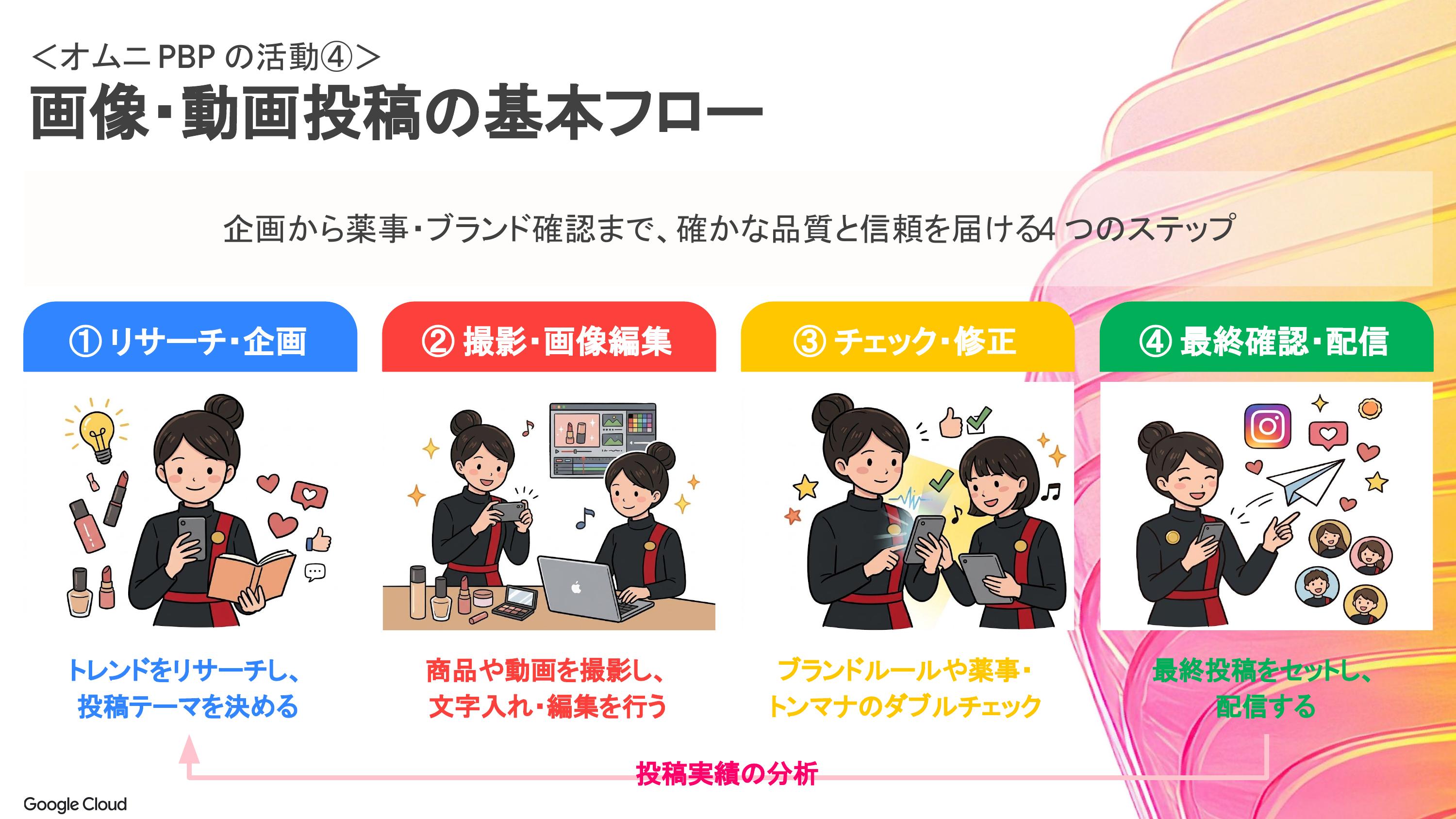
The most thoughtful piece of the talk concerned social media. Each Omni PBP has a personal account and uses her own skin type, age, and favorite techniques to build trust. Producing a post means research, planning, shooting, editing, rule checking, and final approval. Three problems kept coming up: keeping a personal voice while moving fast, the stress of checking company rules, and the fact that the best performers' know how stays locked in their heads.
The team built three agents on Gemini Enterprise, drawing on five internal data sources: rules, past pharmaceutical feedback, knowledge, post data, and social media results.
A drafting agent that builds a profile of each advisor from her past posts, including her emoji habits, sentence endings, and greetings, then drafts in her voice from rough notes.
A rule checking agent that compares a finished draft with company rules and past pharmaceutical feedback and flags what needs to change, including product names, prices, and claims.
A review agent that connects to performance data and acts as a sounding board. An advisor can ask which recent post did best, look at that post together with the agent, and talk through why it worked.
In the demo, the review agent suggested that a post worked not just because it introduced an eyeshadow but because the advisor shared something personal. The speakers were clear that the demo used dummy data. They were equally clear about a design principle: they did not want AI to flatten individual personalities. Advisors said writing from scratch was far harder, and that the more drafts they produce, the more their own style sharpens. Feedback is still shaping the product. One request was to show results in a table and stack items vertically instead of scrolling sideways.
A Reality Check on the Industry
Shiseido has been here before, in a way. In 2022 it launched what was described as the first AI powered makeup advisor, built with Revieve, where users upload a selfie and receive recommendations they can try on virtually. That was a tool for customers. The newer work is different, because it targets the people serving customers.
Across beauty, the gap between curiosity and readiness is wide. A Pattern Group report found that 59 percent of beauty brands are exploring AI agents, but only 27 percent feel ready to let them become the main way customers find and buy products. And more broadly, Deloitte's 2026 retail survey found that 75 percent of retail and consumer goods leaders call AI a top priority, yet only 7 to 10 percent have deployed it across the whole enterprise.
Many companies are racing to put an agent in front of the shopper. Shiseido's approach is quieter. It starts with the staff, fixes their workload, and lets the customer feel the difference indirectly.
What Comes Next, and the Line They Will Not Cross
The closing section was explicitly speculative, and the speakers asked the audience to react. They described two ideas. The first is an AI version of the advisor that is available early in the morning or late at night, when customers often want to talk but stores are closed. The second is AI assisted live commerce, where a presenter can answer a flood of viewer comments using past history and each viewer's profile.
Then came the part I found most revealing. They said they do not want AI alone. The customer, they argued, does not see the boundaries companies draw between day and night, department store and drugstore, online and in person. Someone may ask ChatGPT about an ingredient at home and then arrive at the counter wanting to continue that conversation without starting over. Someone else may skip buying in the store, then return on vacation because a sunburn proved the advisor right. The company wants to support that whole winding path.
And then a line that cuts against most retail thinking. Most companies try to cut the time spent per customer. Shiseido, the speaker said, would rather spend its effort on something hard to measure: whether the customer was moved enough to come back.
What Other Companies Can Take From This
Start with the work around the customer, not the customer chat itself. The most useful AI here removed studying, scheduling, and rule checking.
Let the people doing the work shape the tool. Field staff run the podcast workflow, and the scheduling model reflects planners' real constraints.
Protect what makes the brand human. The drafting agent copies each advisor's voice instead of replacing it.
Be honest about what is measured. Time saved is known. Customer impact was still being counted.
Choose your yardstick carefully. If your value is emotional, minutes per customer may be the wrong number.
The test of this approach will not come from the 53,000 hours or the 90 percent survey score. It will come from whether a customer, months from now, feels that the person at the counter had a little more time and attention for her. The tools described here are modest on the surface: a podcast, a schedule, a caption helper. But they all point at the same goal, which is giving a skilled person room to be a good host.