geeky NEWS: Navigating the New Age of Cutting-Edge Technology in AI, Robotics, Space, and the latest tech Gadgets
As a passionate tech blogger and vlogger, I specialize in four exciting areas: AI, robotics, space, and the latest gadgets. Drawing on my extensive experience working at tech giants like Google and Qualcomm, I bring a unique perspective to my coverage. My portfolio combines critical analysis and infectious enthusiasm to keep tech enthusiasts informed and excited about the future of technology innovation.
The 71-Minute Interview That Ended an xAI Career
AI Summary
Sulaiman Ghori's career at xAI ended in January 2026, just four days after a 71-minute podcast interview where he revealed sensitive details about the company's "move fast" culture. Ghori disclosed regulatory loopholes used for the Colossus data center, the stealth "Macrohard" project, and an audacious plan to use idle Tesla vehicles as a distributed computing network. His swift exit highlights the strict code of silence and extreme intensity that define Elon Musk's most secretive ventures.
January 23 2026 08:13
Sulaiman Ghori's candid podcast appearance offered a rare glimpse into Elon Musk's AI company. Days later, he was out.
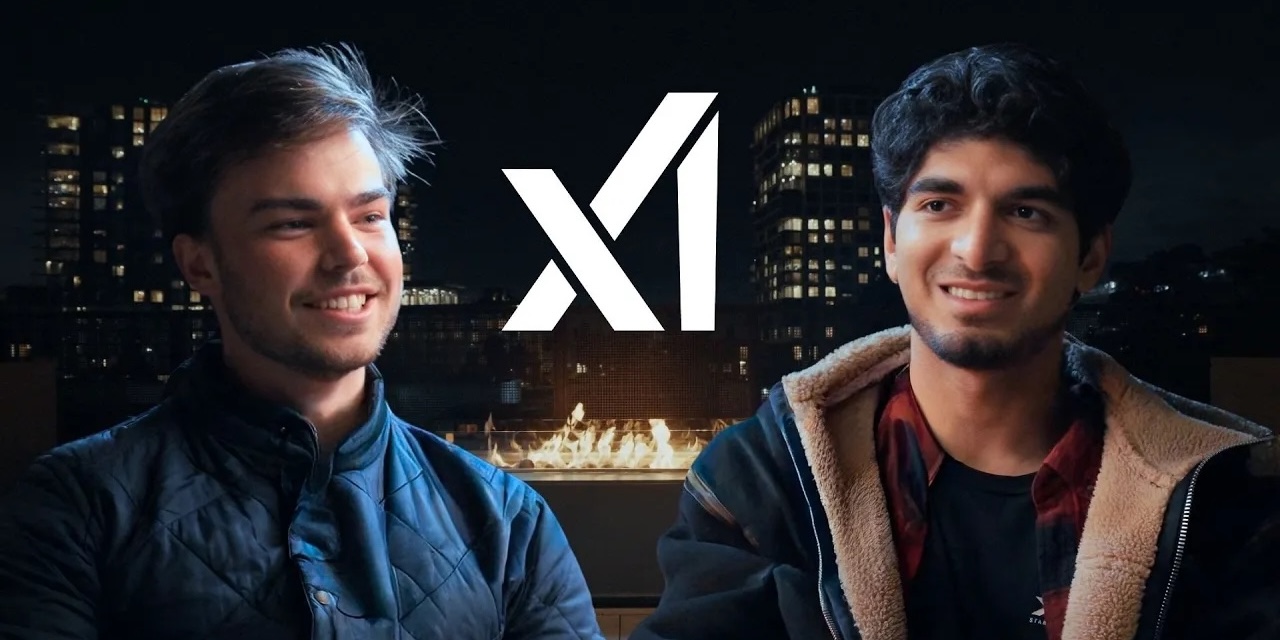
One hour of unguarded conversation can change everything. For Sulaiman Ghori, a technical staff member at xAI, it took exactly 71 minutes on the Relentless podcast to go from insider to outsider at Elon Musk's artificial intelligence venture.
Four days after the interview aired on January 15, 2026, Ghori announced on X that he had left the company. "I have left xAI," he wrote. "Nothing but love to my former team and coworkers!"
The timing raised immediate questions. When MrBeast commented on Ghori's post asking if the podcast was the reason, adding a popcorn emoji, it gave voice to what many in tech were already wondering. While xAI has not confirmed whether the departure was voluntary or forced, the proximity of events tells its own story.
What He Revealed
Ghori's interview was remarkable not for scandal, but for detail. He painted a vivid picture of life inside one of the most secretive companies in Silicon Valley, touching on everything from unconventional hiring practices to questionable regulatory shortcuts.
The most damaging revelations centered on how xAI built its Colossus data center in Memphis, Tennessee. Ghori explained that the company exploited a loophole intended for temporary events like carnivals to fast-track construction permits. "The lease for the land itself was actually technically temporary," he said. "It was the fastest way to get the permitting through and actually start building things."
This was no small operation. Colossus, which xAI touts as having been built in just 122 days, relies on at least 35 methane gas turbines. According to environmental groups and reporting from The New Yorker, these turbines were operating without proper permits, producing pollution equivalent to a large power plant. Even the EPA under the Trump administration labeled the operation illegal.
The data center issue had already been controversial before Ghori spoke. His confirmation of the regulatory workarounds, delivered matter-of-factly on a public podcast, likely did not sit well with company leadership or legal counsel.
The Secret Macrohard Project
Perhaps more sensitive than the regulatory issues was Ghori's discussion of Macrohard, xAI's stealth project to build what Musk has described as a "purely AI software company." The project, whose name playfully mocks Microsoft, aims to create AI agents that can perform any digital task a human can do.
Ghori described these "human emulators" in detail. The vision is to deploy millions of AI workers that can control computers the same way humans do, using keyboards, mice, and screens. No special software integration needed. Just AI that looks at a screen, makes decisions, and takes actions.
The deployment strategy he outlined was particularly audacious. Rather than building new infrastructure, xAI plans to use idle Tesla vehicles as distributed computing nodes. With roughly 4 million Tesla cars in North America and Hardware 4 computers in about half of them, the company could theoretically lease processing time from car owners while their vehicles sit charging. "We can just potentially pay owners to lease time off their car," Ghori explained.
This wasn't public information. While Musk had mentioned Macrohard in passing and even painted the name on the roof of the Colossus 2 data center, the specifics of how it would work and the Tesla integration were closely guarded details.
A Culture of Extreme Velocity
Beyond the sensitive projects, Ghori offered an unusually frank assessment of what it's like to work at xAI. The picture he painted was one of extreme velocity, minimal hierarchy, and constant intensity.
When he joined the company, nobody told him what to do. "My first day they just gave me a laptop and a badge," he said. No assigned desk. No team. No onboarding process. He had to seek out Greg Yang, the co-founder who recruited him, to figure out his next steps.
The organizational structure, as Ghori described it, consists of just three layers: individual contributors, co-founders, and Musk himself. Managers still write code. The sales team trains models. "Everyone is an engineer," he said, noting there were fewer than eight people who weren't engineers when he joined.
The pace of work was relentless. Ghori spent two to three months straight in the office without weekends during the Grok Imagine rollout. The company operated what he called a "war room" for four months straight. When the team outgrew the original war room, they moved to the company gym.
There were sleeping pods and bunk beds for overnight stays. Multiple team members had worked through the night to win bets with Musk. In one instance, an engineer named Tyler won a Cybertruck by getting a training run operational on new GPUs within 24 hours.
AI Employees Among Humans
One of the stranger details Ghori shared involved xAI already using its human emulators as internal employees. These AI workers were listed on organizational charts, assigned to teams, and interacted with human colleagues.
The confusion this created was both comical and revealing. "Multiple times I've gotten a ping saying: 'Hey, this guy on the org chart reports to you. Is he not in today or something?'" Ghori recounted. "It's an AI. It's a virtual employee."
In other cases, someone would ask an AI employee for help, and the AI would say to come to its desk. The person would walk over to find an empty chair. The technology was advanced enough to handle complex tasks but still produced awkward hallucinations that exposed its artificial nature.
The Math That Didn't Help
Ghori also shared some internal calculations that may have been better kept private. The company had determined that each commit to the main code repository was worth roughly $2.5 million in expected value. "I did five today," he said with a laugh. "So you added like 12 and a half million of value."
It was a light moment in the interview, but it revealed how xAI thinks about individual contributions and company valuation. These are the kinds of internal metrics that startups typically guard carefully, especially when trying to justify sky-high valuations to investors.
The Musk Factor
Throughout the interview, Ghori spoke about Musk with a mix of admiration and casual familiarity. He described how Musk would make phone calls to vendors and get software patches delivered the next day. How he would end meetings by asking, "How can I help? How can I make this faster?"
He also described a culture where Musk's timeline estimates had become more accurate over time, particularly compared to SpaceX and Tesla. "I think he himself has calibrated his timelines differently now," Ghori said, suggesting that Musk's infamous optimism had been tempered by experience.
But he also revealed moments of chaos, like when Musk walked into an empty war room looking for the team, only to find they had relocated to the gym without telling anyone. These anecdotes humanized both Musk and the company in ways that likely weren't intended for public consumption.
The Unwritten Rule
Silicon Valley runs on an unwritten code. Employees at high-profile companies, especially those in Musk's orbit, understand that public silence is expected. Twitter, SpaceX, Tesla, and now xAI all maintain tight control over information flow. Leaks are punished. Public interviews are forbidden.
Ghori, who came from the startup world where founders regularly share their experiences, may not have fully internalized this cultural norm. Or perhaps he understood it but chose to speak anyway. Either way, his decision to sit for an hour-long interview about the inner workings of xAI was always going to carry risk.
The podcast host, Ti Morse, gave Ghori ample opportunity to be candid, and Ghori took it. He spoke about regulatory shortcuts, secret projects, internal valuations, organizational chaos, and the personal quirks of the world's richest man. It made for fascinating listening. It also likely made him unemployable at xAI.
What Comes Next
Ghori's personal website, updated after his departure, still lists his time at xAI working on "Grok (agi)" among his accomplishments. His LinkedIn indicates he's moving on to new projects. At 20-something, with experience at one of the hottest AI companies in the world, he'll have plenty of options.
For xAI, the incident serves as a clear message to remaining employees about the consequences of public candor. The company continues to hire aggressively for Macrohard and other projects, but candidates will now understand more clearly what discretion means in Musk's world.
The broader lesson for the tech industry is more ambiguous. On one hand, Ghori's interview provided valuable transparency into how cutting-edge AI companies actually operate, beyond the carefully managed PR. On the other hand, his swift exit demonstrates how quickly that transparency can end a career.
In the end, 71 minutes of honesty cost Ghori his job at what he described as his dream company. Whether that makes him brave or reckless depends on your perspective. What's certain is that his interview will stand as one of the most detailed insider accounts of xAI we're likely to get for a long time.
The other engineers at xAI, watching this unfold, have surely taken note. The message is clear: what happens in the war room stays in the war room.