geeky NEWS: Navigating the New Age of Cutting-Edge Technology in AI, Robotics, Space, and the latest tech Gadgets
As a passionate tech blogger and vlogger, I specialize in four exciting areas: AI, robotics, space, and the latest gadgets. Drawing on my extensive experience working at tech giants like Google and Qualcomm, I bring a unique perspective to my coverage. My portfolio combines critical analysis and infectious enthusiasm to keep tech enthusiasts informed and excited about the future of technology innovation.
The Google Co-Founder's Retirement Mistake: Why Sergey Brin Returned to Work on Gemini
AI Summary
Google co-founder Sergey Brin reflected on his short-lived retirement, calling it a "mistake" because the lack of intense technical challenges left him feeling intellectually dull. This realization, combined with his admission that Google initially "messed up" by underinvesting in the AI revolution it helped start, spurred his return to active duty to work on the Gemini AI project.
December 21 2025 08:58
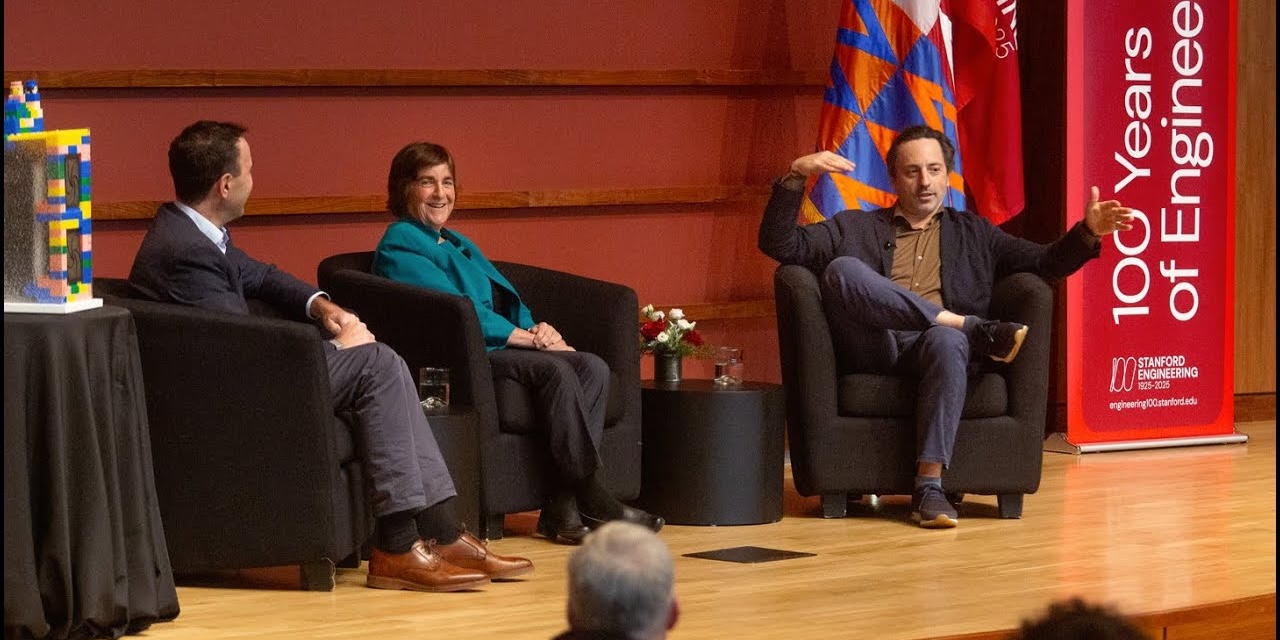
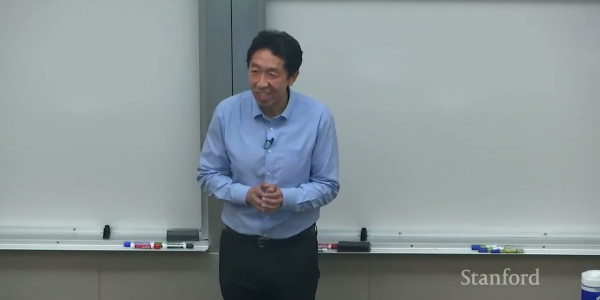
On a December evening at Stanford University, Sergey Brin stood on stage next to a piece of history: the original server that ran Google's PageRank algorithm. The setting was fitting. This was the closing event of Stanford Engineering's centennial year, and Brin, who arrived as a PhD student in 1993, had returned to reflect on the past and puzzle through the future.
But the most revealing moment of the evening came when a student asked about his definition of a good life. Brin's answer was surprisingly candid. He had retired just before COVID hit, planning to sit in cafes and study physics. It turned out to be, in his words, "the worst decision."
"I had this vision that I was going to sit in cafes and study physics, which was my passion at the time," Brin told the packed auditorium. "Yeah, that didn't work because there were no more cafes." The audience laughed, but Brin pressed on. "I was just kind of stewing and kind of felt myself spiraling, kind of not being sharp."
The man who had co-founded one of the world's most valuable companies found himself intellectually adrift without the daily challenge of complex technical problems. So he went back to work, eventually focusing on what would become Gemini, Google's answer to the rapidly evolving AI landscape.
The Lockpicking Graduate Student Who Built Google
Before diving into Brin's return and the AI arms race, Stanford President Jonathan Levin took the audience back to 1993, when both he and Brin arrived at Stanford. Levin was an undergraduate senior. Brin was starting his computer science PhD in Margaret Jackson Hall, an old building on the main quad with creaky rooms and physical locks.
Those physical locks proved irresistible to the young graduate student. "I learned how to pick locks there, thanks to the MIT guide to lockpicking," Brin said with a grin. When the department moved to the new Gates Computer Science building with electronic locks, Brin saw a final opportunity. Workers were still finishing the building, and scaffolding remained on the exterior. All the offices were locked with new electronic key systems, except one crucial room: the balcony entrance to the office containing the computer that programmed the keys.
"I climbed out from my office onto scaffolding," Brin admitted. "I was on the fourth floor." He picked the physical balcony lock, accessed the key programming computer, made himself a master key, and then carefully erased evidence of the copy. For a while, his master key worked throughout the building.
"The statute of limitations has passed, I hope, so I can tell the story," he added.
This wasn't just youthful mischief. It revealed something essential about Brin's approach and the culture of Stanford's computer science department at the time. "In hindsight, maybe I didn't appreciate it at the time, but it was a very creative and free time," Brin reflected. "I'm kind of surprised honestly how much freedom I was given."
His advisors, Hector Garcia-Molina and Jeff Ullman, gave him remarkable latitude to explore. At various points, Brin worked on reversing shredded documents (scanning shredded paper and reconstructing it digitally) and other projects that struck his interest. Nobody told him not to pursue these tangents. The freedom to experiment, to fail, and to follow curiosity wherever it led became foundational to what came next.
The Failed Pizza Startup and the Birth of Google
Brin's first attempt at an internet business was a pizza ordering website. The concept seems mundane now, but in the mid-1990s, the idea that you could order food online seemed radical. "It seemed crazy at the time that you could order food online," Brin said. "Nowadays, we take it for granted."
He even placed a Coca-Cola advertisement at the top of the site as a joke. "I thought it was, 'Haha, so funny. There'd be internet ads,'" he recalled. The audience laughed at the irony, given that Google would later build one of the world's largest advertising businesses.
The pizza startup failed spectacularly. Brin's system would automatically fax orders to pizza restaurants, but he quickly discovered that most establishments didn't check their fax machines frequently enough to make the service viable. Still, the experiment reflected the zeitgeist of the computer science department. Everyone understood how web servers worked and could build one quickly. The internet was new, and students were trying everything.
It was during this experimental period that Brin met Larry Page, who was visiting Stanford to consider the PhD program in 1995. They began working together on a digital libraries project funded by the National Science Foundation. Page was particularly interested in the link structure of the web, which became the foundation for what they initially called "BackRub," later renamed PageRank.
"Kudos to Larry to really focusing on the link structure of the web," Brin said. "But it was at the time the web was the new thing and everybody would do something. It was so easy to create some new idea."
They spent years refining the algorithm while at Stanford, treating it initially as an academic project. They tried to license the technology to established internet companies. In one instance, they pitched it to Excite, with venture capitalist Vinod Khosla encouraging the company to acquire it. Brin and Page sent an email offering to license the technology for $1.6 million. Within 15 minutes, they received a reply: "Oh, that's a lot of moola, but okay."
The two graduate students were thrilled. Then their friend Scott Hassan walked in laughing hysterically. He had faked the reply email. In the 1990s, email security was so lax that anyone could send a message appearing to come from any address. The deal never materialized.
Eventually, Brin and Page decided to start their own company. Brin's advisor Jeff Ullman gave him pragmatic advice: try it, and if it doesn't work out, come back to finish the PhD. "So I'm still on leave of absence technically," Brin joked. "Might still come back. We'll see how it goes."
The Underinvestment That Nearly Cost Google
When the conversation turned to artificial intelligence, Brin made a striking admission. Despite Google's current position at the forefront of AI development, the company had fumbled badly in the years leading up to the current AI boom.
"We for sure messed up in that we underinvested and didn't take it as seriously as we should have say eight years ago when we published the transformer paper," Brin said. The transformer architecture, developed by Google researchers and published in the landmark 2017 paper "Attention Is All You Need," became the foundation for modern large language models. But Google didn't aggressively scale up the technology or rush to bring it to consumers.
"We didn't take it all that seriously and didn't necessarily invest in scaling the compute and also we were too scared to bring it to people because chatbots say dumb things," Brin explained. OpenAI, meanwhile, ran with the technology. "Good for them," Brin added. "It was a super smart insight."
The observation stung particularly because one of the key researchers who left Google for OpenAI was Ilya Sutskever, who became OpenAI's chief scientist and a driving force behind ChatGPT's development. Google had the research, the talent, and the infrastructure. What it lacked was the willingness to move quickly and accept the risks of releasing imperfect AI products to the public.
Yet Brin argued that Google's long investment in deep technical infrastructure positioned it to recover. The company had been working on neural networks since the Google Brain project, led by Jeff Dean. "I didn't take it seriously at first," Brin admitted. "He was like, 'Oh, we can tell cats from dogs.' I'm like, 'Okay, cool.'" But he trusted his technical people to pursue promising directions.
Google had also been developing custom AI chips, the Tensor Processing Units (TPUs), for about 12 years. The company had massive data centers and a culture of investing in foundational R&D. "Very few have that scale of data center, have their own semiconductors, have the deep learning algorithms and so forth, all the components of the stack to be able to perform at the forefront of modern AI," Brin said.
Still, the competitive landscape had shifted dramatically. Hundreds of billions of dollars were flowing into AI infrastructure across multiple companies. The pace of innovation was relentless. "If you skip the news on AI for a month, you're way behind," Brin observed.
Why Retirement Didn't Work
This brings us back to Brin's retirement and return. He stepped away from day-to-day involvement at Google just before the COVID-19 pandemic. His plan was simple: study physics in cafes, pursue intellectual interests at his own pace, and enjoy life after two decades of building one of the world's most consequential companies.
Then the cafes closed. And Brin discovered something uncomfortable about himself. Without the constant intellectual challenge, without the urgency of complex technical problems to solve, he felt himself becoming less sharp. The spiraling feeling he described suggests something deeper than boredom. For someone whose identity had been built around solving hard problems, the absence of that challenge was destabilizing.
So he started returning to the office, initially just occasionally as Google began reopening its campuses. He gravitated toward the team working on what would become Gemini, Google's multimodal AI system designed to compete directly with OpenAI's GPT-4 and other frontier models.
"To be able to have that technical creative outlet, I think that's very rewarding," Brin said. "As opposed to if I stayed retired, I think that would have been a big mistake."
He acknowledged other dimensions of a good life as well. "I like to have family. Have one of my kiddos here. My girlfriend is here. I feel grateful to be able to spend quality time with them." But the intellectual component proved non-negotiable.
The Steve Jobs Mistake and the Google Glass Debacle
When a student asked about avoiding earlier mistakes, Brin immediately brought up Google Glass, the augmented reality eyewear that launched with enormous fanfare in 2013 and quickly became a cautionary tale about premature product launches.
"When you have your cool new wearable device idea, really fully bake it before you have a cool stunt involving skydiving and airship," Brin said, referencing Google Glass's dramatic introduction at Google I/O, where skydivers wearing the device landed on the roof and walked into the conference.
The problem, Brin now admits, was that he tried to commercialize the technology before it was ready. "I thought, 'Oh, I'm the next Steve Jobs. I can make this thing,' Tada." The audience laughed, but Brin's point was serious.
"Everybody thinks they're the next Steve Jobs. I've definitely made that mistake," he continued. "He was a pretty unique kind of guy."
Google Glass launched at $1,500 for a limited "Explorer" edition. The device was bulky, the battery life was poor, and the social dynamics of wearing a camera on your face in public proved deeply problematic. The term "Glasshole" entered the lexicon to describe early adopters who wore the device in inappropriate contexts. Google withdrew the consumer version in 2015.
Brin's lesson was about resisting external pressure to launch before a product is truly ready. "Make sure you've baked your idea long and developed it far enough before there's a treadmill you get onto where outside expectations increase, the expenses increase, and you're sort of, then you kind of have to deliver by a certain time."
It's advice that cuts against the current startup culture of "launch fast and iterate." Brin isn't arguing against rapid iteration. He's arguing against public launches before the core technology and user experience are solid. The distinction matters.
What AI Means for Students and Careers
Multiple students asked Brin about how AI would affect their careers and what they should study. His answers were notably uncertain, which itself felt honest.
"I think it's super hard to predict exactly what will happen," Brin said. He pointed to how the web and smartphones had transformed careers and fields of study in ways few predicted. "AI will 100% change that. But I think it's very hard right now in a rapidly shifting landscape to say exactly what."
One student specifically asked whether they should still major in computer science, given that AI can now write code. Brin's answer was emphatically yes, but not for the reasons you might expect.
"I wouldn't go off and switch to comparative literature because you think the AI is good at coding," Brin said. "The AI is probably even better at comparative literature just to be perfectly honest." The room laughed, but Brin wasn't entirely joking.
He explained that when AI writes code and makes a mistake, the consequences are significant. The program doesn't work. But when AI makes an error in an essay about literature, the stakes are lower. "Getting a sentence wrong in your essay about comparative literature isn't going to really have that consequence."
The deeper point was about where human judgment remains essential. Coding requires not just generating text that looks like code, but understanding whether that code actually solves the problem correctly. That verification step still requires deep human expertise.
His advice to students was to use AI extensively as a tool. He described how he now consults AI for everything from choosing gifts to brainstorming product ideas to understanding technical domains outside his expertise. "I just turn to AI all the time now," he said. "It doesn't do it for me because I typically will ask, give me five ideas, blah blah blah, and probably three of them are going to be junk in some way that I'll just be able to tell, but two will have some grain of brilliance."
Brin even revealed that he talks to Gemini Live in his car, discussing technical questions during his commute. He quickly added a caveat: "The publicly available version right now is not our good version. So you shouldn't do it today, but give me a few weeks to actually ship what I have access to, because we have an ancient model behind it in the publicly released version right now. It's a little embarrassing."
Rethinking What a University Means
Perhaps the most provocative moment came when President Levin asked Brin what he would do if he were launching Stanford Engineering's second century. Brin paused, then offered an answer that questioned the entire premise of the modern university.
"I would rethink what it means to have a university," Brin said. "I know that sounds kind of annoying. That's the kind of thing Larry would say and I would be really annoyed with him."
But Brin pressed forward. Universities are geographically concentrated, built around physical buildings and lecture halls. Yet information now spreads instantly online. MIT's OpenCourseWare, Coursera, Udacity, and YouTube have made high-quality educational content available to anyone. You can talk to an AI and get a reasonable overview of almost any technical topic.
"So I guess, what does it mean to have a university?" Brin asked. "Are you trying to maximize the impact? In that case, probably just limiting it geographically is not going to be so effective."
He acknowledged that the Bay Area is special, that there's value in geographic concentration of talent. But he also noted that people increasingly work remotely and collaborate across distances. "At some level, if you have a hundred people together over there, it's kind of fine. They don't have to be at the same place as these other hundred people."
Brin also observed that individual contributors, regardless of formal degrees, increasingly drive innovation. "We've hired a lot of academic stars, we've hired tons of people who don't have bachelor's degrees or anything like that and they just figure things out on their own in some weird corner."
It's worth noting that Brin's own trajectory depended heavily on that geographic concentration. He met Larry Page because Page visited Stanford. They worked in the same building, had access to the same advisors and resources, and were embedded in a culture that encouraged experimentation. Google emerged from that specific environment at that specific time. Would it have happened if Brin had been taking online courses from Maryland? Probably not.
The Limits of Scaling and the Importance of Algorithms
A freshman asked about the future of AI development once we run out of data and compute to scale. The question reflected a common narrative: that AI progress has been primarily about throwing more data and computational resources at the problem.
Brin pushed back hard. "All the things that you listed, I would say, have already been bigger factors than scaling compute and scaling data," he said. Scaling attracts attention because it's visible. Building data centers, buying chips, and publishing papers about scaling laws are dramatic. "But I think if you carefully line things up, you'll see that actually the algorithmic progress has outpaced even the scaling over the last decade."
He referenced a plot he had seen in graduate school about the n-body problem in physics (calculating the gravitational interactions between many objects). Moore's Law had increased available computing power dramatically from the 1950s through the 1990s. But algorithmic improvements for solving the n-body problem had outpaced hardware improvements.
"Companies like ours are never going to turn down being at the frontier of compute," Brin said. "But that's the dessert after your main course and the veggies of actually having done your algorithmic work."
It's an important corrective to the narrative that AI progress is just about scale. Better algorithms, better architectures, better training methods, and better ways of using compute matter more than raw computational resources. That should be encouraging for universities and smaller companies that can't match the capital expenditures of Google, Microsoft, or Amazon. Clever algorithms can compete with massive resources.
The Soviet Kid Who Expanded His World
When asked about limiting beliefs he had to overcome, Brin took the question in a personal direction. He described growing up in Moscow in a 400 square foot apartment shared with his parents and grandmother, walking up five flights of stairs, in a poor country where nobody had much.
"I didn't really think about the world outside," Brin said. His father attended a conference in Poland where he learned about the Western world, and made the controversial decision to move the family to the United States. "We were still very poor and had to make our way out of having nothing."
The transition was difficult. Learning a new language, making new friends, adapting to a completely different culture. "It was sort of a challenging transition but awakening," Brin said. Coming to Stanford for graduate school brought another expansion. "I had this all this freedom in the way the professors entrusted me, and just something about California that was very freeing and liberating in thought."
He noted that California is "a little bit getting away from" that libertarian tradition but didn't elaborate. The deeper point was about embracing difficult transitions that expand your world. "I had the experience of expanding my world in ways that seemed very painful at the times but later paid off just because of my personal history."
Those challenging transitions, moving from the Soviet Union to America and from the East Coast to California, forced Brin to adapt and grow in ways that shaped everything that followed. It's easy to see Google's mission to "organize the world's information" as stemming in part from someone who grew up in a closed society and later experienced the liberating power of information and openness.
The Unfinished PhD
Brin never finished his PhD. He remains on leave of absence, technically a doctoral candidate who wandered off to start a company and never came back. It's become a running joke. "Might still come back," Brin said. "We'll see how it goes."
There's something appealing about that unfinished status. The PhD represents pure research, the pursuit of knowledge for its own sake. By not finishing, Brin remains symbolically connected to that world even as he operates in the very different universe of building products and companies.
His advisor Jeff Ullman's advice to "just give it a try and if it doesn't work out you come back" reflected the culture of the Stanford Computer Science department in the 1990s. Faculty understood that their students might create companies. They supported it rather than seeing it as abandoning the true calling of academic research. That cultural shift, happening across Stanford and especially in engineering, helped create the environment where Google could emerge.
The original server that ran PageRank sat on stage throughout the conversation, a physical artifact of that moment when academic research became world-changing technology. It's a reminder that universities, for all their limitations and uncertainties about the future, remain places where unlikely collisions happen. A graduate student interested in data mining meets another interested in web link structure. They get federal funding to work on digital libraries. They develop an algorithm, try to license it, fail, and start a company that reorganizes the world's economy.
Could that happen entirely online? Could it happen with AI tutors replacing professors? Maybe. But the physical artifact on stage suggests something is lost when you remove the random encounters, the freedom to pursue weird tangents, the trust between advisors and students, and the geographic concentration of ambitious people in one place.
Sergey Brin is worth over $100 billion. He has access to any resource, any experience, any comfort the world can provide. And what he needed most, what pulled him out of retirement, was hard technical problems to solve.
Brin's mistake wasn't retiring. Lots of people retire happily. His mistake was thinking he could maintain intellectual sharpness through solo study without the urgency and accountability of actually building something. Physics textbooks in cafes couldn't replace the challenge of developing Gemini to compete in the fastest-moving technology race in decades.
"To be able to have that technical creative outlet, I think that's very rewarding," Brin said. The understatement was very Sergey Brin. Not "exciting" or "thrilling" or "world-changing." Rewarding. The quiet satisfaction of hard work on important problems.